Imagine standing on the deck of a Canadian patrol boat in the deep, freezing dark of the Beaufort Sea. Beneath you, thousands of miles of coastline stretch out into the black—the longest coastline on earth. It is completely silent. But if you had the right sensors, you would know that the silence is an illusion. The deep waters of the Arctic are getting crowded. Russian attack subs glide past underwater ridges. Chinese research vessels mapped the ice floors last winter.
And for decades, Canada’s ability to see into its own basement has rested on four broken promises.
Those promises are the Victoria-class submarines. Bought secondhand from the British in 1998, they have spent more time in dry dock than at sea, plagued by fires, dents, and technical failures. Today, only one of the four is considered fully operational. If you are a Canadian sailor, going beneath the waves in one of these vessels is an exercise in profound bravery. If you are a Canadian policymaker, it is a source of quiet terror.
On a rainy Monday in Halifax, Prime Minister Mark Carney stepped up to a podium to change that narrative forever.
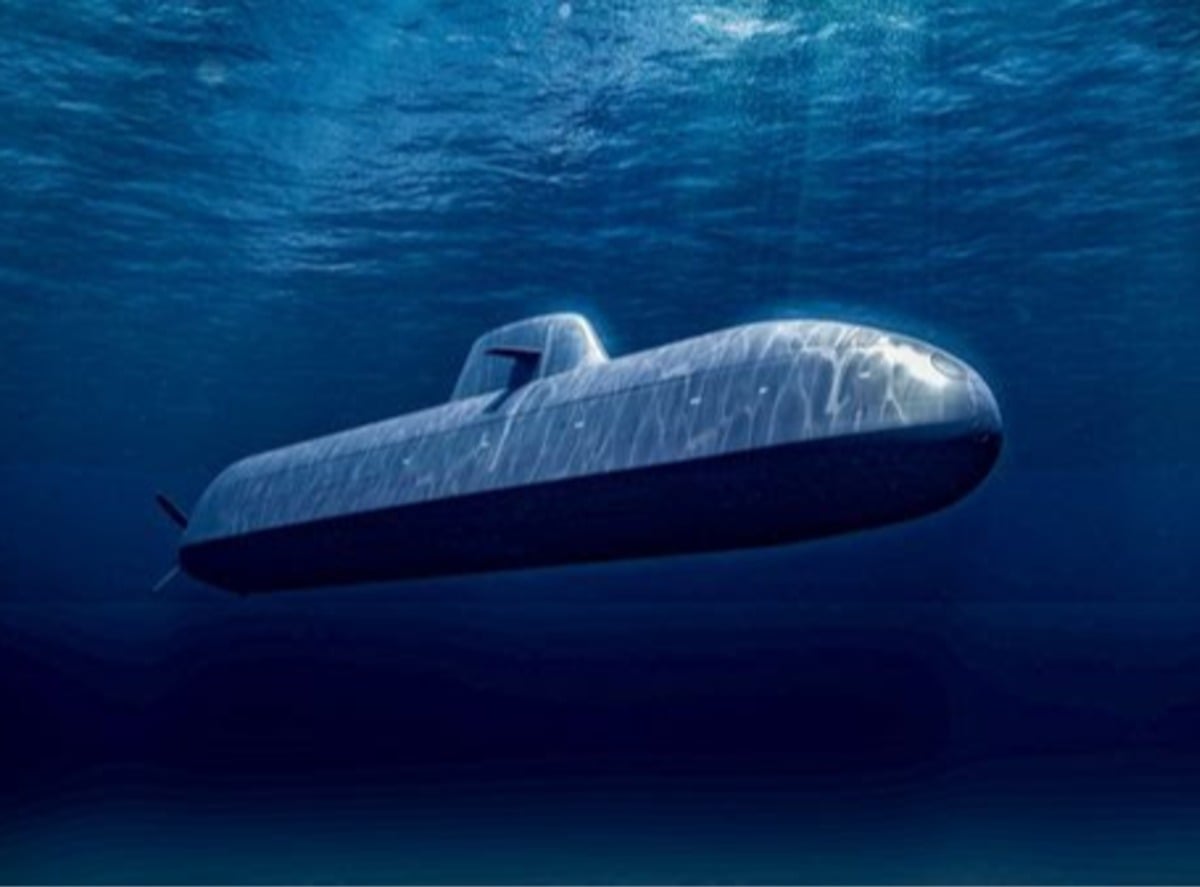
He announced that Germany’s ThyssenKrupp Marine Systems (TKMS) had won the most competitive, high-stakes military bidding war in modern Canadian history. Canada is buying up to 12 brand-new Type 212CD submarines. The total price tag over the lifetime of the fleet? Over $100 billion.
It is a staggering sum of money. But to understand why Canada is spending it, you have to look past the spreadsheets and look at the changing geometry of global power.
The Pitch in the Shadows
For the last year, two of the world's greatest shipbuilding powerhouses have been quietly courting Ottawa.
On one side was South Korea’s Hanwha Ocean, offering their massive, highly capable KSS-III submarine. The South Koreans brought an aggressive timeline and a tantalizing geopolitical proposition: link Canada’s economy to the booming tech and manufacturing hub of the Asia-Pacific. For an administration worried about stability in the Taiwan Strait, it was a compelling argument.
On the other side stood Germany, partnered with Norway, offering a vessel engineered specifically for the punishing, ice-choked waters of the North Atlantic and the Arctic.
Consider the hypothetical choice facing a naval commander. You can choose the partner that ties you to the Pacific, or you can choose the partner whose tech is already running silent under the North Sea.
Canada chose Europe.
But the decision wasn’t just about the steel hulls or the range of the torpedoes. It was about an ideological shift in how Canada spends its money. For generations, the Canadian defense strategy has been simple: buy American, or at least spend seventy cents of every defense dollar with our southern neighbor.
This contract upends that tradition completely. By choosing the German Type 212CD, Canada is weaving its defense infrastructure directly into the NATO European supply chain. The first four submarines are scheduled for delivery starting in 2034, just as the ancient Victoria-class boats are forced into retirement. To meet that deadline, the German government did something extraordinary. They agreed to reallocate production slots originally meant for their own navy and Norway's navy, pushing Canada to the front of the line.
Rust, Welders, and the Anatomy of $100 Billion
When people hear a number like $100 billion, they think of wealth disappearing into a vault, or money being fired into the ocean.
But talk to someone like Sarah, a hypothetical master welder working the docks in Nova Scotia. To her, that number looks like a career. It looks like a life where her kids don't have to leave the East Coast to find a good job.
The procurement of these 12 submarines is designed to act as an economic engine that will run for fifty years. TKMS claims the project will inject $86 billion into Canada's gross domestic product and create over 650,000 job-years of employment. We are talking about generations of pipefitters, machinists, electrical engineers, and software developers who will be trained to maintain these complex machines.
The ripples of this deal go far beyond the coastlines. Because the German bid was an all-of-government pitch, it contains elements that sound wild for a military contract.
Germany has pledged massive investments across the country, from space technology to critical minerals. In Alberta, the German government has proposed building a massive carbon capture facility using specialized TKMS engineering. In Manitoba, the deal aligns with provincial pushes to expand the northern port of Churchill.
It is a defense contract disguised as a national industrial strategy.
The Ghost in the Machine
Submarines are unique because they are the ultimate instrument of sovereign doubt. A surface ship can be tracked by satellites. An aircraft leaves a radar signature. But a modern diesel-electric submarine equipped with air-independent propulsion—like the Type 212CD—can vanish for weeks at a time.
When a country owns an effective submarine fleet, adversaries cannot assume the waters are empty. They have to hunt. They have to slow down. They have to worry.
For thirty years, Canada has lacked that ghost in the machine. Our allies knew it, and more importantly, our rivals knew it. We relied on the Americans to police our deep waters, a compromise that always carried a quiet sting to Canadian sovereignty.
The decision to go with Germany is a high-wire act. If negotiations stall before the end of the year, the South Koreans are still waiting in the wings as the official reserve supplier. And defense procurement in Canada is historically where good intentions go to die, bogged down by red tape and political shifts.
But if this project holds, the first sleek, dark hull of a Canadian Type 212CD will slide into the Atlantic water by 2034. It will dive, the surface noise will fade to nothing, and Canada will finally be able to see what is moving in the dark.