At 4:15 in the morning, the humidity in Hsinchu feels like a wet wool blanket draped over your shoulders. Inside a cleanroom the size of three football fields, Mei-Ling adjusts her bunny suit, checks the pressure gauges on an extreme ultraviolet lithography machine, and watches microscopic beams of light etch circuits onto a twelve-inch disc of pure silicon.
Mei-Ling is thirty-four. She drinks too much iced oolong tea, worries about her father’s knees, and has never fired a rifle in her life. Yet, if you are reading these words on a smartphone, a laptop, or a tablet, there is an overwhelming probability that the silicon brain powering your screen passed through a facility just like hers.
Now, walk a hundred miles west across the choppy, gray waters of the Taiwan Strait.
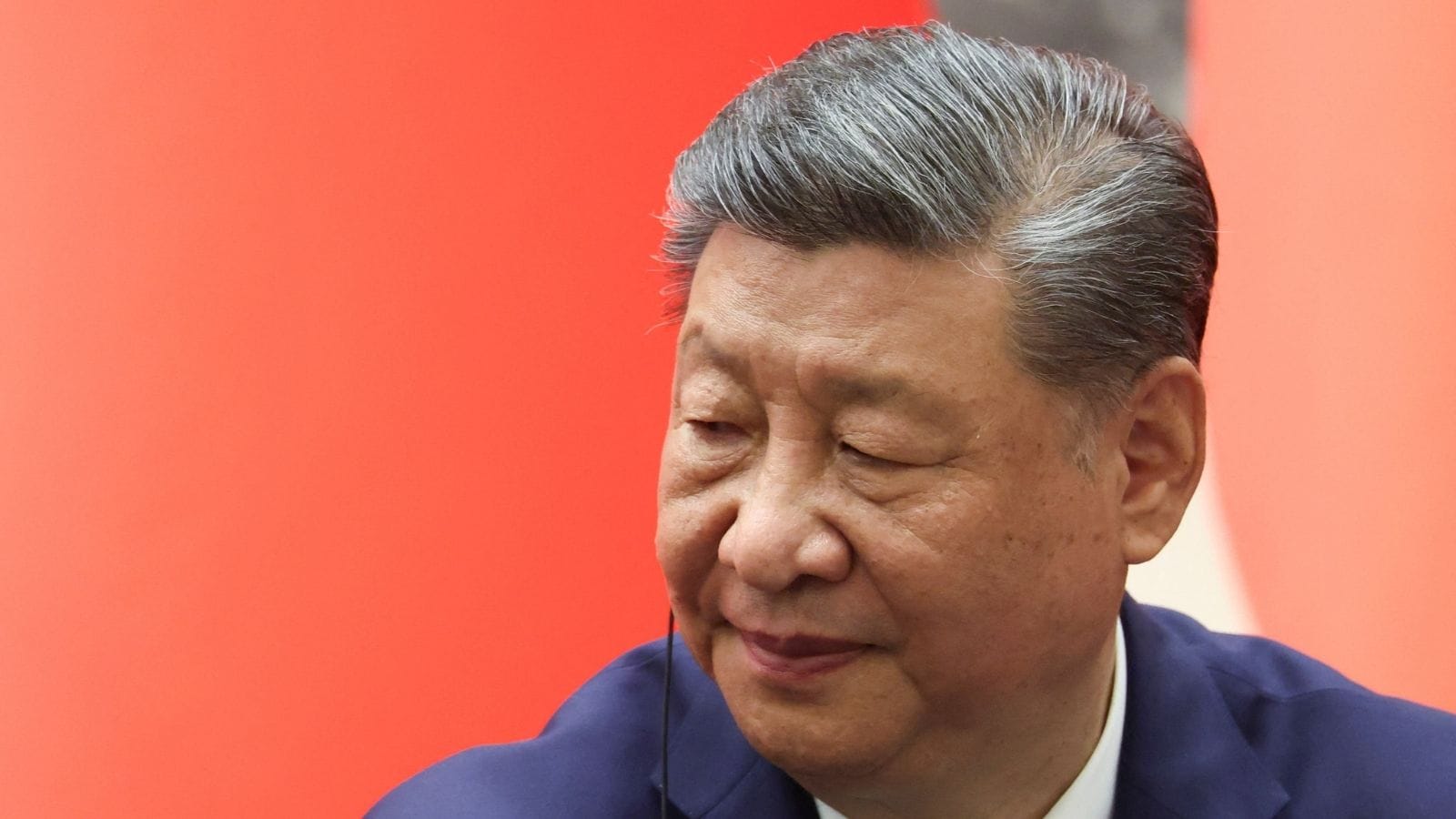
In Beijing, inside the cavernous, red-carpeted expanse of the Great Hall of the People, Chinese President Xi Jinping steps up to a podium. His voice is steady, measured, devoid of theatricality. He tells the world, once again, that Taiwan’s "reunification" with the mainland is a historical inevitability. No one, he declares, can stop the wheel of history.
Read the wire reports from that speech, and the whole thing sounds like diplomatic wallpaper. Geopolitical posturing. Just another Tuesday in East Asia. You skim the headline, sip your coffee, and move on to the sports scores.
That is a mistake.
When a leader who commands the largest standing military on earth says history cannot be stopped, he is not offering a philosophical observation. He is setting a timer. And the hands on that clock are sweeping directly over Mei-Ling’s cleanroom, over the cargo ships idling in the Port of Kaohsiung, and directly into your living room.
The Architecture of an Inevitability
To understand why Xi Jinping’s words carry the weight of a tectonic plate shifting beneath our feet, you have to strip away the sterile vocabulary of international relations. Forget words like sovereignty, deterrence, and status quo for a moment. Think instead about a family feud that never ended, frozen in amber since 1949.
When Mao Zedong’s Communists won the Chinese Civil War, Chiang Kai-shek’s defeated Nationalists fled to the island of Taiwan. For decades, both sides claimed to be the sole legitimate government of all China. Time, however, did not stand still. While the mainland endured the convulsions of the Cultural Revolution before exploding into an economic juggernaut, Taiwan quietly transformed itself from a brutal military dictatorship into one of the most vibrant, progressive democracies in Asia.
Today, Taiwan has its own constitution, its own currency, its own passport, and a population of twenty-three million people who mostly view themselves not as exiled mainlanders, but simply as Taiwanese.
Beijing sees things differently. To the Chinese Communist Party, Taiwan is not a neighbor. It is a severed limb. Since taking power in 2012, Xi Jinping has tied his personal legacy—and the very legitimacy of the Party—to the "great rejuvenation of the Chinese nation." In Beijing’s telling, China can never be truly whole, nor fully healed from its "Century of Humiliation" at the hands of foreign powers, until the flag of the People's Republic flies over Taipei.
Notice the language Xi uses. He rarely speaks of conquering Taiwan. He speaks of healing, of family, of destiny. By framing annexation as an unstoppable historical current, he backs himself—and the rest of the world—into a corner where compromise looks like treason.
The Silicon Shield and the Fragile Glass
Let us try a thought experiment. Imagine, just for a second, that the geopolitical tension spills over into an actual blockade or invasion. You do not need to picture mushroom clouds to understand the catastrophe. Picture a shipping container.
Consider what happens next.
Roughly half of the world’s container fleet passes through the Taiwan Strait every year. It is the jugular vein of global commerce. If that waterway closes, supply chains do not merely slow down; they snap.
Worse still is what sits on the island itself. Taiwan produces over sixty percent of the world’s semiconductors, and more than ninety percent of the most advanced ones—the sub-seven-nanometer chips that run artificial intelligence data centers, modern fighter jets, hospital MRI machines, and the fuel-injection systems in standard family sedans. Taiwan Semiconductor Manufacturing Company, or TSMC, is the beating heart of the twenty-first century.
Economists have a polite term for what happens if TSMC goes offline: a global depression. Bloomberg Economics estimated that a war over Taiwan would wipe out roughly ten trillion dollars from the global economy in the first year alone. That is ten percent of global GDP, evaporating faster than it did during the 2008 financial crisis or the COVID-19 lockdowns.
I spent three weeks in Taipei a few autumns ago, reporting on supply chain resilience. One evening, I sat in a cramped night market stall eating beef noodle soup with a retired naval officer named Chen. Rain drummed loudly against the corrugated tin roof. I asked him if people on the island felt afraid when Beijing ran military drills just twelve miles off their coast.
Chen stared into his broth for a long time. "Fear is a luxury," he told me finally. "If you live next to a volcano, you do not spend every morning screaming at the mountain. You check the wind. You build a stronger roof. And you pray the pressure vents somewhere else."
That is the psychological reality of Taiwan. It is a society living permanently in the shadow of an existential threat, yet maintaining a surreal, quiet normalcy. People still argue about housing prices in Taipei. They still line up for bubble tea. They still go to work in Hsinchu at four in the morning, calibrating lasers that etch patterns thinner than a strand of human DNA.
Analysts call this dominance the "Silicon Shield"—the theory that China would never destroy Taiwan because China needs Taiwan’s chips just as desperately as the United States does. It is a comforting theory.
It is also dangerously flawed.
When Pride Outweighs Profit
History is littered with leaders who burned down profitable enterprises to satisfy ideological obsessions. When we assume Beijing will always act like a rational hedge fund manager—weighing the cost of sanctions against the profit of trade—we project our own commercial logic onto a political system driven by entirely different imperatives.
For Xi Jinping, political survival and historical legacy are not line items on a spreadsheet. They are absolute values. Over the past decade, he has systematically dismantled collective leadership in Beijing, purged rivals, and concentrated power in his own hands to an extent unseen since Mao. When you hold absolute power, you also hold absolute responsibility. If the economy slows down, if youth unemployment rises, if the real estate market craters—and all three have bruised China in recent years—nationalism becomes the ultimate pressure valve.
"The Taiwan question," Xi has stated repeatedly, "cannot be passed down from generation to generation."
Read that sentence again. It is not a vague aspiration. It is a deadline.
To back up those words, Beijing has embarked on the fastest peacetime military buildup in modern history. The People’s Liberation Army Navy now boasts more ships than the United States Navy. China has developed hypersonic "carrier-killer" missiles specifically designed to keep American aircraft carriers thousands of miles away from the Taiwan Strait. Every single day, Chinese fighter jets and warships cross the median line—an informal boundary in the strait that held for decades—turning an extraordinary provocation into routine background noise.
This is a classic tactic known in military strategy as "salami slicing." You never take a bite big enough to trigger a full-scale war. You just take thin slice after thin slice until the entire sausage is gone, and the other side realizes too late that the status quo has vanished.
The Ambiguity Trap
So, where does that leave the rest of us?
For nearly fifty years, Washington has managed this powder keg using a diplomatic tightrope walk called "strategic ambiguity." Under the Taiwan Relations Act of 1979, the United States officially recognizes Beijing as the sole legal government of China, while maintaining robust unofficial ties with Taipei and selling the island weapons to defend itself. Crucially, Washington has historically refused to say whether it would send American troops to fight China if Beijing invaded.
The logic was brilliant in its simplicity: keep Taipei guessing so it does not recklessly declare formal independence, and keep Beijing guessing so it does not dare attack.
That tightrope is fraying.
As China’s military power has surged, Beijing has grown less intimidated by ambiguity. Meanwhile, presidents and lawmakers in Washington have increasingly hinted—and sometimes stated outright—that the United States would intervene militarily. Yet, saying you will defend an island ten thousand miles from California and actually having the munitions, ships, and political will to do so are two entirely different things.
War games conducted by Washington think tanks paint a sobering picture. In almost every simulated conflict over Taiwan, the United States and its allies eventually prevail in keeping the island free—but at a staggering cost. Two American aircraft carriers at the bottom of the Pacific. Hundreds of lost aircraft. Tens of thousands of casualties in the first three weeks alone. Taiwan’s economy left in ruins. China’s navy decimated, its economy isolated from global markets.
Nobody wins that war. Everybody just survives different degrees of wreckage.
I will be honest: looking at the trajectory of the last five years, it is hard not to feel a cold knot tighten in your stomach. Diplomacy feels slower than missile production. The moderate voices in Beijing who once argued for patience and peaceful integration have largely been sidelined or retired. In Taiwan, a younger generation has grown up with zero emotional attachment to the mainland; to them, asking Taiwan to become part of the People's Republic of China makes about as much sense as asking Canada to merge with the United States.
Two incompatible realities are hurtling toward the same narrow stretch of water.
The Invisible Front Line
If you think this is purely a story about admirals, presidents, and stealth bombers, look closer at how modern conflicts actually begin. They rarely start with an amphibious landing at dawn. They start in the dark, with invisible fingers probing the locks on your doors.
Before a single missile is launched across the Taiwan Strait, the battle is already raging in submarine fiber-optic cables, on social media feeds, and inside electrical grids. Taiwan experiences millions of cyberattacks every single day, overwhelmingly originating from the mainland. Disinformation campaigns flood Taiwanese messaging apps, subtly designed to convince citizens that their government is corrupt, that the United States will abandon them at the first sign of trouble, and that resistance is futile.
Meanwhile, China practices blockades without calling them blockades. Through massive naval exercises that encircle the island, Beijing demonstrates that it can cut off Taiwan’s imports of liquefied natural gas and food whenever it chooses. Taiwan imports nearly ninety-eight percent of its energy. You do not need to bomb Taipei into submission if you can simply turn off the air conditioning in July and empty the grocery shelves by August.
And what happens to the rest of the world during a quarantine of Taiwan?
Think about the factories in Germany waiting for automotive microcontrollers. Think about the hospitals in Brazil waiting for diagnostic equipment. Think about the grocery stores in Tokyo and Seoul, whose maritime lifelines run directly through the exact same waters.
We have spent the last forty years building a hyper-efficient, interconnected global machine, assuming that peace among major powers was a permanent law of nature rather than a fragile truce. We optimized everything for speed and low cost, leaving zero margin for geopolitical earthquakes.
Now, the ground is shaking.
How to Read the Clock
When Xi Jinping declares that history cannot be stopped, he wants the world to feel a sense of fatalism. Fatalism is a powerful weapon. If you can convince your adversaries that your victory is inevitable, they will stop preparing, stop resisting, and eventually negotiate the terms of their own surrender.
History, however, is not a train running on fixed tracks. It is a series of human choices, made by flawed, frightened, ambitious people under immense pressure. Nothing about the future of the Taiwan Strait is written in stone.
Deterrence still works, provided it is credible. Every day that passes without a conflict is a day that Beijing calculates the cost of invasion is still slightly too high. Building up Taiwan’s asymmetric defenses—mobile anti-ship missiles, sea mines, drones, hardened communications—makes the island a "porcupine" that even a giant cannot swallow without choking. Strengthening alliances across the Indo-Pacific, from Japan and South Korea to the Philippines and Australia, ensures that aggression would trigger a unified regional backlash rather than an isolated skirmish.
At the same time, deterrence without reassurance is just a slow march toward war. Washington and Beijing both have an obligation to keep diplomatic guardrails intact, to maintain military-to-military hotlines so a mid-air collision between fighter jets does not accidentally spiral into World War III, and to give Beijing off-ramps that do not require total humiliation.
None of this makes for a clean, triumphant headline. Maintaining peace in the Taiwan Strait is exhausting, unglamorous, high-wire work. It requires patience in an era addicted to instant gratification, and nuance in a political climate that rewards chest-thumping.
Back in Hsinchu, the sun is finally coming up over the mountains, burning off the pre-dawn mist. Mei-Ling finishes her shift, peels off her sterile bunny suit, and steps out into the warm Taiwanese morning. She checks her phone. There is a message from her mother reminding her to pick up fruit on the way home, sandwiched right beneath a push notification from a global news outlet quoting another speech from Beijing about destiny and history.
Mei-Ling locks her screen, slips the phone into her pocket, and walks toward the train station, stepping into a future that hasn't been decided yet.