The ink on a presidential decree dries quickly. Political alliances fade even faster. But when you are tasked with managing twelve billion dollars of a nation's wealth, you cannot afford to think in terms of five-year electoral cycles. You have to think in generations.
This is the quiet, high-stakes reality facing Danantara, Indonesia’s newly minted sovereign wealth fund. On paper, it is a massive financial engine designed to consolidate state-owned enterprises, fund massive waste-to-energy plants, and build a glitzy international financial center in Bali. In reality, it is an experiment in political survival. Don't miss our recent article on this related article.
To understand the sheer scale of what is being attempted, look past the corporate spreadsheets and consider a hypothetical Indonesian civil servant—let’s call her Sri. For two decades, Sri has watched a familiar ritual play out in Jakarta. A new president takes the oath of office. A new cabinet is formed. Suddenly, the strategic priorities of the nation’s largest state-owned enterprises pivot 180 degrees. Projects that were deemed vital last November are quietly shelved by May. Bureaucrats learn that the safest career move is to wait out the current administration, knowing that the political winds will eventually shift.
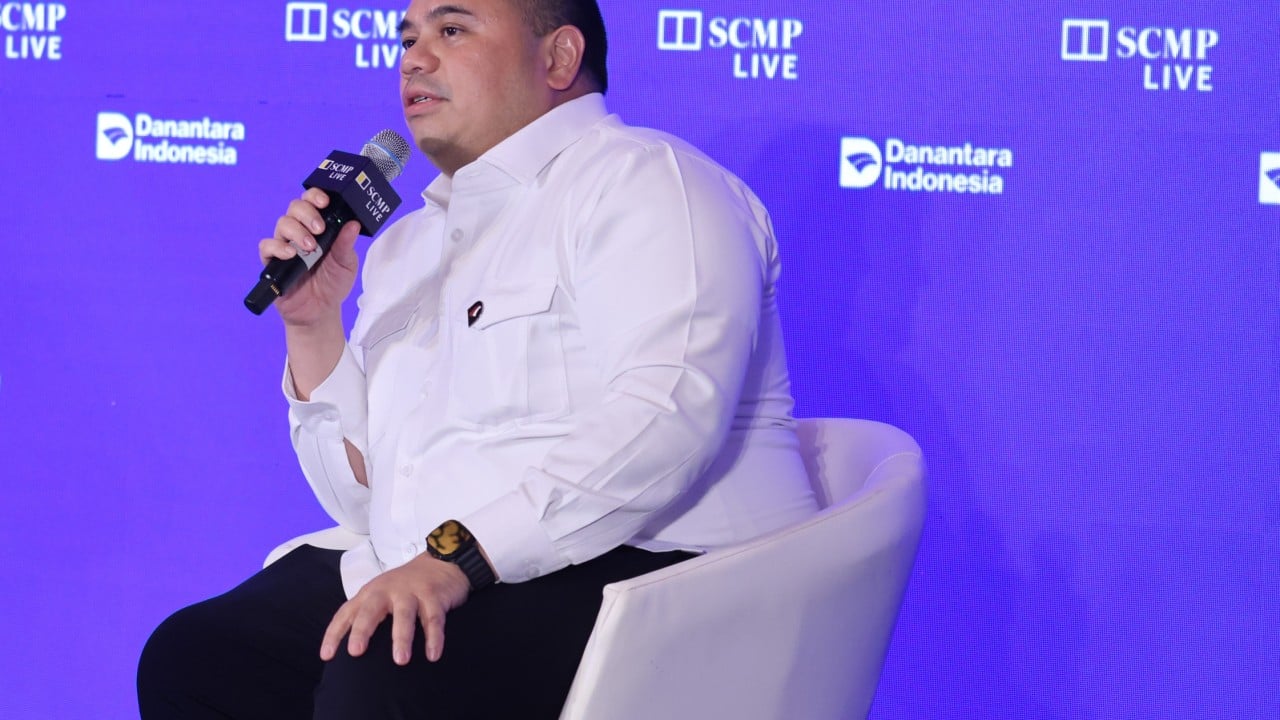
This institutional whiplash is exactly what Pandu Patria Sjahrir, Danantara’s Chief Investment Officer, is fighting against. Speaking at a recent industry roundtable in Jakarta, Sjahrir laid bare the foundational challenge of the institution: Danantara must "outlast" presidencies to prove its worth. To read more about the context of this, Business Insider provides an excellent summary.
It is a remarkably candid admission from a top economic official. It acknowledges a truth that global investors have whispered for decades: Indonesia’s potential has often been held hostage by its political calendar.
Consider the mathematics of the challenge. Earlier this year, Danantara’s publicly disclosed investment figure stood at approximately $14 billion. Today, that number sits closer to $12 billion. The cause of the dip wasn’t a bad bet or a failed project; it was the brutal, unyielding movement of the rupiah exchange rate against a dominant US dollar. When your balance sheet can be swung by billions simply because of global currency fluctuations, you cannot play a short-term game.
Danantara is currently executing a massive corporate diet, aiming to slash the number of state-owned entities from over 1,000 down to fewer than 300. The goal is efficiency, streamlining, and eliminating the bureaucratic bloat that makes state companies slow to react. But cutting hundreds of legacy entities means stepping on toes. It means dismantling fiefdoms that have existed for decades.
To survive the inevitable political pushback, a sovereign wealth fund needs more than just a mandate from the current palace occupant. It needs deep institutional roots. It needs to become so vital to the economic fabric of the country that no future administration would dare dismantle it.
The strategy to achieve this permanence relies on building tangible, undeniable infrastructure. You can argue with a policy paper, but you cannot argue with a power grid. Danantara is aggressively backing downstream industrialization—moving Indonesia away from merely exporting raw dirt and nickel, and toward processing high-value materials domestically. Ground has already been broken on a $166 million waste-to-energy plant in Bali, alongside a sprawling plan to develop 26 downstream projects worth billions.
If these factories open, if they create the projected 38,000 jobs, and if they fundamentally alter the economic trajectory of regional communities, Danantara wins a layer of protection that no politician can easily strip away. The fund's survival strategy is to become too useful to fail.
But the real test will come when the political guard changes. When a future leader looks at Danantara's massive pool of capital and resists the urge to raid it for short-term populist projects, only then will the institution truly have outlasted a presidency.
The ambition is grand: to emulate the sovereign wealth models of Singapore or Dubai, creating a financial ecosystem where global investors feel safe parking billions for the long haul. Yet, the ghost of corporate history looms large in Southeast Asia, where state-directed funds have occasionally transformed into political piggy banks. Sjahrir’s push for governance reforms—including trimming boards to ensure members have true skin in the game—is an attempt to build a firewall against that history.
Ultimately, the success of this multi-billion-dollar experiment won’t be measured by the closing price of the rupiah tomorrow, or by the glamour of a new financial hub in Bali. It will be measured twenty years from now, when Sri’s children enter the workforce, taking for granted an economic stability that was built by an institution brave enough to look past the next election.
The machinery has been set in motion. The first financial reports are being scrutinized. The factories are being built. Now, a $12 billion institution waits to see if it has the stamina to survive the one thing that changes faster than the markets: the human desire for political power.