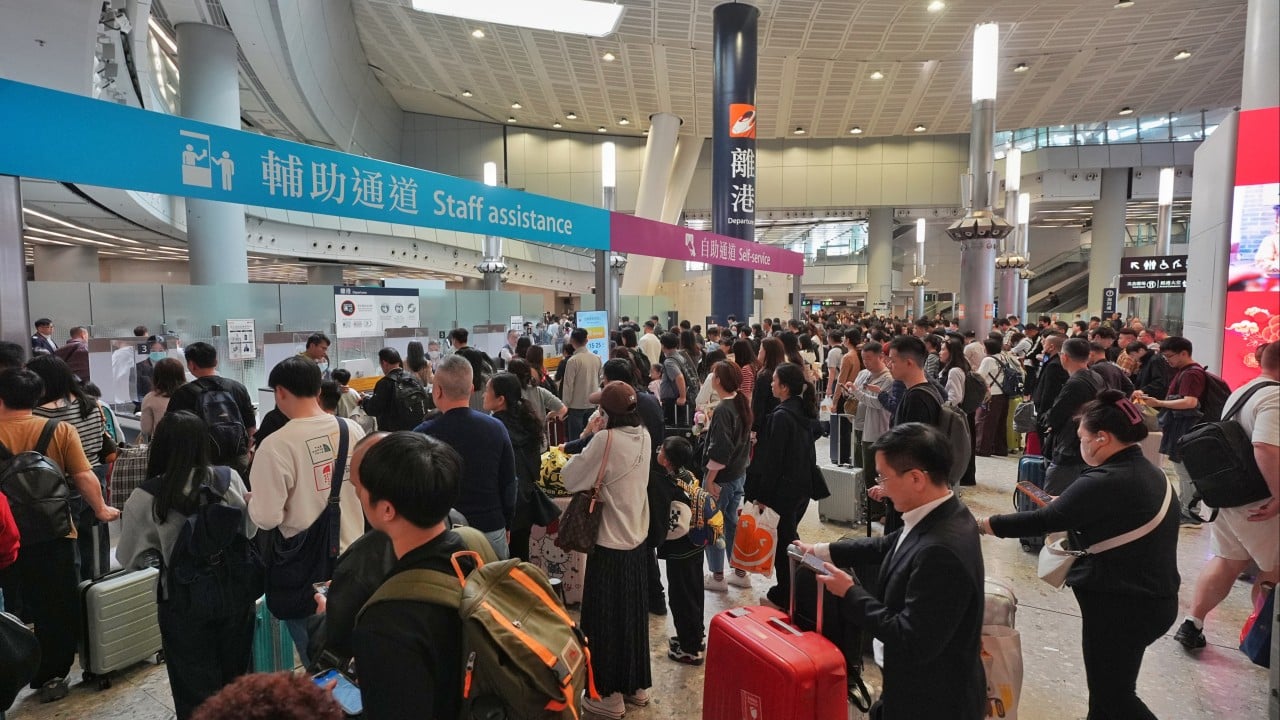
Celebratory headlines love a big, shiny number. When transit authorities proudly announce that Hong Kong's Express Rail Link racked up over 16 million passenger trips in six months, the public nods along. The narrative writes itself: infrastructure works, integration is flourishing, and high-speed rail is an undisputed triumph.
They are looking at the wrong metric.
Raw passenger volume is the easiest metric to inflate and the most deceptive way to measure transit vitality. A million people riding a train means nothing if the underlying financial model bleeds cash, displaces superior regional transport options, and relies on suppressed cross-border friction to justify its existence.
Hong Kong's high-speed link did not solve a transport crisis. It created an expensive showcase for a connectivity problem that was already being handled cheaper, faster, and more flexibly by existing infrastructure.
The Volume Illusion
Measuring the health of a mega-project by ridership alone is like measuring a tech startup's success by registered users while ignoring cash burn.
Rail infrastructure carries immense capital expenditure and brutal maintenance costs. When civil engineering teams blast through dense urban rock to build West Kowloon Station—one of the largest underground high-speed rail terminals on the planet—the yield baseline changes. You are no longer competing with standard commuting costs; you are competing with the debt service on tens of billions of dollars.
Here is what the headline numbers leave out:
- Yield per kilometer vs. maintenance debt: High-speed tracks wear down exponentially faster than conventional lines. Moving 16 million passengers at subsidized or price-capped ticket rates generates photo opportunities, not sustainable asset replacement funds.
- The displacement effect: A massive chunk of those 16 million riders were not "created" by the high-speed rail. They were poached from existing cross-border routes, like the East Rail Line through Lok Ma Chau and Lo Wu, or standard regional bus networks. Shifting a commuter from a cheap, self-sustaining train to a heavily subsidized high-speed train is a loss, not a gain.
- The short-haul mismatch: High-speed rail excels across distances between 300 and 800 kilometers—the sweet spot where train travel beats airport security overhead. For short hops between Hong Kong and Shenzhen, high-speed rail is an over-engineered solution. By the time a passenger clears immigration, navigates the subterranean caverns of West Kowloon, and waits for a fixed departure window, the time saved on the tracks is completely eaten up on the platform.
I have spent years analyzing transit economics and watching municipal governments sink fortunes into vanity lines. The pattern never changes: build the most expensive tech possible, price the tickets to avoid public outrage, and then point at crowded platforms to claim victory while the balance sheet quietly rots.
The True Cost of Point-to-Point Obsession
Urban planners fall into a predictable trap. They treat high-speed rail as a magic wand for economic integration, assuming that direct physical tracks automatically yield economic activity.
They forget how actual human movement works in dense metro regions.
High-speed rail forces a rigid hub-and-spoke model onto a region that thrives on decentralized network flow. If you live in West Kowloon and want to go directly to Futian, the rail link is fantastic. But if your origin or destination lies outside those precise station footprints, the system breaks down.
Compare the high-speed experience to the traditional regional network:
| Feature | Express Rail Link (HSR) | Traditional Cross-Border Transit (MTR/Bus) |
|---|---|---|
| Frequency | Fixed timetable, reserved seating | Turn up and go, high frequency |
| Flexibility | High penalty for missed trains | Zero penalty, catch the next car in 3 minutes |
| First/Last Mile | Centralized, high-density bottlenecks | Distributed across multiple border points |
| Capital Intensity | Extreme debt load per kilometer | Modest maintenance costs on existing rights-of-way |
When you force cross-border traffic through a single, massive high-speed funnel, you create artificial congestion at the nodes. You trade flexible, high-frequency regional movement for rigid, scheduled travel.
That is not modern transit design. That is 20th-century prestige engineering wrapped in a sleek aerodynamic shell.
The "People Also Ask" Flaws
Let's dismantle the standard questions people ask when defending these mega-projects.
"Doesn't high-speed rail cut travel time significantly?"
Only in a marketing brochure. Real travel time includes door-to-door transit, security checks, ticket retrieval, border clearance, and platform waiting time.
If a train takes 14 minutes to travel between stations, but the station architecture requires 35 minutes of walking, queuing, and border control on either end, your actual travel time is nearly an hour. A commuter taking a local MTR connection to a standard land crossing often achieves the same total travel time with far greater flexibility and a fraction of the ticket price.
"Isn't high-speed rail better for the environment than other transit?"
On paper, electrified rail is cleaner than private cars or short flights. In practice, the carbon footprint embedded in the construction of massive underground stations, deep tunneling, and high-tensile steel manufacturing takes decades of full-capacity operations to offset.
Building redundant high-speed lines right next to operational, high-capacity commuter rail is an environmental debt, not an eco-friendly win.
"Won't ridership growth eventually make the system profitable?"
No. High-speed passenger rail globally is almost never profitable strictly from farebox recovery. The few lines on earth that turn a real profit—like the Tokaido Shinkansen between Tokyo and Osaka—operate between massive population centers with zero competing ground transit alternatives of equal scale and continuous, massive business-class demand willing to pay premium prices.
Subsidizing ticket prices to artificially inflate passenger volume ensures the system stays in the red forever while masking the true cost of operation from the public.
The Uncomfortable Realities
Every transit model involves tradeoffs. It is fair to acknowledge where the contrarian argument faces its own limits.
If your goal is pure political symbolism and visible regional cohesion, an iconic high-speed terminal works better than a dozen unglamorous bus routes. It projects authority, modern infrastructure, and momentum. Furthermore, for long-haul travel deeper into mainland China—far beyond Shenzhen and Guangzhou—the high-speed network provides genuine utility by replacing domestic air travel.
But using deep long-haul utility to justify short-haul commute metrics is intellectual dishonesty.
16 million passengers over six months looks impressive on a press release. It satisfies bureaucrats who need to justify multi-billion-dollar outlays. But as a masterclass in efficient, cost-effective urban transport? It is a cautionary tale disguised as a triumph.
Stop counting heads at the turnstile. Start auditing the balance sheet.