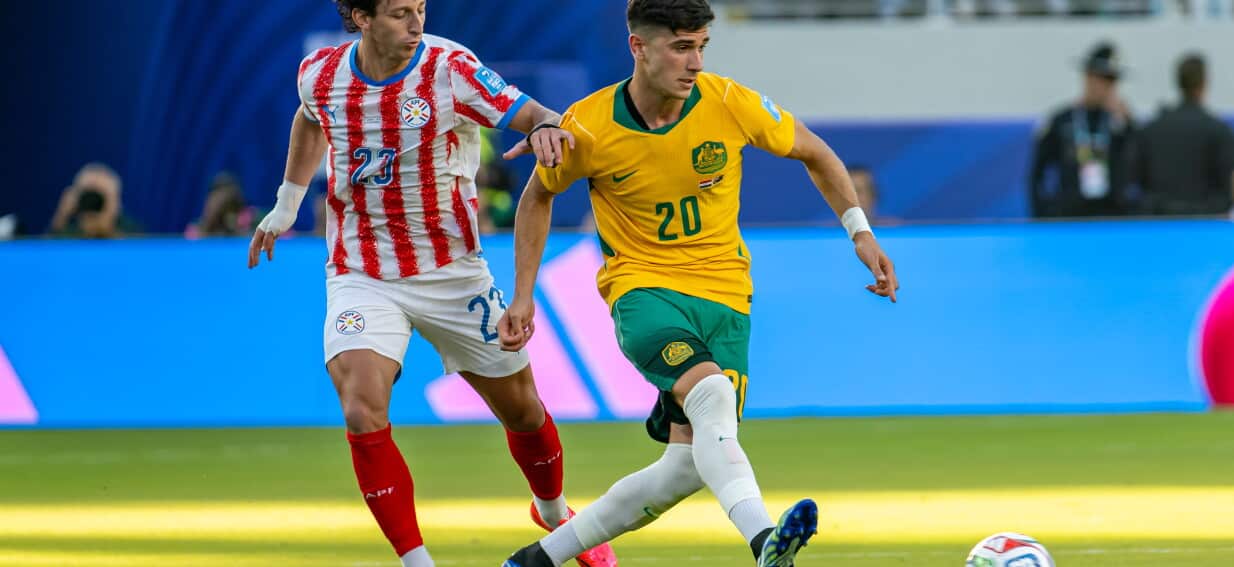
The collective elite media is currently mourning the death of football. Walk through the sports pages today and you will see the same lazy, regurgitated narrative: the 2026 World Cup group stage was a bloated, unwatchable mess that diluted the prestige of the world's greatest tournament. They are weeping for the old 32-team format like it was a sacred, flawless text.
They are entirely wrong. For an alternative view, read: this related article.
The traditionalists missed the real story of the last few weeks because they were too busy counting the matches and complaining about air travel. The expansion to 48 teams didn't ruin the group stage. It exposed the tactical stagnation of Europe's top heavyweights and gave the sport the chaotic, hyper-competitive jolt it desperately needed.
What we just witnessed wasn't a dilution of quality. It was a redistribution of power. Further insight on the subject has been published by Bleacher Report.
The Myth of the Bloated Group Stage
The loudest complaint leading into this tournament was that adding 16 teams would create a tier of unwatchable, blowout matches. The consensus predicted a endless parade of 6-0 drubbings where global powerhouses walked all over minnows who didn't belong on the pitch.
The data just obliterated that assumption.
In the old 32-team system, top-tier nations frequently treated the group stage as an extended, low-intensity warm-up. They could afford a slip-up, rotate their entire squad by matchday three, and coast into the knockout rounds on autopilot. The tactical blueprint was safe, predictable, and frankly, boring.
By opening the door to more nations, FIFA accidentally created a completely different tactical ecosystem. Teams that historically parked the bus for 90 minutes to secure a "respectable" 1-0 loss came into this group stage realizing that goal difference and third-place mathematical formulas meant every single minute mattered. They didn't just sit back; they pressed. They counter-attacked with ferocity.
We saw tactical flexibility from CAF and AFC nations that completely paralyzed UEFA midfields. The gaps have closed. The "low quality" teams the media warned you about brought more intensity and structural discipline than the bloated, fatigued squads of Western Europe's multi-millionaire superstars.
Your Favorite European Giants Are Boring
Let’s be brutally honest about what actually lowers the quality of a football match. It isn't a lack of name recognition; it is a lack of ambition.
For the past decade, elite European international football has devolved into a tedious exercise in possession obsession. The goal is often not to score, but to avoid losing the ball. It is risk-averse, hyper-sanitized, and miserable to watch.
The newly expanded group stage blew that entire paradigm apart. When you inject teams that play with genuine desperation into a tournament, it forces the giants out of their comfort zones. Look at how the traditional powerhouses struggled when they couldn't just pass the ball sideways between their center-backs for twenty minutes. They looked slow. They looked entitled.
I have spent years analyzing tournament structures and team metrics. The sharpest minds in analytics know that tension, not sheer technical perfection, is what drives compelling football. The new format injected raw, unscripted tension into groups that used to be a foregone conclusion by the second matchday.
The Math Behind the Madness
The skeptics pointed to the 12 groups of four as a logistical nightmare. They claimed fans wouldn't be able to keep track of who was advancing.
"It's too complicated for the casual viewer."
This argument insults the intelligence of the modern sports fan. Audiences track complex fantasy sports algorithms and betting lines every single weekend. They can handle a third-place wild card tracker.
More importantly, the math created a beautiful desperation. Under the old format, if a team lost their first two games, their third game was a dead rubber—a useless, depressing exercise for the reserve squad. In 2026, almost every single final group stage match had massive, tournament-altering stakes. A single goal in the 89th minute of a concurrent match three thousand miles away could shift three different teams in the standings.
That isn't dilution. That is high-stakes drama that the old format physically could not generate.
The Real Cost of Elitism
The pushback against the 48-team field isn't actually about footballing quality. It is about gatekeeping.
European club football has spent the last twenty years consolidating wealth and talent into a tiny handful of cities. The Champions League has become an exclusive club where the same eight teams pass the trophy around. The critics wanted the World Cup to mirror that exact same elitism. They wanted a closed shop where only the established aristocracy got to play.
Exposing the world to more football cultures forces the entire sport to evolve. It forces South American and European giants to adapt to different pressing triggers, different physical profiles, and different psychological approaches to the game.
Yes, the travel schedule across three massive nations was brutal on the players. Yes, FIFA’s logistical execution is always open to valid criticism. But do not confuse logistical friction with a flawed sporting concept. The product on the pitch proved that the world has caught up to the traditional elite.
Stop whining about the good old days of the 32-team snoozefest. The group stage didn't destroy the World Cup. It finally turned it into a truly global tournament, and the comfortable elites are terrified because they no longer own the monopoly on winning.
Pack your bags, analyze the data, and get ready for the knockouts. The era of predictable football is officially dead.