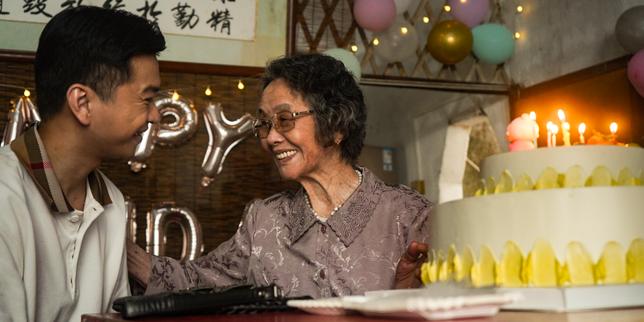
There is a specific kind of quiet that settles over a suburban kitchen at two in the morning. The dishwasher has finished its cycle, humming its final, damp note. The kids are finally asleep, breathing in that heavy, untroubled rhythm unique to the young. And at the kitchen table, illuminated only by the cold blue glow of a refrigerator door left slightly ajar, sits a woman who has spent the last eighteen hours keeping everyone else afloat.
She is tired. Not the kind of tired that a good night's sleep cures, but a bone-deep exhaustion born of decades spent managing expectations, folding endless loads of laundry, and keeping the peace in a household that runs on emotional triage.
For most of her life, Leanne Morgan was that woman.
We are often told that ambition is a young person's game. We romanticize the twenty-something visionary sleeping under their desk in Silicon Valley, the prodigy composer writing symphonies before their voice has fully broken, the starlet who is famous by nineteen and broken by twenty-five. Society loves an early riser. We applaud the hustle that starts at dawn and peaks before thirty.
But what happens to the person who takes the scenic route? What happens when the talent is real, the voice is singular, but the timing is completely, stubbornly wrong?
For nearly thirty years, Leanne Morgan was a homemaker in rural Tennessee. She sold jewelry door-to-door. She hosted Tupperware parties. She raised three children and supported her husband through the unpredictable grinding gears of the business world. And all the while, she carried a secret cargo: an extraordinary, razor-sharp comedic mind that had nowhere to go.
Comedy, as an industry, is notoriously unforgiving. It is a grueling marathon of smoke-filled rooms, drunk hecklers, and endless drives down dark, lonely highways for fifty bucks and a basket of lukewarm wings. It is not designed for a mother of three driving a minivan with a broken air conditioner. The math simply does not work. You cannot drop everything for an open mic at midnight when someone has a dentist appointment at eight the next morning.
So she waited. Not patiently, perhaps. Not gracefully, certainly. But she waited.
Consider what it means to hold onto a dream while your physical reality pulls you in a thousand different directions. Every day offered a hundred small distractions, a thousand valid reasons to let go. The laundry piled up. The meals needed cooking. The expectations of southern womanhood whispered sweet, suffocating lies about staying in your lane, being quiet, being polite, and keeping your opinions to yourself.
Instead, she observed.
She watched the way women navigated the absurdities of marriage, motherhood, aging, and southern culture. She saw the quiet humor in casseroles brought to funerals, the silent warfare of church potlucks, and the terrifying reality of changing bodies as the decades rolled on. When she finally stepped onto a stage—often performing for groups of women who recognized their own chaotic lives reflected in her bright blonde hair and infectious Tennessee drawl—she wasn't trying to invent a persona. She was just telling the truth.
The industry missed her for a long time because the industry was looking in all the wrong places. Hollywood loves a young archetype. It loves a neat narrative box. For decades, executives looked at a middle-aged southern mother and saw a demographic dead end. Who wants to hear about hot flashes and husband-training from a woman in sensible shoes?
As it turns out, millions of people do.
When the cultural shift finally came, it didn't arrive via a traditional studio development meeting. It arrived through the democratization of the internet. Short clips of her stand-up began circulating on social media, passed from phone to phone among women who felt entirely unseen by mainstream entertainment. It was a digital underground railroad of laughter. Mothers texting clips to daughters. Sisters sharing videos across state lines. A collective roar of recognition disguised as a punchline.
By the time her Netflix special, I'm Every Woman, dropped, it wasn't just a comedy release. It was a cultural coronation.
At sixty years old, an age when Hollywood typically casts women either as weeping matriarchs or silent background props, Leanne Morgan became a breakout star. She sold out theaters across the country. She booked major film and television roles. She proved that charisma has no expiration date and that timing, while frustratingly slow, can eventually arrive with the force of a tidal wave.
There is a profound lesson hidden in her trajectory, and it has very little to do with comedy.
We live in an era of intense, suffocating urgency. People in their twenties panic because they haven't disrupted an industry yet. People in their thirties mourn lost potential. We treat life like a race with a strict cutoff time, terrified that if we haven't reached the summit by a certain marker, we have somehow failed.
Leanne Morgan’s story shatters that anxiety.
Sometimes, the delay isn't a denial. Sometimes, the long detour through ordinary life is the exact thing that gives you something worth saying. If she had broken through at twenty-five, she would have been a standard-issue comic talking about dating and roommates. At sixty, with decades of marriage, child-rearing, heartbreak, and resilience baked into her bones, she had weight. She had perspective. She had the kind of authenticity that cannot be manufactured in a writer's room.
The spotlight found her when her skin had lines and her perspective was fully formed.
Think about the projects you have abandoned because you felt you were too old, too busy, or too far behind. Think about the voice you have kept quiet because the world told you your season had passed.
The kitchen is quiet again. The dishwasher has stopped its hum. Somewhere in the dark, a woman is sitting at a table, wondering if it is too late to start.
It is never too late. The stage is still there. The audience is waiting. And sometimes, the best part of the show doesn't even begin until the second act.