A standard machine learning algorithm processing an audio signal can achieve up to 90% accuracy when identifying an infant cry caused by acute physical pain, such as a vaccination needle. Yet, when tasked with distinguishing between an infant who is slightly hungry, mildly fatigued, or experiencing minor abdominal gas, that same algorithm’s predictive power frequently degrades to a level indistinguishable from random chance. This performance asymmetric highlights the core friction in the emerging market for infant vocalization analysis: the wide gap between high-amplitude physiological distress and low-amplitude behavioral nuance.
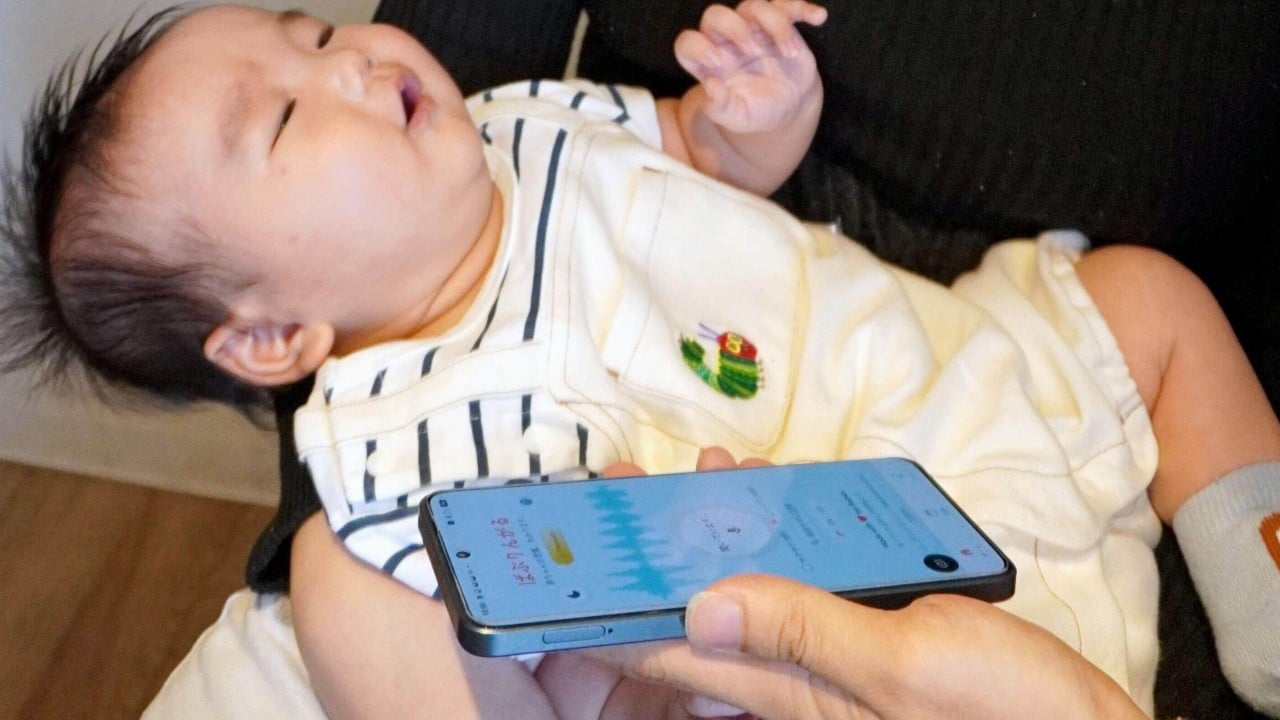
The consumer market for parenting applications has shifted from passive logging mechanisms toward predictive diagnostics. In Japan, products like Babylingual, Awababy, and CryAnalyzer are entering municipal healthcare infrastructure, distributed by local governments in regions like Mishima and Oyama to mitigate parental anxiety in isolated nuclear families. To evaluate the utility of these systems, one must strip away the marketing promises of infant translation and examine the precise acoustic engineering, statistical boundaries, and clinical utility of automated cry analysis.
The Tripartite Acoustic Framework of Infant Vocalization
An infant cry is not a singular data point; it is a complex, time-varying acoustic signal driven by the interaction of the respiratory system, the vocal cords, and the central nervous system. Cry translation algorithms attempt to map these physical outputs to internal emotional or physiological states by extracting features across three primary acoustic dimensions.
Spectral Architecture (Pitch and Frequency Distribution)
The fundamental frequency ($F_0$), commonly referred to as pitch, serves as the baseline variable. A healthy infant cry typically exhibits a fundamental frequency between $400\text{ Hz}$ and $600\text{ Hz}$. When an infant experiences high-intensity distress, such as acute pain, autonomic nervous system arousal increases subglottic pressure and vocal cord tension. This physiological shift elevates $F_0$ well above $600\text{ Hz}$, sometimes introducing hyperphonation or chaotic noise components (bifurcation). Algorithms capture these shifts using Mel-Frequency Cepstral Coefficients (MFCCs) to isolate the mathematical shape of the vocal tract.Temporal Dynamics (Envelope and Rhythm)
The macro-structure of a crying episode provides critical diagnostic data. A standard distress signal consists of four distinct phases: the expiratory cry vocalization, a brief resting expiratory pause, an inspiratory phase (the intake of breath), and an inspiratory pause. Pain-induced cries are characterized by an instantaneous onset with zero latency, an elongated initial expiratory phase, and extended periods of apnea (silence) between cycles. Conversely, fatigue- or hunger-driven vocalizations demonstrate a gradual crescendo, lower initial energy variance, and highly predictable, rhythmic cycle lengths.Energy and Intensity Profile (Amplitude Modulation)
The root-mean-square (RMS) energy quantifies the volume and power of the audio signal over time. Rapid, jagged fluctuations in amplitude point to unstable respiratory drive, frequently correlated with physiological discomfort like gastric pressure or localized physical irritation. Steady, sustained energy plateaus are more typical of behavioral demands for proximity or environmental stimulation.
The Disconnect Between Signal Training and Real-World Inference
The commercial viability of apps like Awababy—trained on over 140,000 recorded data points—rests on the assumption that a massive training dataset inherently yields high predictive accuracy during real-world inference. This assumption overlooks a fundamental bottleneck in machine learning: validation bias.
To train an algorithm to recognize a specific state, developers require a labeled dataset where the ground truth is verified. Procuring verified audio data for severe distress is straightforward; researchers can record infants during routine clinical procedures like vaccinations or ear piercings. Because the cause-and-effect loop is locked, the algorithm easily learns the acoustic signature of high-amplitude pain, explaining the 90% accuracy rates achieved by academic benchmarks like the UCLA ChatterBaby project.
The mechanism breaks down completely when classifying ambiguous emotional states. When an infant cries at 2:00 AM, the ground truth is rarely binary. A parent may log that the baby was "hungry" because they accepted a feeding, but the underlying trigger could have been a desire for comfort, an environmental temperature drop, or a minor sleep cycle disruption.
[Infant Distress Signal] ---> [Acoustic Feature Extraction (MFCC, F0, RMS)]
                                       |
                                       v
                    +------------------------------------+
                    |  Classification Rigidity Dilemma   |
                    +------------------------------------+
                    /                                    \
                   v                                      v
     [High-Amplitude Pain/Trauma]             [Low-Amplitude Ambient State]
     - Deterministic physiological link        - Stochastic behavioral cues
     - Explicit ground truth (e.g., vaccine)   - Ambiguous parental labeling
     - Algorithm Performance: >90% Accuracy   - Algorithm Performance: ~Chance
Because training libraries for these applications rely on subjective, parent-labeled data for everyday scenarios, the baseline inputs are inherently noisy. A 2023 study published in Communications Psychology confirmed this limitation, demonstrating that neither advanced machine learning models nor experienced adult caregivers can reliably differentiate between hunger, boredom, or mild discomfort purely from audio cues when the signal lacks high-intensity pain characteristics.
Systemic Risks and the Placebo Effect of Diagnostic Dashboards
The integration of cry-translation software into municipal public health initiatives in Japan is frequently positioned as a preventative measure against postpartum depression. While providing a structured dashboard can reduce the cognitive load on a sleep-deprived parent by transforming an ambiguous auditory assault into a structured problem-solving task, this framework introduces three distinct operational risks.
The first limitation is the risk of confirmation bias and behavioral lock-in. If an application returns a high-probability diagnosis of "hunger," a parent may repeatedly attempt to feed an overstimulated or overtired infant. This introduces an artificial feedback loop: the infant may ingest milk for comfort, experience subsequent digestive discomfort, cry again, and prompt the parent to run another analysis that suggests more feeding. The algorithm does not see the holistic environment; it only processes the audio sample in isolation.
The second bottleneck is hardware inconsistency. Consumer smartphones vary wildly in microphone quality, frequency response curves, and analog-to-digital conversion algorithms. A low-cost smartphone may attenuate higher frequencies or introduce digital distortion, inadvertently shifting a baseline $450\text{ Hz}$ pitch into a spectral profile that the application misinterprets as a high-urgency emotional state.
Finally, the reliance on automated diagnostics introduces an instinctive decoupling. Infant-caregiver bonding is fundamentally built on a dynamic, iterative feedback system where the caregiver reads a matrix of multi-sensory inputs—rooting reflexes, closed fists, skin temperature, and wake-window timelines. Relying on an isolated audio translation app strips away this vital contextual data, replacing nuanced behavioral observation with a flattened probabilistic percentage on a screen.
Strategic Operational Protocol for Caregivers and Technologists
For developers looking to advance the field and caregivers attempting to deploy these tools safely, cry translation must be treated as a secondary telemetry stream, never a primary diagnostic engine.
Developers must move away from isolated audio classification. To achieve true predictive utility, models must implement multimodal sensor fusion. An optimal system integrates three distinct data vectors:
- The Acoustic Signal: Real-time extraction of MFCCs and fundamental frequency trends.
- The Longitudinal Ledger: A deterministic tracking system recording the precise time elapsed since the last verified physiological event (feeding volume, sleep duration, diaper change).
- Biometric Telemetry: Wearable or optical tracking of infant body temperature, heart rate variability, and physical movement velocity.
If an audio clip registers a generic, ambiguous distress pattern but the longitudinal ledger indicates that 3.5 hours have elapsed since a full feeding cycle, the system should structurally weight hunger as the primary driver. If the ledger shows a feeding occurred 30 minutes prior, the system should dynamically down-weight hunger and prompt the user to check for gas or overstimulation, regardless of the audio pattern's similarity to a generic hunger model.
For parents utilizing existing software like Babylingual or Awababy, the output must be treated as a hypothesis generator rather than an absolute truth. If the application indicates a 75% probability of fatigue, that metric should simply serve as an entry point into a standardized physical validation checklist. The diagnostic dashboard is not a translator; it is an analytical guardrail designed to prevent decision paralysis during periods of extreme cognitive fatigue.