The internet loves a sob story about a fallen star.
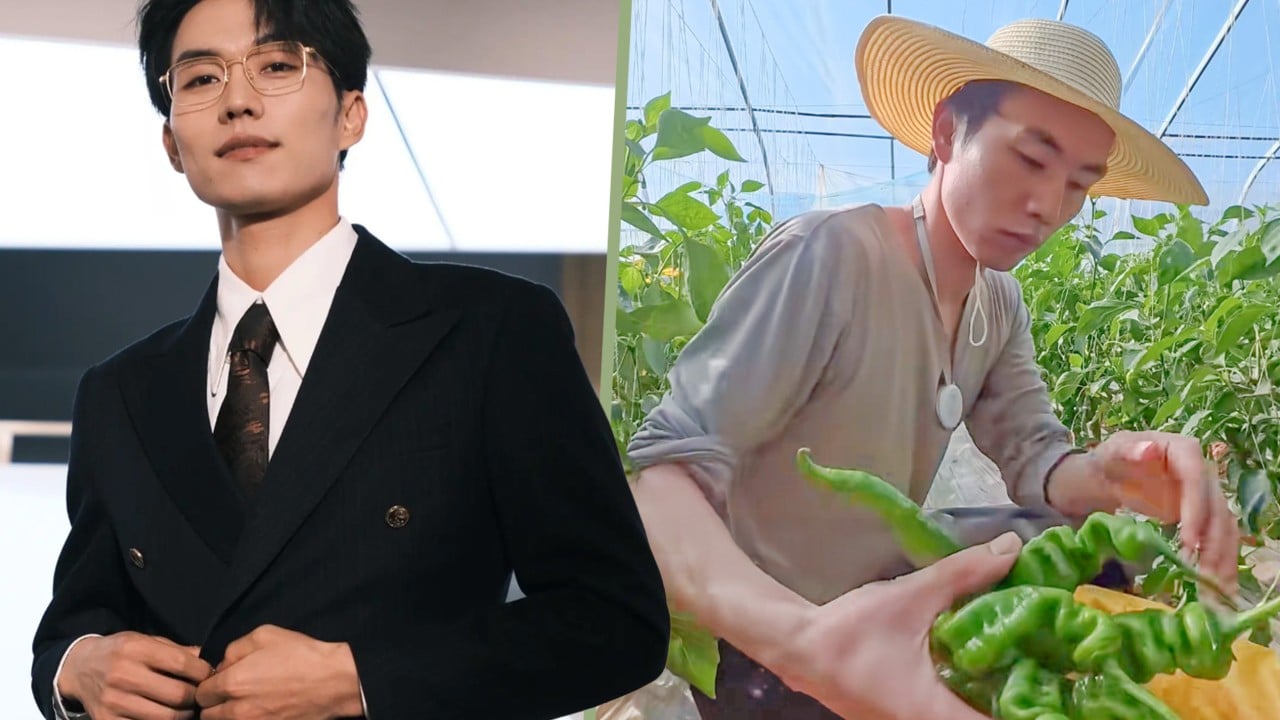
When news broke that a prominent Chinese short drama actor—a man who once commanded millions of views—was returning to his family farm because "AI replaced him," the digital world wept. They saw it as a cautionary tale. A sign of the looming machine apocalypse. A tragedy of the creative class.
They are wrong.
This isn’t a story about the unstoppable march of technology. It is a story about the collapse of a low-effort gold rush and the sudden, violent demand for actual talent. If you are an actor losing your job to a digital avatar in 2026, the problem isn't the software. The problem is that your performance was so mechanical that a few lines of code did it better for a fraction of the cost.
The Myth of the AI Victim
Let's strip away the sentimentality. The short drama industry in China (and its burgeoning Western counterparts) was built on a foundation of "disposable content." We are talking about 90-second episodes, cliffhangers every 15 seconds, and acting so ham-fisted it makes soap operas look like Shakespeare.
The industry didn't need actors; it needed warm bodies to fill frames.
Now, companies are switching to AI-generated leads and deepfake dubbing for international exports. The "victim" in this narrative didn't lose his job because AI is a genius. He lost his job because he was a commodity in a market that just figured out how to manufacture that commodity cheaper.
If your value proposition is "I can look handsome and act surprised on cue," you aren't an artist. You're a data point. And data points are easy to replicate.
Why the "Return to Farming" is a PR Stunt
The "return to the simple life" is the oldest trope in the celebrity playbook. It frames failure as a philosophical choice. It suggests that the industry grew too cold and "artificial" for their pure, salt-of-the-earth soul.
Nonsense.
Farming is hard. It is a business with razor-thin margins, grueling labor, and massive risk. Most of these "displaced" actors aren't tilling soil because they love the land; they are doing it because the Short Drama Bubble popped. The venture capital dried up. The platforms changed their algorithms to favor higher production values.
They didn't get "AI-ed" out of a career. They got "quality-ed" out of a hustle.
The Brutal Logic of the Digital Double
The math is simple. A human actor requires a trailer, catering, hair and makeup, 12-hour turnarounds, and occasionally, they have "creative differences."
An AI model requires a server rack.
In the high-volume, low-margin world of vertical dramas, the human element is a bug, not a feature. If you are producing 50 episodes a week to keep a mindless audience scrolling, you don't want "nuance." You want consistency.
- Cost of Human Talent: $5,000 - $50,000 per series (plus residuals/points).
- Cost of AI Synthesis: Electricity and a subscription fee.
When the output is essentially digital junk food, why pay for a Michelin star chef to flip the burgers?
The Skill Gap Nobody Wants to Talk About
The "AI is stealing jobs" crowd ignores the most uncomfortable truth in entertainment: We have an oversupply of mediocre talent.
For a decade, social media platforms convinced everyone that "content creation" was a replacement for "craft." You didn't need to study Meisner or Stanislavski; you just needed a ring light and a trendy filter. This created a generation of performers who are essentially human presets.
When a generative model can replicate your entire emotional range after "watching" thirty seconds of your footage, you haven't been robbed. You've been audited. The audit found that you weren't adding enough unique value to justify your paycheck.
The Efficiency Trap
The industry isn't shrinking; it's optimizing.
The actors who are thriving right now aren't the ones complaining about AI in WeChat groups. They are the ones using AI to clone their own voices so they can "film" three dramas at once. They are the ones treating AI as a high-speed prosthetic for their own creativity.
The "farming" actor represents the group that refused to evolve. They saw the tech coming and waited for the world to apologize to them. The world didn't apologize. It just found a more efficient way to generate 9:16 video files.
Stop Asking if AI is "Good Enough"
People ask: "But can AI really capture the soul of a human performance?"
That is the wrong question.
The right question is: "Does the person watching a drama on their lunch break while eating noodles care?"
The answer is a resounding no. For the vast majority of "snackable" entertainment, "good enough" is the gold standard. AI has already cleared that bar. If your career relies on the audience caring about your "soul" while they’re distracted by a push notification, you are already unemployed. You just haven't realized it yet.
The New Hierarchy of Talent
If you want to survive the next five years in entertainment, you have to lean into the things that machines suck at:
- Extreme Physicality: Stunt work and physical comedy that requires a physical presence in a physical space.
- Unpredictable Charisma: That "it" factor that makes people want to follow a specific human, not just a character.
- High-Level Strategy: Becoming the person who prompts the machine, rather than the person the machine is mimicking.
The middle ground is dead. The "pretty good" actor is a ghost.
The Great Culling is Necessary
Every industry goes through this. The Luddites smashed power looms. The carriage makers cursed the Model T. The film projectionists fought the digital transition.
In every case, the "loss of jobs" was actually a shift in gravity. We don't have fewer stories today than we did 50 years ago; we have millions more. We just don't need a human to hold the boom pole or stand in a specific spot for eight hours to tell them.
The exit of these actors into the agricultural sector isn't a tragedy. It’s a market correction. It clears the field for people who actually have something to say, rather than people who just want to be seen.
Your Career Isn't a Right
The sense of entitlement in the creative arts is staggering. There is no law that says the world owes you a living because you decided to be an actor. If a tool comes along that does your job better, faster, and cheaper, you don't get to demand that the tool be banned. You either master the tool or you move out of the way.
The "victim" in this story is now growing vegetables. Good. Maybe in the quiet of the fields, he'll realize that he wasn't replaced by an algorithm.
He was replaced by his own refusal to be irreplaceable.
Stop mourning the "star" who went back to the farm. Start wondering why you thought a human being was the best way to deliver garbage content in the first place. The era of the human commodity is over.
Pick up a shovel or pick up the software. There is no third option.


