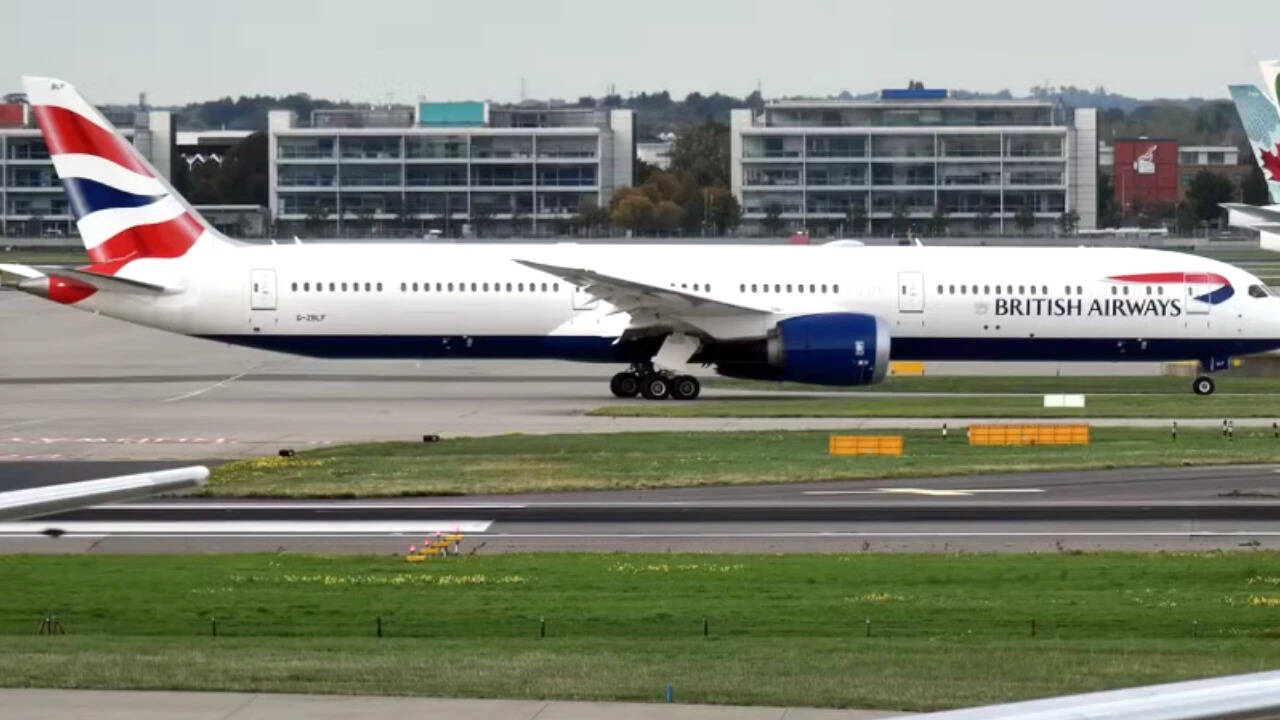
When an aviation hub enters a systemic ground stop, waiting at the terminal frequently shifts from a minor inconvenience to an acute financial and operational loss. A four-hour rideshare becomes mathematically superior to waiting out a flight delay the exact moment the expected value of your delayed arrival—measured in lost productivity, missed commercial commitments, and physiological degradation—exceeds the marginal fare of ground transport. Most stranded passengers make this decision emotionally, anchored to the sunk cost of an already purchased airline ticket. Optimal transit recovery requires stripping away sunk costs, modeling the true probability distribution of airline recovery times, and executing a rapid pivot before regional rideshare surge pricing locks in.
The Structural Anatomy of an Airport Ground Stop
Airlines and aviation regulators operate under strict safety and airspace capacity constraints that dictate how disruptions cascade. Understanding the operational mechanics of a delay allows a traveler to predict whether a hold will clear in forty minutes or collapse into a multi-day cancellation.
Ground Delay Programs Versus Full Ground Stops
Air traffic control (ATC) manages congestion and weather hazards through two primary mechanisms. A Ground Delay Program (GDP) throttles the arrival rate at a destination airport by holding aircraft at their departure gates with assigned Expect Departure Clearance Times (EDCT). Under a GDP, the system remains fluid; planes are moving, albeit slowly, and the probability of eventual departure remains high unless crew duty limits expire.
A full Ground Stop (GS) halts all departures destined for a specific airport or airspace sector. A GS is an emergency brake applied when severe convective weather, runway closures, or ATC staffing shortages drop arrival capacity to zero. While a GDP represents a quantifiable queue, a GS introduces a heavy-tailed probability distribution. You are no longer waiting in a moving line; you are waiting for an external environmental or systemic barrier to clear before the queue can even begin to reform.
The Cascading Failure of Crew Duty Limits and Aircraft Rotation
The primary reason passengers underestimate delay durations is a failure to account for secondary operational bottlenecks. Even after weather clears or ATC lifts a ground stop, an airline cannot instantaneously resume scheduled operations. Commercial aviation relies on tightly coupled networks where one aircraft and one crew fly four to six legs per day.
When a ground stop exceeds two hours, two secondary failure modes trigger:
- Aircraft Misallocation: The inbound plane scheduled for your outbound leg is stranded at an upstream spoke airport. Even if your local airspace opens, your metal is hundreds of miles away.
- Crew Timeout: Federal aviation regulations enforce strict maximum flight duty periods for pilots and flight attendants. A two-hour weather delay frequently pushes a crew past their legal duty window. Replacing a timed-out crew at a non-hub airport, or during a system-wide disruption at a major hub, often adds three to five hours to the delay—or forces an outright cancellation.
Airlines routinely issue "rolling delays," updating departure times in thirty-minute increments. This communication pattern is rarely malicious; it reflects dispatchers waiting for real-time ATC updates and crew legality recalculations. However, rolling delays trap passengers in a cognitive loop, keeping them tethered to the gate until all viable ground alternatives are exhausted.
The Opportunity Cost Function of Terminal Waiting
To determine when a 250-mile rideshare makes financial sense, you must construct an objective cost function. Comparing a $350 Uber fare against a "free" rebooking on your existing airline ticket is a flawed calculation. The true comparison is between the total cost of the ground pivot and the total expected cost of waiting.
The decision threshold can be expressed through a straightforward economic comparison:
$$C_{ground} + V(T_{ground}) < P_{cancel} \cdot C_{overnight} + V(E[T_{air}])$$
In this framework, $C_{ground}$ represents the direct out-of-pocket expense of the rideshare, minus any refund or flight credit recovered from canceling the unused flight segment. $V(T_{ground})$ is the value of your time during the predictable four-hour drive, which for a passenger working from the back seat of a sedan is often higher than the fragmented, high-stress environment of a crowded terminal.
On the air travel side, $E[T_{air}]$ is the expected total door-to-door time remaining if you stay at the airport, factoring in the high probability of rolling delays. $V(E[T_{air}])$ is the value of that lost time, amplified by nonlinear penalties such as a missed client pitch, a lost consulting day, or the inability to return home before a critical family obligation. Finally, $P_{cancel}$ represents the probability that the delay converts into an overnight cancellation, multiplied by $C_{overnight}$—the combined cost of a last-minute airport hotel, meals, and the next morning's transit.
Sunk Cost Fallacy and Ticket Refund Mechanics
Behavioral economics demonstrates that humans irrationally overweight prior expenditures when making forward-looking decisions. You have already paid $400 for your flight; spending another $350 on an Uber feels like paying $750 for a single trip.
In reality, the $400 is gone regardless of whether you sit at the gate or get into a car. Furthermore, under current aviation consumer protection rules in major jurisdictions, if an airline significantly delays or cancels your flight and you choose not to travel, you are entitled to a full cash refund for the unflown portion of your ticket—even on non-refundable basic economy fares. When you factor in a $150 to $250 refund for the abandoned flight segment, the net incremental cost of the four-hour rideshare drops dramatically.
Mapping the Four-Hour Rideshare Envelope
Geography dictates when ground transport can compete with commercial aviation. Over short-to-medium regional corridors—typically distances between 150 and 300 miles—commercial air travel holds a much narrower time advantage over driving than most travelers assume.
Consider a standard 220-mile corridor, such as New York to Boston, Chicago to Indianapolis, Dallas to Austin, or Los Angeles to Las Vegas. Under normal conditions, the actual flight time is roughly 60 to 75 minutes. However, total door-to-door transit time includes:
- Terminal Buffer: Arriving 90 minutes prior to departure for security and boarding.
- Taxi and Gate Operations: 30 to 45 minutes combined for pushback, tarmac queues, and deplaning.
- Destination Egress: 30 to 45 minutes to exit the destination airport and reach the final urban core.
A "one-hour flight" requires three and a half to four hours of total transit time under ideal conditions. A four-hour rideshare, operating door-to-door without security lines, boarding queues, or tarmac holds, is nearly time-neutral on a good day. The moment an airport ground stop adds a 90-minute delay to that flight, the rideshare becomes objectively faster.
The Liquidity Crisis of Regional Rideshare Supply
The primary operational risk of executing a long-distance rideshare pivot is supply elasticity. Airport rideshare queues are designed to absorb steady waves of arriving passengers taking 20-to-40-minute trips into the local metropolitan area. They are not built to supply dozens of drivers willing to undertake a four-hour, 250-mile out-of-region deadhead return trip.
When a major ground stop hits, hundreds of savvy travelers simultaneously reach the same conclusion. Within fifteen minutes of a widespread cancellation wave, two market failures occur on rideshare platforms:
- Dynamic Surge Multipliers: Algorithmic pricing responds to the sudden spike in demand and drop in local supply, pushing a standard $300 fare to $650 or higher.
- Driver Acceptance Collapse: Rideshare drivers frequently reject long-distance trips because platform algorithms rarely compensate them fully for the empty return drive across state or regional lines. A passenger may secure a quote on the app, only to watch the system spin endlessly without matching a driver.
Executing the Pivot Protocol
Waiting until an airline officially cancels your flight guarantees you will lose the race for ground transport. You must treat airport disruption management as a real-time arbitrage window, executing a strict sequence of actions while the majority of the terminal is still staring at the departure board.
Step 1: Audit Upstream Aircraft and Airspace Status
Do not rely on the airline's gate display or mobile app push notifications, which lag behind operational reality. Open a live flight-tracking tool and check the exact tail number assigned to your flight. If your inbound aircraft has not yet taken off from its previous city, add its remaining flight time plus a minimum 45-minute turn time to the current clock. Simultaneously, check national airspace status maps to see if your destination or departure hub is under an active Ground Stop versus a Ground Delay Program. If you see a full Ground Stop paired with an inbound plane still sitting on the ground elsewhere, your actual delay is almost certainly three hours or more.
Step 2: Lock In Ground Liquidity Before Canceling Air
Never cancel your airline ticket before securing a physical vehicle. Open both primary rideshare platforms immediately and request the trip to lock in the pricing algorithm before surge multipliers peak. If the app fails to match a driver within five minutes, pivot immediately to tier-two alternatives:
- One-Way Car Rentals: Walk or take the tram to the consolidated rental car facility while simultaneously booking a one-way reservation on your phone. Rental car inventories at airports deplete rapidly during ground stops, and walk-up counter rates will be punitive compared to app reservations made ten minutes earlier.
- Private Black Car Dispatch: Search for local corporate livery or airport town car services. Unlike gig-economy drivers, commercial chauffeurs are structured for long-distance interstate transfers, maintain commercial insurance, and will quote a flat rate without algorithmic surge volatility.
- Intercity Rail: In dense corridors like the Northeast United States, Western Europe, or Japan, high-speed or regional rail operates independently of airspace closures. Check seat availability immediately, as rail inventory sells out within minutes of an aviation hub shutdown.
Step 3: Manage the Airline Rebooking and Refund Workflow
Once you are physically seated in a moving vehicle or holding rental car keys, address your airline reservation. Do not stand in the terminal customer service line, which yields zero economic return and wastes critical transit time.
If your flight has already been officially delayed beyond the airline's threshold for a significant schedule change (typically two to three hours for domestic flights, depending on carrier policy) or canceled outright, use the airline's app or website to cancel the itinerary and request a refund to your original form of payment. If the airline has not yet officially posted the long delay—meaning your app still shows an optimistic, rolling thirty-minute push—do not cancel the ticket yet. Wait until the flight's actual departure time crosses the official delay threshold while you are driving down the highway, then submit the refund claim digitally. Canceling prematurely while the airline still claims the flight is "on time" forfeits your right to a cash refund and leaves you with a restricted flight credit.
Limitations and Operational Edge Cases
A four-hour rideshare is not a universal solution, and misapplying this strategy introduces severe safety and financial hazards. You must screen out three specific scenarios before abandoning the terminal:
- Shared Weather Systems: If the ground stop is caused by a massive winter blizzard, hurricane, or dense regional freezing fog rather than isolated summer thunderstorms or ATC staffing shortages, the same hazard shutting down the runways will shut down the interstate highways. Trading a climate-controlled terminal for a stranded sedan on an iced-over highway is a catastrophic risk miscalculation.
- Driver Fatigue and Safety: Unlike commercial airline pilots who operate under strict federal rest mandates, rideshare drivers have looser fatigue controls and may already be eight hours into a shift when they accept your four-hour trip. Before leaving the airport perimeter, verify the driver's alertness, confirm they are comfortable with the interstate distance, and offer to cover a quick stop for coffee or fuel. If a driver appears exhausted, terminate the ride immediately at the terminal curb.
- International and Connecting Itineraries: Abandoning a single domestic point-to-point flight carries minimal downstream risk. However, if you skip the first leg of a multi-segment international itinerary or a round-trip ticket, the airline's automated revenue management system will automatically cancel all subsequent legs of your reservation, including your return flight home. Never execute a ground pivot on a multi-leg ticket without explicitly speaking to an airline agent to split the reservation and protect your return segments.
The Strategic Play for Modern Business Travel
Treat regional flights under 300 miles as conditional options rather than guaranteed transit. Whenever you book an itinerary within a four-hour driving radius of your origin or destination, establish your abort criteria before you leave for the airport. Know the exact flat-rate cost of a one-way rental or livery transfer for that corridor, and set a hard internal clock: the moment an airspace Ground Stop pushes your realistic door-to-door arrival past the four-hour driving mark, bypass the gate agent, book the car, and claim the highway while the rest of the terminal waits for the next thirty-minute delay update.