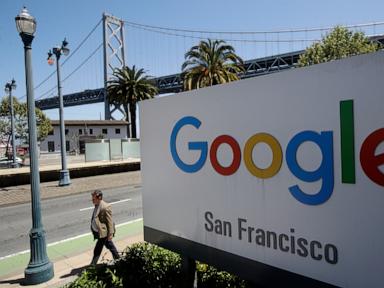
When Google misses revenue expectations, Alphabet stock sinks in early after-hours trading because institutional algorithms price the company not as a diversified technology conglomerate, but as a single-engine digital advertising utility. A shortfall of even a single percentage point in top-line growth triggers immediate sell-offs. Wall Street interprets any deceleration in search or YouTube ad spend as structural vulnerability rather than temporary macroeconomic friction.
Most financial coverage treats an Alphabet earnings miss like a sudden shock. It rarely is. Having watched Silicon Valley balance sheets expand and contract through three major market cycles, the pattern is entirely predictable. The headline numbers drop at 4:00 PM Eastern Time, high-frequency trading desks parse the top-line revenue figure against consensus estimates within milliseconds, and the share price craters before the chief financial officer even clears their throat on the earnings call.
To understand why the market reacts with such violent speed, you have to look past the surface-level press releases. You have to examine how Alphabet actually makes money, why its cost structure resists quick cuts, and what happens when the core search monopoly faces simultaneous pressure from regulators, artificial intelligence competitors, and cautious corporate marketers.
The Anatomy of an After-Hours Sell-Off
After-hours trading is notoriously thin. Liquidity dries up the moment the closing bell rings on the Nasdaq, meaning relatively modest sell orders can push a multi-trillion-dollar stock down five, seven, or ten percent in minutes. When Alphabet misses consensus revenue targets, three distinct groups hit the sell button simultaneously.
First come the quantitative funds. These automated systems do not care about Sundar Pichai’s long-term vision for artificial general intelligence or the theoretical valuation of Waymo’s autonomous fleet. They are programmed to execute trades based on variance from Wall Street consensus. If analysts modeled $86 billion in quarterly revenue and Alphabet prints $84.5 billion, the algorithms dump shares instantly.
Second are the sector-rotation managers. For years, mega-cap technology stocks acted as safe havens during economic uncertainty. Portfolio managers parked cash in Alphabet because its search business generated predictable, high-margin cash flow regardless of interest rate hikes or supply chain bottlenecks. A revenue miss shatters that defensive thesis. If Google’s ad auction is cooling down, managers assume the broader consumer economy is weaker than government data suggests, prompting them to rotate capital out of growth equities and into treasuries or staples.
Third, and most damaging over the medium term, are the fundamental analysts recalculating discounted cash flow models. Alphabet carries massive fixed overhead. Unlike a traditional manufacturer that can idle a factory line when orders slow, Google’s primary expenses are elite engineering talent and hyperscale data center infrastructure. When top-line revenue misses expectations while capital expenditures remain elevated, operating margins compress rapidly.
The Advertising Engine Is Showing Its Age
Strip away the futuristic branding and moonshot subsidiaries, and Alphabet remains overwhelmingly dependent on digital advertising. Roughly three-quarters of its total revenue still flows from people clicking on links next to search results, watching pre-roll commercials on YouTube, or browsing websites connected to the Google AdSense network.
That concentration creates a fragile dynamic. Digital advertising is the easiest line item for a corporate chief marketing officer to cut when economic visibility clouds over. You cannot easily cancel a five-year enterprise software contract or walk away from a commercial real estate lease, but you can slash your Google Ads daily budget on a Tuesday afternoon with three clicks of a mouse.
Consider a hypothetical example to illustrate how sensitive the auction model really is. Imagine a mid-sized online retailer spending $500,000 a month bidding on high-intent keywords like "running shoes" or "ergonomic office chair." If consumer demand softens by five percent, that retailer pulls back its ad spend by ten percent to protect its own profit margins. Multiply that defensive pullback across millions of small and medium-sized businesses globally. The result is lower auction density, cheaper cost-per-click rates for the remaining bidders, and an immediate miss on Google’s top-line revenue line.
Search Saturation and the AI Dilemma
The deeper anxiety driving post-earnings sell-offs has nothing to do with temporary marketing budgets. Investors are quietly terrified that the golden era of ten blue links is ending, and that Google’s own defensive maneuvers might cannibalize its highest-margin business.
For two decades, Google Search operated as the undisputed tollbooth of the internet. Every commercial query generated an opportunity to serve high-converting text ads above organic results. Today, generative artificial intelligence changes user behavior at the foundational level. When users ask complex questions to conversational interfaces, they want a single synthesized answer rather than a list of websites to click.
Google has responded by integrating AI-generated summaries directly at the top of search results. While technically impressive, this creates a brutal financial contradiction. Running large language models requires exponentially more compute power than serving traditional search index queries. Every AI-assisted search costs Google significantly more in server energy and silicon depreciation, yet monetizing those conversational answers without ruining the user experience remains an unsolved commercial puzzle.
If Google shows fewer traditional ads to accommodate AI summaries, revenue growth stalls. If it packs AI answers with aggressive sponsorships, users defect to rival AI search engines. Wall Street sees this trap clearly, which explains why any deceleration in core search revenue triggers immediate valuation compression.
YouTube and the Fight for Attention
YouTube represents Alphabet’s second major advertising pillar, and its performance often dictates whether an earnings report is judged a triumph or a failure. While YouTube commands unmatched reach across connected televisions and mobile devices, it operates in a fiercely contested market.
Short-form video formats have altered viewing habits across younger demographics. While YouTube Shorts successfully attracts billions of daily views, short-form inventory historically monetizes at a lower rate than traditional long-form videos where creators embed mid-roll advertisements. Transitioning viewers from a fifteen-minute tech review to a thirty-second vertical clip creates a structural drag on revenue per thousand impressions.
At the same time, brand advertisers have grown far more selective. Streaming competitors, retail media networks operated by major e-commerce giants, and social video platforms are all chasing the same finite pool of television ad dollars. When YouTube growth slows by even a couple of hundred basis points, analysts immediately question whether the platform is losing share to rival video ecosystems.
Google Cloud Cannot Carry the Weight Alone
Whenever core advertising stumbles, Alphabet executives inevitably pivot the conversation toward Google Cloud. It is a classic corporate deflection strategy, and it rarely works on seasoned institutional investors.
Google Cloud has undeniably matured into a formidable enterprise competitor, capturing significant market share in data analytics, cybersecurity, and artificial intelligence infrastructure. Reaching sustained operating profitability in the cloud division was a major milestone that proved Alphabet could build a legitimate business outside of consumer advertising.
However, scale matters. Even when Google Cloud posts twenty-five or thirty percent year-over-year growth, it still accounts for a relatively small fraction of Alphabet’s overall revenue base. A $1 billion beat in cloud revenue cannot mathematically offset a $2.5 billion shortfall in Google Search and YouTube.
Furthermore, cloud revenue is notoriously lumpy. Enterprise customers sign multi-year commitments, but their actual consumption fluctuates based on internal IT optimization cycles. During periods of tight corporate budgets, chief information officers aggressively audit their cloud bills, deleting unused storage instances and optimizing database queries. That belt-tightening shows up directly on Google Cloud’s top line, removing the very cushion investors hope will soften an advertising slowdown.
The Capital Expenditure Trap
Perhaps the single biggest reason Alphabet stock sinks so aggressively after a revenue miss is the glaring mismatch between slowing sales and accelerating capital expenditures.
Building the infrastructure required for modern artificial intelligence is the most capital-intensive endeavor in corporate history. Alphabet is spending tens of billions of dollars every year on custom tensor processing units, networking gear, liquid-cooled server racks, and massive electrical substations. Executives argue, with considerable justification, that underinvesting in AI infrastructure carries an existential risk of obsolescence.
Wall Street accepts that argument only when revenue growth remains pristine. When top-line sales beat expectations, massive capital spending is celebrated as visionary offense. When revenue misses expectations, that exact same spending is rebranded as reckless margin destruction.
Heavy capital expenditures do not hit the income statement all at once; they flow through over several years in the form of depreciation expenses. This means the billions Alphabet spends today on data centers will weigh on its gross and operating margins for the next four to five years, regardless of whether the economy enters a recession or digital ad demand stagnates. Analysts looking at a revenue miss immediately project lower future free cash flow, which mechanically drives down price targets across major investment banks.
Regulatory Headwinds That Never Subside
Unlike traditional industrial companies whose risks are mostly cyclical, Alphabet operates under a permanent cloud of antitrust litigation and regulatory scrutiny across North America and Europe.
In the United States, federal courts have scrutinized the multibillion-dollar revenue-sharing agreements Google pays to smartphone manufacturers and browser developers to maintain default search placement. In Europe, digital market regulations force Alphabet to redesign search results to favor rival comparison shopping services and travel aggregators, introducing friction into user journeys that previously converted seamlessly into ad clicks.
Investors usually ignore regulatory fines because Alphabet holds enough cash on its balance sheet to pay multi-billion-dollar penalties without blinking. What investors cannot ignore are structural remedies that threaten default distribution or degrade ad targeting capabilities. When an earnings report reveals sluggish European or domestic ad growth, analysts immediately wonder if regulatory interventions are finally biting into the core monopoly.
Other Bets Remain Expensive Distractions
For nearly a decade, Alphabet has separated its moonshot projects into a reporting segment called Other Bets. This bucket houses autonomous vehicle pioneer Waymo, life sciences unit Verily, drone delivery service Wing, and various early-stage venture funds.
The theoretical justification for this corporate structure was transparency. Management wanted investors to see the pure profitability of Google’s core internet businesses without the distortion of long-term research and development losses.
In practice, Other Bets remains a consistent cash incinerator, losing billions of dollars every year while generating negligible revenue. While Waymo has achieved genuine commercial milestones with paid robotaxi rides in major metropolitan areas, scaling autonomous fleets requires massive upfront capital for vehicles, sensors, charging depots, and local operations. During quarters when Google’s core advertising engine beats expectations, Wall Street tolerates these losses as harmless eccentricities. The moment core revenue misses, activist investors and institutional desks demand immediate cost discipline, questioning why Alphabet subsidizes science projects while its primary cash cow slows down.
How Wall Street Actually Reads the Earnings Call
To see how a post-earnings sell-off either deepens or reverses, you have to watch the forty-five minutes following the initial press release. The headline revenue miss sets the downward trajectory, but management commentary during the analyst Q&A determines whether the stock recovers by the next morning’s opening bell or enters a prolonged downtrend.
Institutional analysts listen for three specific signals during the call:
- Search Query Volume vs. Monetization: Management must clarify whether fewer people are searching on Google, or if query volume remains healthy while advertisers simply paid less per click. A drop in actual search volume is treated as an existential crisis. Lower cost-per-click rates are forgiven as temporary macroeconomic noise.
- Headcount and Expense Discipline: Investors want to hear concrete commitments to slowing operating expense growth. Vague promises about "durability" or "efficiency" rarely satisfy desks looking for hard numbers on real estate consolidation and slower hiring.
- AI Monetization Timelines: Analysts push relentlessly for proof that enterprise customers are paying extra for generative AI tools inside Google Workspace and Google Cloud, rather than merely testing free pilot programs.
If executives dodge these questions with corporate platitudes about long-term innovation, the after-hours selling accelerates into the regular trading session.
Separating Noise From Structural Decline
Every technology giant eventually faces the law of large numbers. When a company generates more than $300 billion in annual revenue, adding another ten or fifteen percent requires conjuring tens of billions of dollars in brand-new economic activity every single year. Occasional misses against hyper-optimistic Wall Street consensus models are mathematically inevitable.
Yet the market’s brutal reaction whenever Alphabet stumbles reveals a deeper truth about the company’s standing. Despite decades of acquisitions, hardware launches, cloud expansion, and artificial intelligence breakthroughs, Alphabet has never escaped its original identity. Until a second business line generates enough high-margin cash flow to genuinely rival search advertising, every single quarterly earnings report will remain a high-stakes referendum on the health of the global ad auction.