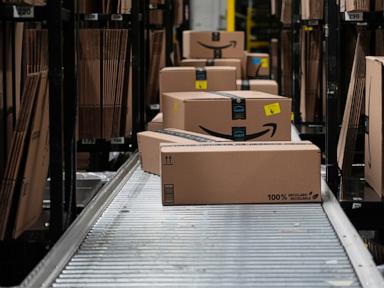
Big tech doesn't spend twenty billion dollars on a whim. When a quarter brings massive cash flow, leaders face a choice. They can return it to shareholders or double down. Amazon chose the second option. After a surprisingly strong second-quarter earnings report, the retail and cloud giant announced a staggering capital expenditure bump focused heavily on artificial intelligence and data center infrastructure.
Most headlines treated this as just another corporate spending spree. They missed the underlying shift. This isn't just about keeping up with Microsoft or Google. It's a calculated gamble on a structural transformation that will reshape AWS and logistics for the next decade. If you're watching how enterprise software evolves, you need to understand what this massive cash injection actually means for the market.
The Real Driver Behind the Spending Surge
You've probably heard that everyone is building data centers. That is true, but the scale is difficult to comprehend until you look at the numbers. Amazon's massive capital expenditure isn't going toward shiny new corporate offices or minor software tweaks. It's buying physical reality.
Think about the sheer amount of silicon required to train modern large language models. Nvidia chips don't sit on standard retail shelves. They are expensive, scarce, and require specialized power grids. Amazon is pouring cash into physical infrastructure because compute capacity is the new oil.
I talk to cloud architects every week. They are wrestling with a simple bottleneck. Demand for AI training and inference completely outstrips current supply. When a company like Amazon ramps up spending by twenty billion dollars, they are securing their supply chain years in advance. They are buying market dominance.
AWS remains the primary profit engine here. Without heavy investments in custom chips like Trainium and Inferentia alongside standard hardware, enterprise clients will migrate to competitors. AWS cannot afford to lose its crown as the dominant cloud provider. Andy Jassy knows this.
Beyond the Cloud AI in the Supply Chain
Wall Street focuses entirely on AWS when Amazon earnings drop. That is a mistake. A massive portion of this infrastructure spending trickles down into retail and logistics.
Imagine running a global shipping network with millions of automated items moving through hundreds of fulfillment centers. Traditional routing algorithms worked well enough for a long time. They don't cut it anymore. Predictive demand modeling requires localized machine learning models running at the edge.
Amazon is embedding localized AI across its warehouse network. Robotic arms use computer vision to sort items faster. Delivery routes dynamically adjust in real time based on weather, traffic, and individual customer behavior.
This infrastructure spending directly funds those efficiency gains. The capital expenditure looks huge today. Tomorrow, it lowers fulfillment costs per unit. That creates a wide moat against competitors who can't afford to burn cash on hardware at this scale.
The Risks of Chasing the AI Gold Rush
Nobody talks enough about the downside of this strategy. Capital intensity is rising fast. Depreciation costs will hit the balance sheet hard over the next few quarters.
If enterprise adoption of generative AI slows down or fails to deliver the productivity gains companies expect, these data centers will sit underutilized. That turns productive assets into expensive burdens. Wall Street loves growth until margins compress too quickly.
Amazon is playing a high-stakes game. They are betting that demand for computational power will scale infinitely. History suggests technology infrastructure cycles often experience severe overbuilding phases before finding a stable equilibrium. Remember the fiber optic cable glut of the late nineties?
Yet, standing still is worse. In the current technological climate, under-investing in AI guarantees obsolescence. Amazon is choosing the risk of spending too much over the existential threat of missing the shift.
What This Means for the Market
If you build software, run an IT department, or invest in tech stocks, this massive spending spree changes the rules of engagement. Smaller cloud providers will struggle to match these capital requirements. Consolidation is coming.
Enterprise clients will benefit from increased competition among major cloud hyperscalers, driving down the cost of raw compute over the long run. At the same time, proprietary software ecosystems will become deeply entrenched.
Watch how AWS packages its AI services over the coming quarters. The battle isn't just about raw infrastructure anymore. It's about making custom models easy to deploy for everyday businesses without requiring a team of elite data scientists. Amazon is building the pipes. Now they have to make sure people actually turn on the faucets.