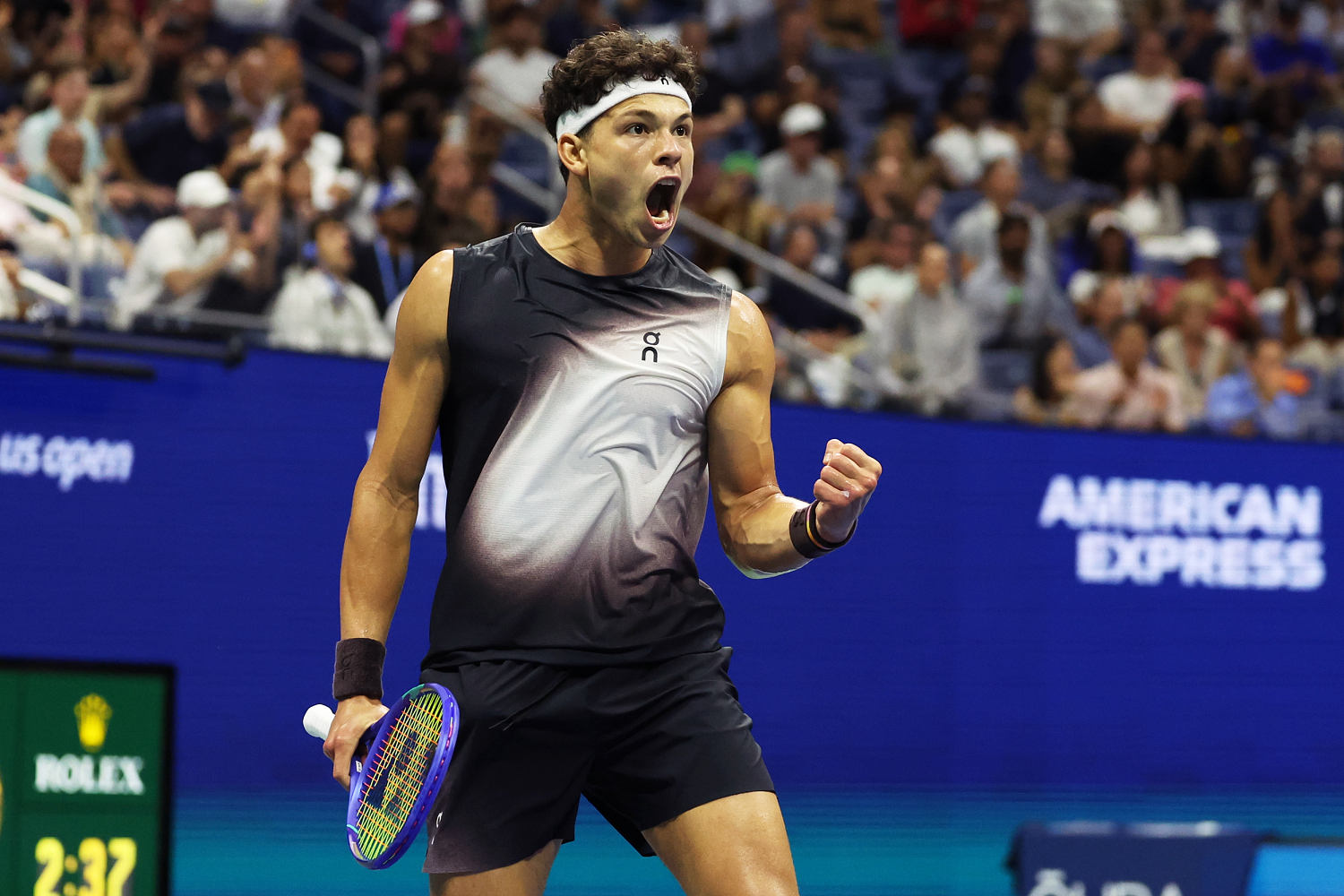
The boundaries of physical exhaustion and psychological resilience in professional tennis were redrawn during an extraordinary session at Flushing Meadows, culminating in the latest-ever match conclusion in the history of the United States Open. American left-hander Ben Shelton executed a tactical masterclass to defeat defending champion Carlos Alcaraz in a contest that tested the absolute limits of human recovery cycles, physiological stamina, and temporal optimization.
At the core of this victory lies a profound shift in match dynamics, dictated by environmental friction, metabolic drain, and tactical asymmetry. When a high-stakes Grand Slam fixture extends past conventional circadian rhythms, the determinants of success shift away from baseline technical proficiency toward autonomic nervous system regulation and fatigue-management efficiency.
The Temporal Mechanics of Late-Night Extremes
A match concluding in the early hours of the morning introduces unique performance stressors that standard sports science models rarely encounter. The human body operates on a circadian clock that regulates core body temperature, hormone secretion, and cognitive processing speed. As local time pushes past midnight and deep into the 2:00 AM hour, metabolic efficiency degrades, and reaction time latency increases.
Shelton and Alcaraz engaged in a high-intensity contest where every rally demanded peak neuromuscular firing long after biological prime operational hours. The strategic implication of a record-setting late finish involves three distinct performance variables:
- Glycogen Depletion Curves: Carbohydrate oxidation rates accelerate under stress, while digestive capacity plummets during late-night hours, making caloric replenishment inefficient during changeovers.
- Neuromuscular Fatigue: Micro-tears in muscle fibers accumulate rapidly during high-impact deceleration phases, reducing explosive force generation in the legs and core by the fourth and fifth sets.
- Cognitive Processing Latency: Decision-making under pressure becomes compromised as prefrontal cortex efficiency drops due to sleep deprivation and central nervous system fatigue.
Alcaraz, known for his relentless defensive coverage and explosive lateral movement, faced a structural disadvantage as environmental and temporal variables compounded. His game model relies on sustained high-velocity output across extended rallies. When the clock crossed historical thresholds, the energy cost function of his baseline aggression spiked beyond sustainable physiological margins.
Tactical Asymmetry and the Serve-Plus-One Economy
Shelton structured his path to victory by maximizing efficiency through the serve-plus-one paradigm. While Alcaraz expended vast amounts of metabolic energy constructing points from deep positions behind the baseline, Shelton optimized his possession metrics by shortening rally lengths.
The left-handed slider serve directed into the ad court proved to be the primary architectural weapon of the match. By pulling Alcaraz wide off the court, Shelton opened the entire geometry of the playing surface for an aggressive first-strike forehand or an approach shot to the net.
- Positional Advantage: Shelton maintained court position inside or on the baseline for over sixty percent of his service games, restricting Alcaraz's capacity to dictate court geometry.
- Energy Conservation Ratio: By ending points within zero to four shots, Shelton preserved vital anaerobic capacity for late-set tiebreaks.
- Risk Calibration: Alcaraz was forced into low-percentage passing shots under severe physical fatigue, elevating his unforced error count during critical service breaks.
The defending champion attempted to neutralize this strategy by varying the pace with heavy topspin cross-court exchanges and sudden drop shots. However, the physical toll of executing delicate touch shots while managing profound muscular fatigue undermined the consistency of these variations.
Psychological Attrition Under Extreme Environmental Pressures
The psychological architecture of a record-setting late-night Grand Slam match is defined by crowd amplification and sensory overload. Flushing Meadows at 2:00 AM operates in a hyper-stimulated environment where the acoustic resonance of a capacity crowd acts as an external stimulant, compounding adrenaline surges in both competitors.
Shelton capitalized on this feedback loop. Rather than draining his mental reserves in a passive defensive posture, he channeled the visceral energy of the late-night partisan crowd to maintain aggressive court posture. Alcaraz, conversely, encountered a psychological bottleneck when his signature shot-making repertoire produced diminishing returns against Shelton's serving precision.
The capacity to suppress the instinct to retreat into conservative play under extreme pressure separates elite performers from generational champions. Shelton demonstrated an advanced ability to recalibrate risk parameters mid-match, identifying that Alcaraz's foot speed was visibly degrading due to the accumulated cumulative fatigue of the tournament fortnight.
The Broader Implications for Elite Tennis Scheduling
The milestone of the latest-ever United States Open finish forces tournament administrators and sports scientists to confront the operational sustainability of modern tennis schedules. The collision between prime-time broadcast monetization requirements and athlete physiology creates a systemic vulnerability.
When matches stretch across five hours and conclude in the pre-dawn hours, the downstream consequences affect tournament integrity. Recovery windows shrink below the mandatory forty-eight-hour threshold required for muscle protein synthesis and nervous system reset, jeopardizing subsequent rounds and elevating injury incidence rates.
Future tournament architectures must address the tension between commercial broadcasting demands and the biological realities of high-performance athletics. Implementing strict match start caps, optimizing court rotation efficiencies, or transitioning to strict time-limit regulations represent structural interventions that governing bodies will need to evaluate to prevent systemic athlete burnout.
Deploy aggressive baseline disruption early in matches against high-mobility opponents to force extended defensive recovery, while prioritizing first-strike serving efficiencies to compress rally duration when structural fatigue sets in during extended tournament formats.