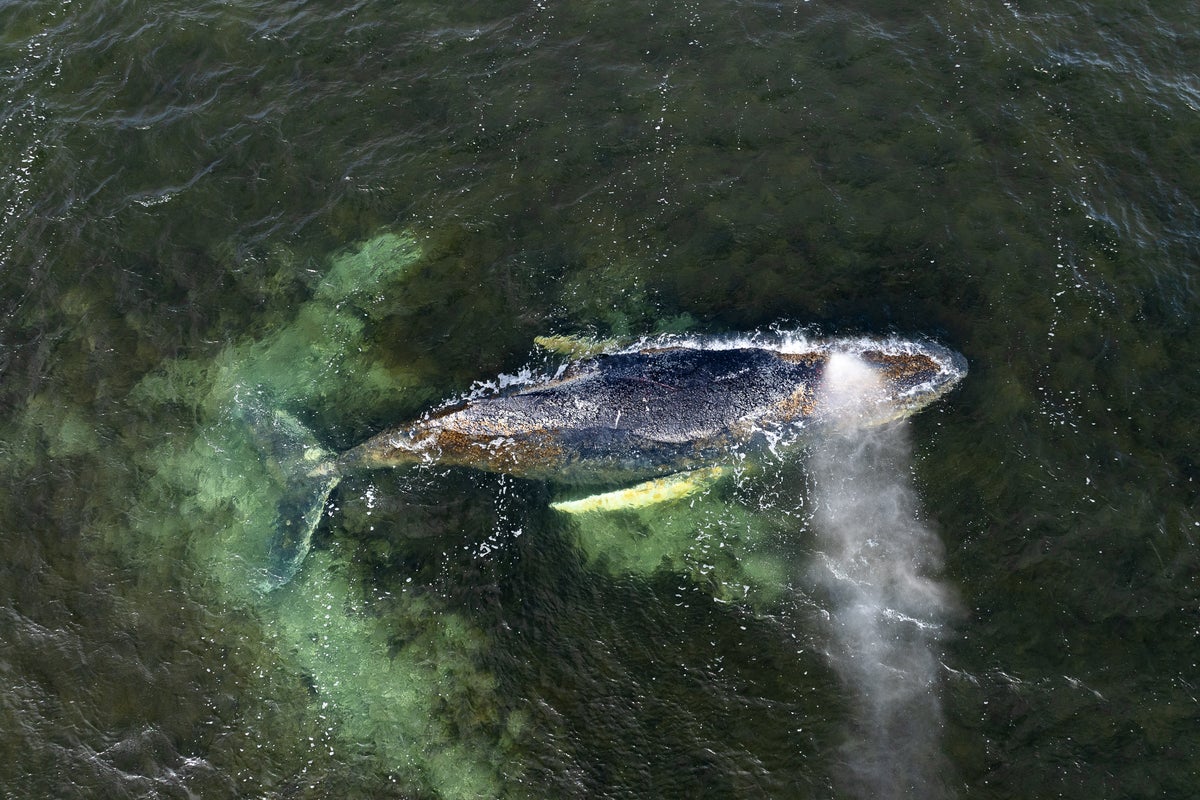
The recovery of a dead humpback whale carcass on the shores of Anholt, Denmark, marks the end of a multi-month ecological crisis that highlights a significant mismatch between public emotion and marine biology. The animal, known in German media as "Timmy" or "Hope," became a focal point for private rescue efforts after stranding on the German Baltic coast.
The subsequent intervention, tracking, and ultimate death of the animal demonstrate the limits of human management in wild marine settings. The entire event can be understood by looking at the interaction between biological reality, the logistics of moving the whale, and the management of public perception. Also making news in this space: Why Karachi University Semester Delays Are Costing Students More Than Just Time.
+-------------------------------------------------------------+
|                THE INTERVENTION PARADOX                     |
+-------------------------------------------------------------+
|  Public Narrative:                                          |
|  [Stranded Whale] -> [Human Rescue] -> [Successful Release] |
|                                                             |
|  Biological Reality:                                        |
|  [Pathological Stasis] -> [Forced Transport] -> [Fatality]  |
+-------------------------------------------------------------+
The Biological Constraints of Baltic Cetacean Ingress
The primary breakdown in the rescue strategy stemmed from a failure to recognize the physiological limits of the animal. Humpback whales (Megaptera novaeangliae) are pelagic mammals optimized for deep, high-salinity oceanic environments. The Baltic Sea and its approaches, including the Kattegat strait, present two major physiological challenges to large cetaceans.
- Hyposalinity and Buoyancy Deficits: The Baltic Sea features a steep salinity gradient, dropping from roughly 35 practical salinity units (psu) in the open Atlantic to under 10 psu in its northern basins. Lower salinity reduces water density, which reduces the natural buoyancy of a large marine mammal. To maintain its position and keep its blowhole above water to breathe, the whale must expend more energy, speeding up metabolic exhaustion.
- Foraging Deprivation: Large mysticetes rely on high-density schools of krill or specific forage fish. While the Baltic contains herring populations, the structural distribution and density of these schools do not match the energetic needs of an adult humpback. The whale was likely operating under a severe, long-term caloric deficit.
When a large whale enters shallow coastal waters and exhibits repeated strandings, it is rarely a simple navigation error. Instead, it is usually a sign of an advanced internal problem, such as parasite loads, acoustic trauma, or starvation. More insights regarding the matter are explored by USA Today.
Expert consensus from government veterinarians and marine biologists initially favored non-intervention or euthanasia. They recognized that the whale was likely using shallow sandbanks to prop its body up and breathe without swimming.
Private interventions disrupted this survival mechanism. Forcefully removing the whale from the sandbanks overrode its natural response to weakness, compelling an already exhausted animal back into a deep-water swimming state that it could no longer sustain.
Transport Logistics and Mechanical Stress
The transport phase, carried out by private actors on May 2, highlights the massive mechanical problems involved in moving a live, multi-ton marine mammal.
+-----------------------------------------------------------+
|          MECHANICAL STRESS AND ORGAN COMPRESSION          |
+-----------------------------------------------------------+
|                  [Whale Suspended in Air]                 |
|                             |                             |
|                             v                             |
|              Unsupported Gravitational Load               |
|                             |                             |
|                             v                             |
|      Internal Organ Compression & Skeletal Deformation    |
|                             |                             |
|                             v                             |
|        Ischemic Tissue Damage / Compartment Syndrome       |
+-----------------------------------------------------------+
The operation required lifting the whale into a specialized basin on a barge to move it through Danish waters toward the Skagerrak. This process introduced severe physical stressors.
The Gravitational Load on Internal Organs
In the ocean, water pressure distributes a whale's body weight evenly across its entire surface area. Once removed from this supportive medium, the animal's massive weight presses down on its own internal organs and skeleton. This crushing weight restricts lung expansion, cuts off blood flow to major organs, and can cause rapid muscle breakdown known as rhabdomyolysis. The resulting toxins can quickly overwhelm the kidneys once the animal is returned to the water.
Thermal Regulation Failures
Whales are wrapped in a thick, highly insulating layer of blubber designed to retain heat in cold water. When an animal is held on a barge or in a shallow, stagnant basin, it loses the ability to dump heat through its peripheral blood vessels. This can lead to rapid overheating, spikes in heart rate, and severe systemic stress.
The immediate cause of death remains under investigation by the Danish Environmental Protection Agency, but the timeline points to a clear pattern. The animal was found dead on May 14 off Anholt, just twelve days after its high-stress transport. This suggests that the moving process itself likely worsened the whale's physical decline, rather than helping it recover.
The Cost and Risk Functions of Carcass Management
The death of a large whale near the coast triggers a complex set of public health, environmental, and financial challenges. A decaying whale carcass is a dynamic biosecurity hazard that requires a swift, coordinated response.
The initial plan to tow the carcass from the shallow waters around Anholt to the port of Grenaa for processing failed due to poor weather and shallow sandbanks. This logistical failure forced authorities to pivot to an onshore disposal strategy, exposing the operational trade-offs of managing large marine remains.
| Management Vector | Operational Challenge | Environmental and Public Safety Impact |
|---|---|---|
| Biosecurity & Public Nuisance | High concentrations of putrefactive gasses (methane, hydrogen sulfide). | High risk of carcass rupture; severe odor limits local tourism and economic activity. |
| Logistical Extraction | Shallow water prevents heavy salvage vessel access; requires heavy trucks and long cables. | High mechanical stress on equipment; risks tearing the decomposing tissue. |
| Disposal Pathway | Moving large volumes of organic mass out of remote island environments. | Requires onsite butchering and transport in sealed containers to specialized disposal plants. |
The decision by the Danish Nature Agency to pull the carcass onto an Anholt beach using a truck-and-cable system represents a shift from an offshore natural decay strategy to an active containment strategy.
While leaving a carcass in deep water feeds the local marine ecosystem, a carcass trapped in shallow, high-traffic coastal waters creates a public health hazard. The buildup of decomposition gases inside the sealed blubber layer creates internal pressure that can cause the carcass to burst, spreading pathogens into the surrounding water and beach areas.
The Conflict Between Public Sentiment and Scientific Reality
The timeline of this event reveals a deep divide between public sentiment and professional wildlife management. The creation of a public narrative around the whale shows how social pressure can distort sound scientific policy.
+-----------------------------------------------------------+
|            THE PUBLIC SENTIMENT FEEDBACK LOOP             |
+-----------------------------------------------------------+
|  [Media Live Blogs & Alerts] -> [Public Emotional Bond]   |
|                                            |              |
|  [Political Pressure on Officials] <-------+              |
|                 |                                         |
|                 v                                         |
|  [Private Fundraising & Unsanctioned Intervention]        |
|                 |                                         |
|                 v                                         |
|  [Accelerated Animal Decline & Biological Failure]       |
+-----------------------------------------------------------+
The regular media updates and live blogs transformed a predictable biological event into an emotional public drama. This media attention generated intense pressure on political figures, leading environmental ministries to step aside and allow private groups to attempt an unsanctioned rescue.
By prioritizing public approval over the advice of veterinary scientists, officials allowed a well-meaning but flawed intervention to proceed. This set a troubling precedent where emotional public campaigns can override established wildlife management protocols.
The analytical reality is clear: the rescue operation treated a complex pathological problem as a simple logistics issue. It operated on the flawed assumption that moving the whale to a new location would fix its underlying health issues.
For future wildlife management, the lessons learned from this case support a return to strict, science-first policies. When dealing with stranded large cetaceans, intervention strategies must be guided by objective health markers and ecological realities, rather than public pressure or emotional media campaigns. Where rescue is impossible, human intervention should focus on minimizing suffering through structured euthanasia or undisturbed natural death, rather than prolonged, high-stress transport operations.