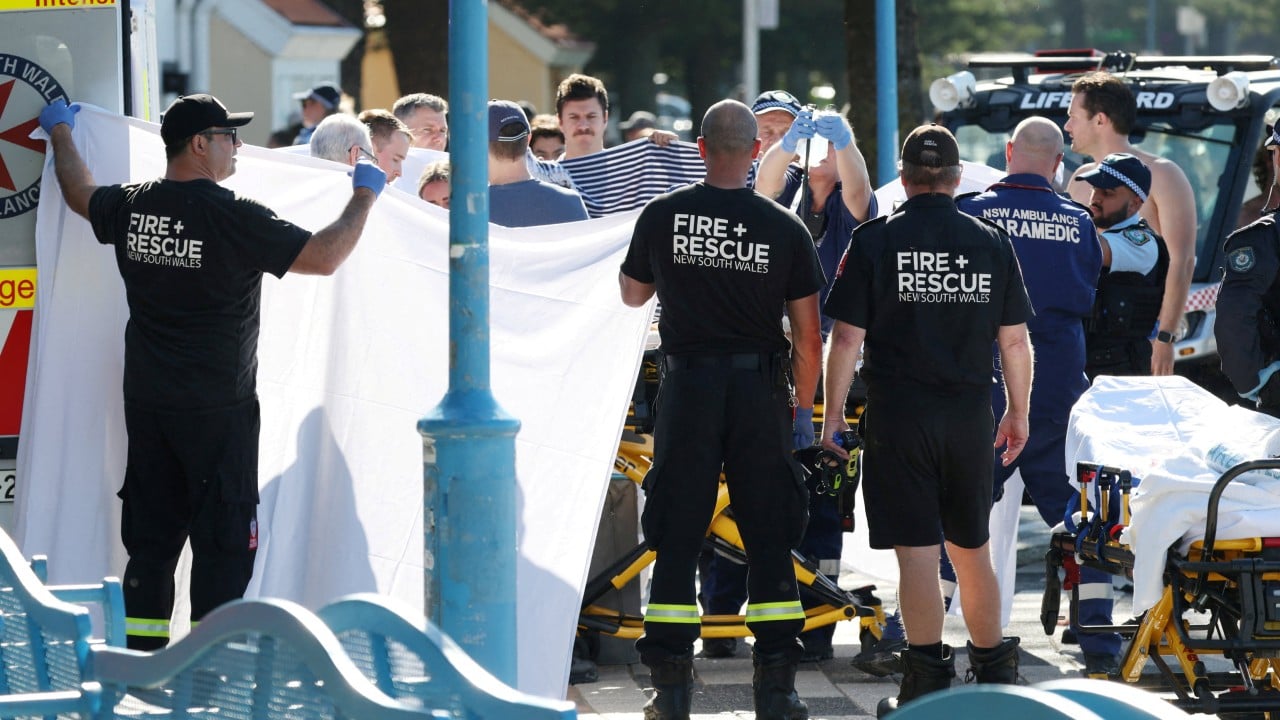
The probability of an apex predator strike in highly regulated urban waters is statistically marginal, yet when an intersection occurs, survival relies entirely on rapid intervention. The June 13, 2026, attack on a 35-year-old female swimmer approximately 30 meters off Sydney’s Coogee Beach provides a stark case study in the mechanics of marine predator interactions and the logistical chain required to mitigate catastrophic blood loss. This event represents the ninth documented shark attack in Australian waters since January 2026, forcing a critical re-examination of the variables driving urban marine risk.
Mitigating mortality in these scenarios depends on three distinct operational phases: immediate physical extraction, rapid hemorrhage control, and advanced trauma transport. Analyzing how these components functioned at Coogee Beach illuminates the precise boundaries between survivable trauma and fatal exsanguination.
The Kinematics of the Encounter
The incident involved a white shark (Carcharodon carcharias) estimated at 3.5 meters in length. The attack profile conforms to a predatory strike characterized by high kinetic energy and catastrophic tissue destruction. The victim sustained a 30-centimeter laceration to the thigh resulting in extensive muscle mass removal and cortical bone exposure, alongside matching severe trauma to the upper extremity.
From an anatomical perspective, injuries of this magnitude present an immediate threat to the femoral and brachial arterial systems. At normal physiological pressures, a complete rupture of the femoral artery can induce hypovolemic shock within 60 to 90 seconds, followed rapidly by cardiac arrest. The victim's survival was fundamentally a function of minimized extraction time and instantaneous mechanical pressure application.
The mechanics of the rescue occurred via a two-stage extraction vector:
- Phase 1: Water-Borne Interception. A lifeguard utilizing a 5.5-meter paddleboard intercepted the victim immediately after she resurfaced from a secondary submersion. The board served as a flotation stable point, compensating for the victim's severe loss of motor function and profound weakness.
- Phase 2: Shoreward Transport. Because the victim lacked the physical capacity to mount the watercraft, the rescuer secured her by the upper extremity, maintaining an active tow while traversing the 30-meter surf zone back to the beach line, supported by secondary bystanders who entered the shallow water to expedite the final egress.
The Physiology of First Responder Resuscitation
The transition from extraction to stabilization represents the most volatile period in a trauma response pipeline. The presence of an off-duty medical professional on the beach created an immediate field-triage environment. In severe arterial hemorrhages, standard direct pressure is structurally insufficient; survival dictates the immediate implementation of mechanical occlusion.
Bystanders and first responders applied improvised or tactical tourniquets directly proximal to the wounds on both the affected leg and arm. The physiological objective of a tourniquet is to compress the vascular wall against the underlying bone structure, completely halting both arterial inflow and venous outflow.
[Arterial Laceration]
       │
       ▼
[Improvised/Tactical Tourniquet Applied Proximal to Injury]
       │
       ▼
[Mechanical Compression of Vascular Wall Against Bone]
       │
       ▼
[Total Occlusion of Local Arterial Inflow]
       │
       ▼
[Stabilization of Mean Arterial Pressure (MAP) & Prevention of Hypovolemic Shock]
This intervention halted the "cloud of blood" witnessed during the extraction phase, stabilizing the victim’s mean arterial pressure (MAP) and buying critical minutes for advanced life support (ALS) units to arrive. NSW Ambulance paramedics subsequently assumed care, initiating intravenous fluid resuscitation to maintain end-organ perfusion before executing the transfer to a tertiary trauma center via a CareFlight helicopter launched from a nearby athletic oval.
Macro Environmental Drivers and Spate Dynamics
The Coogee Beach event cannot be assessed as an isolated anomaly. It occurs within a documented surge in shark-human conflicts along the Australian coastline in 2026, which has yielded four fatalities across nine incidents over a six-month period. To understand this trajectory, the data must be viewed through an environmental and behavioral matrix rather than a simplistic increase in predator aggression.
The Pelagic Shift Hypothesis
Marine biologists trace localized spikes in shark encounters to shifting thermal baselines and altering current patterns. Marine heatwaves or localized upwellings transport nutrient-rich waters closer to urban shorelines. These baitfish aggregations naturally draw large pelagic predators—such as white, bull (Carcharhinus leucas), and tiger (Galeocerdo cuvier) sharks—into the shallow zones heavily utilized by recreational swimmers.
Human Spatial Density
The long-term multi-decade upward trend in shark incidents correlates directly with human demographic expansion along coastal corridors and the proliferation of high-exposure water sports like surfing, spearfishing, and open-water swimming. Increased human hours spent in the water mathematically elevates the probability of an encounter, particularly when activities overlap with low-light periods or geographic drop-offs.
The specific vulnerability of spearfishing is clearly reflected in the 2026 data:
| Date (2026) | Location | Species involved | Victim Activity | Outcome |
|---|---|---|---|---|
| January | Sydney Harbour | Bull Shark | Swimming | Fatal |
| May 16 | Rottnest Island, WA | White Shark (4m) | Spearfishing | Fatal |
| May 24 | Great Barrier Reef, QLD | Bull Shark (Suspected) | Spearfishing | Fatal |
| June 6 | Michaelmas Island, WA | White Shark (4.5m) | Spearfishing | Fatal |
| June 13 | Coogee Beach, NSW | White Shark (3.5m) | Swimming | Critical |
The data underlines a distinct operational hazard: three of the four fatalities this year involved spearfishing divers. The acoustic signature of a struggling fish combined with the discharge of biological fluids creates an active olfactory trail that actively attracts apex predators, fundamentally changing the encounter dynamic from an investigatory bite to an aggressive feeding response. Conversely, the Coogee Beach attack represents an investigatory or predatory mistake occurring in a high-density swimming zone, a much rarer phenomenon for that specific geography.
Municipal Containment and Policy Limitations
The immediate administrative response by Randwick Council—mandating a blanket 24-hour closure of Coogee, Clovelly, and Bronte beaches—serves as a short-term risk mitigation protocol. However, municipal closures represent a blunt instrument with clear systemic limitations.
The primary limitation of a 24-hour beach ban is its failure to address the underlying presence of the predator. A large pelagic shark can transit dozens of kilometers of coastline within a diurnal cycle. Closing a localized 2-kilometer pocket of surf minimizes immediate human exposure but does not mitigate the macro risk along adjacent unpatrolled coastlines.
Furthermore, relying heavily on visual aerial surveillance via drones or fixed-wing aircraft is constrained by water clarity. In the wake of heavy rain or high energy swells—conditions that frequently trigger murky, bait-rich environments—visual detection efficiency drops precipitously.
The strategic imperative for municipal authorities requires moving past reactive beach closures toward an integrated, telemetry-driven framework. This involves expanding real-time acoustic tracking arrays that tag and monitor target species, providing automated alerts to beach management apps before predators enter the surf zone. Concurrently, public education must shift from general awareness to tactical trauma literacy. Ensuring that accessible, weatherproof bleeding control kits containing certified windlass tourniquets are permanently mounted alongside public defibrillators at high-traffic beaches is the single most actionable measure to reduce mortality when the next inevitable intersection occurs.


