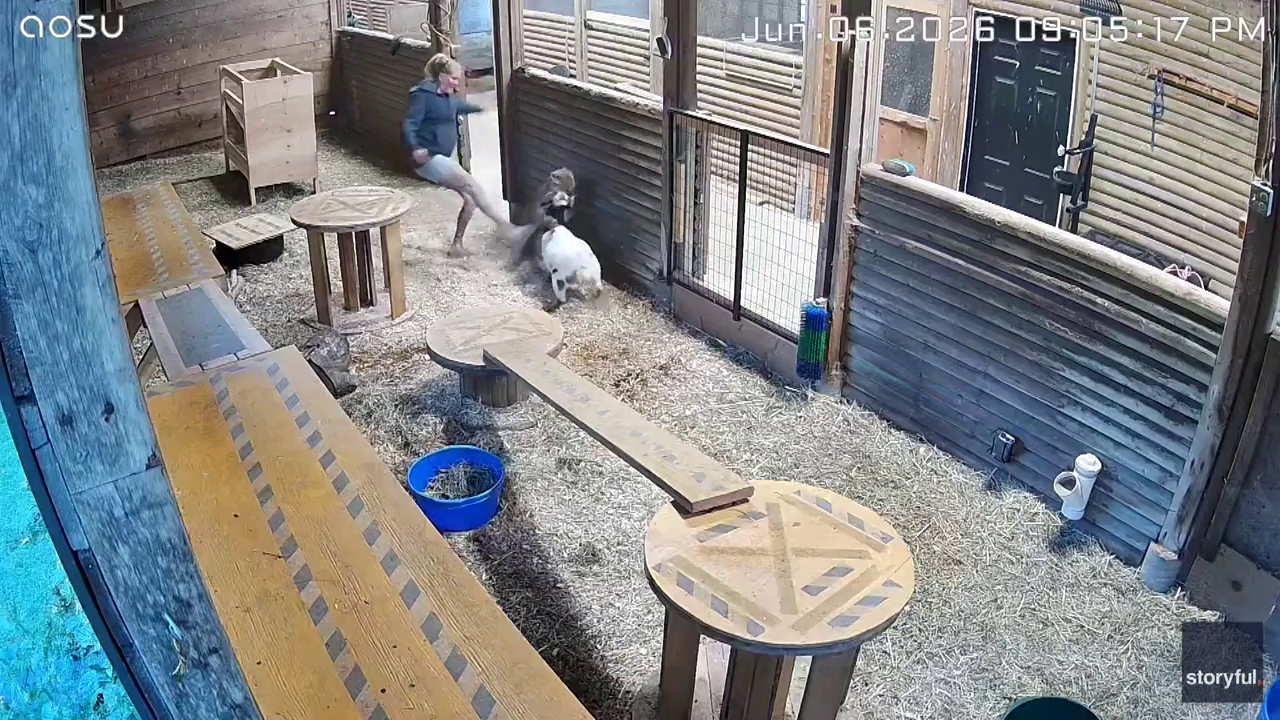
In rural resource management and homestead defense, a predator breach represents a sudden breakdown of physical security infrastructure. When a cougar (Puma concolor) bypasses perimeter controls to target livestock, the human response typically defaults to panic or flight. However, analyzing a recent high-risk encounter in British Columbia—where a property owner used direct physical force to disengage a cougar from a juvenile goat—reveals a repeatable, high-stakes framework for asset preservation. Surviving a close-quarters apex predator encounter requires an immediate transition from passive containment to active, kinetic deterrence.
The Anatomy of the Breach: Tactical Disadvantages
Homestead security relies on a series of defensive layers, starting with physical fencing and ending with guardian animals or human intervention. When a cougar breaches these layers, the asset owner faces three immediate compounding variables:
- The Velocity Deficit: Cougars are ambush predators relying on explosive acceleration. Human reaction times cannot prevent the initial strike once the perimeter is compromised.
- The Fixation Window: During the initial phase of a kill, predators experience tunnel vision focused entirely on subduing the prey asset. This fixation temporarily lowers their situational awareness regarding secondary threats.
- The Force Asymmetry: Humans lack the biological weaponry (claws, fangs) to compete in a sustained kinetic engagement with a large felid. Any physical intervention must rely on leverage, surprise, and sudden, concentrated force rather than prolonged grappling.
In the British Columbia incident, the property owner bypassed standard escalation protocols due to the immediate threat of asset liquidation. The cougar had already pinned the juvenile goat. At this specific juncture, the owner deployed a blunt-force strike—a direct kick to the predator’s flank.
The Mechanics of the Flank Strike
To understand why a single kick managed to break the cougar’s hold without triggering a retaliatory attack on the human, we must analyze the biomechanics and psychology of the predator during a hunt.
1. The Energy Expenditure Equation
Predators operate on a strict caloric budget. A prolonged struggle or an unexpected injury risks a net-negative energy return on the hunt, or worse, permanent disablement that prevents future hunting. When the owner delivered a localized strike to the cougar's midsection, it forced the animal to instantly recalculate the caloric and physical risk of the interaction.
2. Disrupting the Bite Mechanism
A cougar secures prey using a suffocating bite or by severing the spinal cord. This requires immense jaw pressure and stabilization from the front limbs. A sudden force applied laterally to the flank disrupts the predator’s center of gravity, breaking the leverage required to maintain the bite.
3. The Target Shift Failure
Because the cougar was highly fixated on the goat, the sudden intrusion of a secondary actor (the human) created a psychological shock. The predator did not view the human as an immediate competitor to be fought, but rather as an unknown, high-mass threat. This induced a flight response over a fight response, causing the animal to abandon the prey and retreat into the treeline.
Systematic Vulnerabilities in Small-Scale Livestock Management
Relying on physical intervention to save livestock is a high-risk strategy with a low statistical probability of repeated success. It indicates a fundamental failure in the primary and secondary containment systems. Small-scale operators frequently miscalculate the specific threat vectors posed by large felids.
[Perimeter Fence] -> Bypassed via vertical leap
  [Night Penning]  -> Absent or unsecured during daytime hours
    [Human Guarding] -> Reactive, introducing high physical risk
The first structural vulnerability is fence design. Standard agricultural fencing keeps livestock contained but rarely keeps determined predators out. Cougars can clear vertical obstacles up to four meters from a standstill. A fence that lacks an outward-facing overhang or an electric top wire serves as a psychological barrier for livestock, not a physical barrier for an apex predator.
The second vulnerability is the absence of biological deterrents. Livestock guardian dogs (LGDs) change the risk calculation for a cougar before a breach ever occurs. A trained LGD establishes a vocal and olfactory perimeter that removes the element of surprise, which is the cornerstone of cougar hunting strategy.
Escalation Protocols and Tactical Limitations
Intervening in a wildlife attack introduces severe liability and physical peril. If you must execute a defensive intervention to preserve life or critical assets, the operational sequence must be disciplined and immediate.
First, establish visual dominance. If the predator has not yet made physical contact with the asset, expanding your physical profile and utilizing high-decibel acoustic deterrents (such as air horns or aggressive shouting) can disrupt the stalk phase.
Second, maintain a clear exit vector. A cornered predator will fight out of perceived necessity. When the British Columbia resident approached the cougar, she did so from an angle that allowed the animal an immediate path of retreat into the wilderness. Had she blocked the escape route, the cougar's instinctual response would have pivoted from flight to defensive aggression against the human threat.
Third, deploy intermediate force options whenever possible. While the incident in question relied on a boots-on-the-ground kick, carrying bear spray (capsicum derivative) or a motorized deterrent (like a loud chainsaw or weed trimmer) offers a safer distance buffer. Bear spray creates an expanding cloud of respiratory irritants that neutralizes the predator’s sensory inputs without requiring close-quarters physical contact.
The Operational Strategy for Long-Term Mitigation
The long-term survival of small agricultural assets in apex predator territory cannot rely on individual acts of heroism. To harden a property against cougar incursions, implement a multi-tiered security architecture.
Begin by clearing brush and low-hanging branches within a fifteen-meter radius of all livestock pens. Cougars require stalking cover; eliminating blind spots forces them to cross open ground, removing their tactical advantage.
Next, upgrade night-penning infrastructure. Ensure that juvenile or highly vulnerable livestock are transitioned to fully enclosed, roofed structures before dusk, matching the peak nocturnal and crepuscular hunting windows of large felids.
Finally, integrate motion-activated strobe lights and random-interval auditory alarms. These systems exploit the predator's innate neophobia—the fear of the unfamiliar—effectively disrupting their hunting patterns before they approach the physical perimeter.