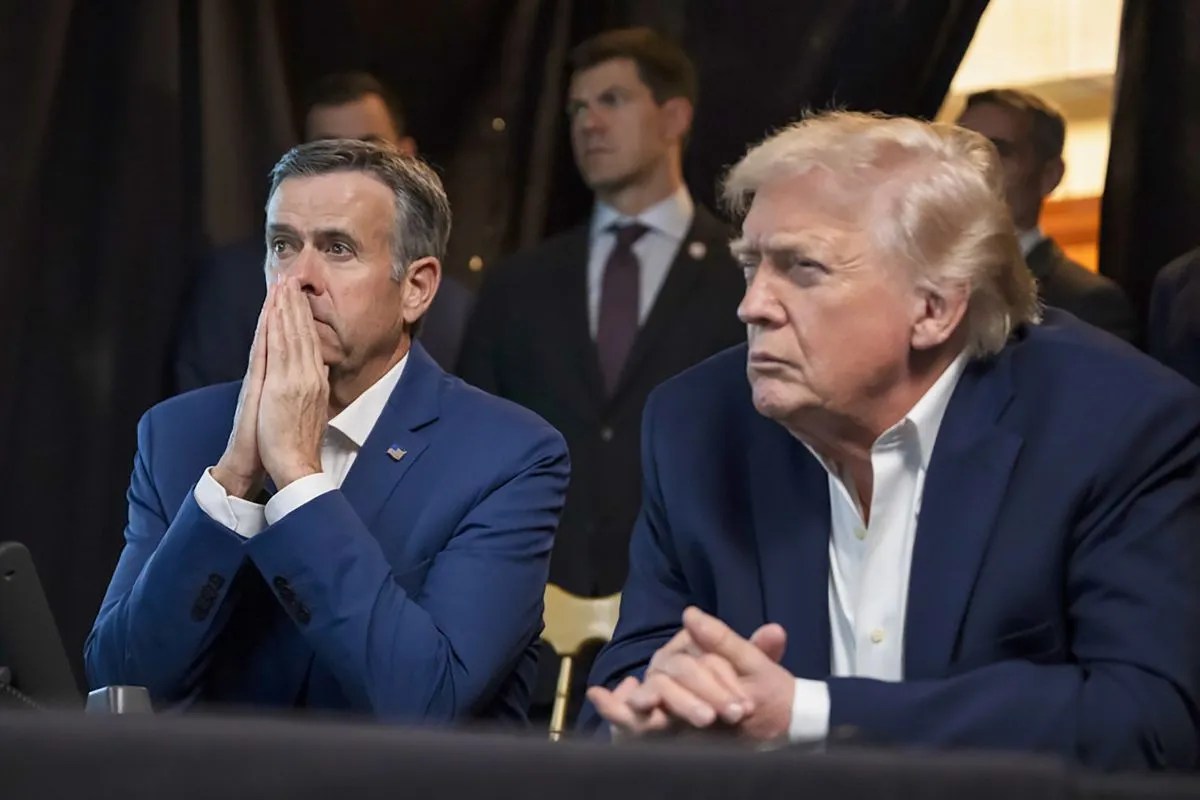
Unannounced statecraft relies on structural isolation to bypass bureaucratic friction. When Central Intelligence Agency Director John Ratcliffe boarded an unmarked United States military cargo aircraft bound for Moscow via Latvia, the operational design bypassed standard diplomatic channels and senior White House policy personnel entirely. This execution model highlights a recurring pattern in modern executive power: when traditional foreign service channels stall, administrative principals substitute institutional protocol with intelligence-led backchannels.
Understanding this maneuver requires analyzing the mechanics of state-level communication failures, the operational utility of intelligence directors as envoys, and the cost function of keeping senior cabinet officials uninformed.
The Architecture of Information Asymmetry
The decision to conceal high-level missions from domestic stakeholders serves a specific operational function. Bureaucracies leak, deliberate, and dilute strategic intent through inter-agency consensus-building. By restricting advance knowledge of Ratcliffe's itinerary to a minimal circle, the executive branch achieved two primary objectives:
- Mitigation of Inter-Agency Resistance: Traditional diplomatic corps prioritize alignment with regional allies, often introducing procedural delays or watering down direct messaging to appease coalition partners.
- Signaling Urgency to Adversaries: An unannounced visit by a principal intelligence officer carries a weight that traditional ambassadors cannot replicate, signaling that the communication comes directly from the head of state without legislative dilution.
Flight-tracking data revealed the logistical footprint of this isolation. Operating via a C-17 Globemaster III transport through Riga, the transit route minimized standard diplomatic notifications while maximizing physical security. The resulting confusion among European partners and domestic cabinet officers was not an administrative oversight, but a byproduct of closed-loop execution.
The Tripartite Message Matrix
While the White House minimized the significance of the engagement—labeling the trip semi-routine—intelligence assessments and subsequent leaks to foreign policy publications mapped out a dense operational agenda. The mission targeted three distinct geopolitical variables:
- Deterrence of Expanded Territorial Incursions: Ratcliffe communicated explicit warnings regarding potential Russian actions against North Atlantic Treaty Organization member states, reinforcing collective defense commitments.
- Economic and Security Decoupling: The discussions addressed Moscow's expanding military and commercial arrangements with Tehran, pressing for a reversal of bilateral integration.
- The Ukraine Conflict Stalemate: The envoy delivered assessments regarding the long-term sustainability of the war effort, targeting Russian decision-making structures directly.
The choice of an intelligence director rather than a special presidential envoy stems from the nature of intelligence services. Intelligence agencies maintain continuous, low-visibility contact channels that function even during diplomatic freezes. By routing the message through Russian intelligence counterparts rather than the Ministry of Foreign Affairs, the United States utilized a channel designed for pragmatic risk assessment rather than public posturing.
The Institutional Cost Function
Bypassing standard administrative hierarchies introduces distinct institutional liabilities. While operational secrecy protects against premature leaks, it creates severe friction within the executive branch itself. Senior officials who discover critical foreign missions through media reports experience a loss of operational coherence.
This creates a structural deficit in follow-through. When cabinet secretaries and regional policy heads are left outside the loop, subsequent diplomatic efforts lack integrated support. The strategy trades long-term institutional alignment for short-term tactical surprise.
Furthermore, public downplaying by the executive—characterizing high-stakes intelligence delegations as ordinary travel—forces foreign capitals to decode mixed signals. Moscow faces a dual narrative: a stark, unannounced warning delivered face-to-face by a spymaster, contrasted with public dismissals from the Oval Office. This divergence complicates the adversary's risk calculation, preventing them from neatly categorizing the outreach as either a sign of weakness or an ultimatum.
Strategic Execution Moving Forward
The deployment of intelligence chiefs for direct state-to-state bargaining marks a fundamental shift away from traditional career diplomacy. As formal negotiation frameworks face structural gridlock, executives will increasingly rely on clandestine, point-to-point intelligence communications to test red lines.
The primary risk of this methodology lies in its fragility. Without institutional infrastructure backing the backchannel, any miscommunication at the operational level risks immediate escalation without an established diplomatic buffer to absorb the shock.