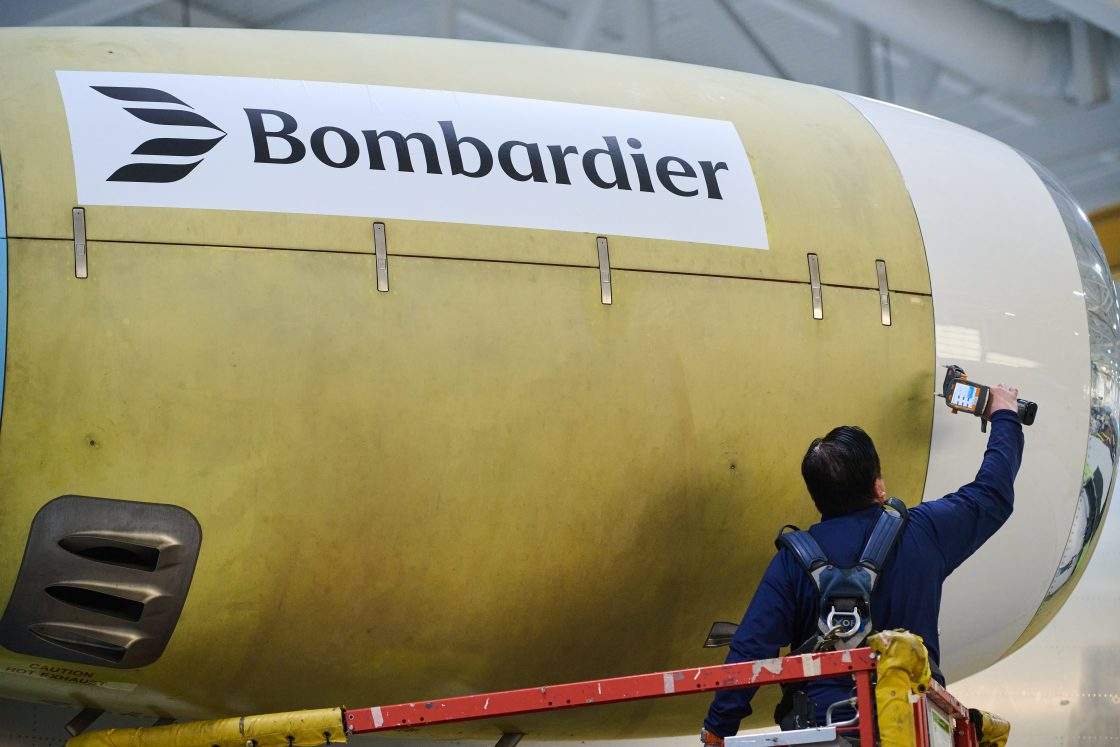
Geopolitical bluster rarely survives contact with actual supply chains. When Donald Trump backed off his aggressive trade rhetoric targeting Bombardier, official Washington chalked it up to standard political theater. But behind the headline-grabbing warnings and the high-stakes trade disputes lay a far more complex reality of cross-border manufacturing, aerospace integration, and raw economic leverage that politicians ignore at their peril.
The underlying friction point centered on the bitter trade dispute between Boeing and Bombardier regarding the CSeries commercial airliner. Boeing accused the Canadian manufacturer of dumping heavily subsidized aircraft into the United States market, setting off a regulatory war at the Department of Commerce and the International Trade Commission. For a brief moment, the narrative suggested an existential threat to Bombardier’s commercial aviation division and a broader rift in North American industrial relations.
Then, the posture shifted. Threats quieted, punitive duties were overturned by trade judges, and the immediate crisis receded, eventually leading to European manufacturer Airbus acquiring a controlling stake in the program, now known as the A220.
To understand why the escalation stopped, one must look past the podium rhetoric and examine how modern aerospace actually functions. Airplanes are not built in a vacuum, nor are they manufactured within the borders of a single nation. They are the ultimate manifestation of globalized engineering.
The Myth of National Supply Chains in Modern Aerospace
The fundamental misunderstanding in modern trade disputes is the assumption that a company belongs entirely to one country. Bombardier is proudly Canadian, headquartered in Montreal, but its supply chain reads like an inventory of American manufacturing might.
Wings, fuselage sections, and avionics travel back and forth across the border before a single airframe ever rolls out of a hangar. More critically, the engines powering the CSeries were designed and built by Pratt & Whitney, an American firm based in Connecticut. Major components originate in states whose congressional representatives hold substantial sway in Washington.
When a trade penalty threatens a foreign manufacturer, it often inflicts simultaneous collateral damage on domestic suppliers. A tariff designed to punish a Canadian firm rapidly translates into a tax on American component makers, job losses in domestic factories, and increased costs for American airlines trying to modernize their fleets.
Politicians love the optics of protecting national champions. Bureaucrats eventually run into the spreadsheet reality of component interdependence.
The Delta Factor and the Limits of Protectionism
Another major driver behind the cooling of hostilities was the behavior of American carriers themselves. Delta Air Lines had placed a massive, landmark order for CSeries jets, injecting much-needed life into the program. When Boeing petitioned for steep countervailing duties, Delta did not quietly back down. They publicly pushed back, arguing that the aircraft filled a market niche that Boeing simply did not serve with its aging 737 lineup.
This dynamic exposed a critical flaw in protectionist strategies. You cannot easily penalize a foreign manufacturer without alienating domestic buyers who rely on that specific product to remain competitive.
When an airline like Delta points out that blocking an import harms domestic operational efficiency, the political calculus changes immediately. Protectionism ceases to be about saving local jobs and starts looking like an artificial handicap imposed on domestic businesses.
Legal Realities Versus Political Posturing
It is also vital to distinguish between executive threats and the grinding machinery of international trade law. While political figures can command headlines with bold declarations, trade bodies operate under statutory frameworks that require actual evidence of market injury and illegal subsidization.
When the U.S. International Trade Commission unanimously ruled against Boeing, concluding that the domestic industry was not threatened by imports of Bombardier jets, it dealt a heavy blow to the political narrative. The legal system held the line against executive pressure.
That ruling demonstrated a persistent truth about global trade. Laws and independent tribunals still matter, even in eras marked by populist economic nationalism. Once the legal justification for punitive tariffs evaporated, maintaining the political crusade became much harder to defend.
The Airbus Lifeline and Strategic Realignment
Bombardier did not merely wait out the storm; they executed a strategic pivot that fundamentally altered the geopolitical chessboard. By partnering with Airbus, they integrated the disputed program into a truly global giant with deep roots in European and American markets alike.
Final assembly lines established in Alabama meant that CSeries aircraft delivered to U.S. airlines were suddenly manufactured on American soil by American workers. You cannot easily label a plane built in Mobile, Alabama, as an unfair foreign threat to American manufacturing.
This maneuver neutralized the primary protectionist argument. It transformed a bilateral trade dispute into a multilateral reality that defied easy categorization.
What the Bombardier Episode Teaches Us About Modern Trade
The easing of tensions between Washington and Bombardier offers a masterclass in how modern economic power operates. The era of pure economic nationalism collides constantly with the realities of integrated industrial ecosystems.
Threats are cheap. Rewriting the global aviation supply chain is expensive, disruptive, and politically perilous. When leaders realized that escalating the fight would damage domestic suppliers, alienate major airlines, and ultimately fail in independent trade courts, the rhetoric dialed back.
The next time an industry titan faces political crosshairs, look past the initial noise of the headlines. Follow the components, examine the supply chain, and watch where the parts are actually made. The bark is often loud, but the bite is constrained by the hard math of global commerce.