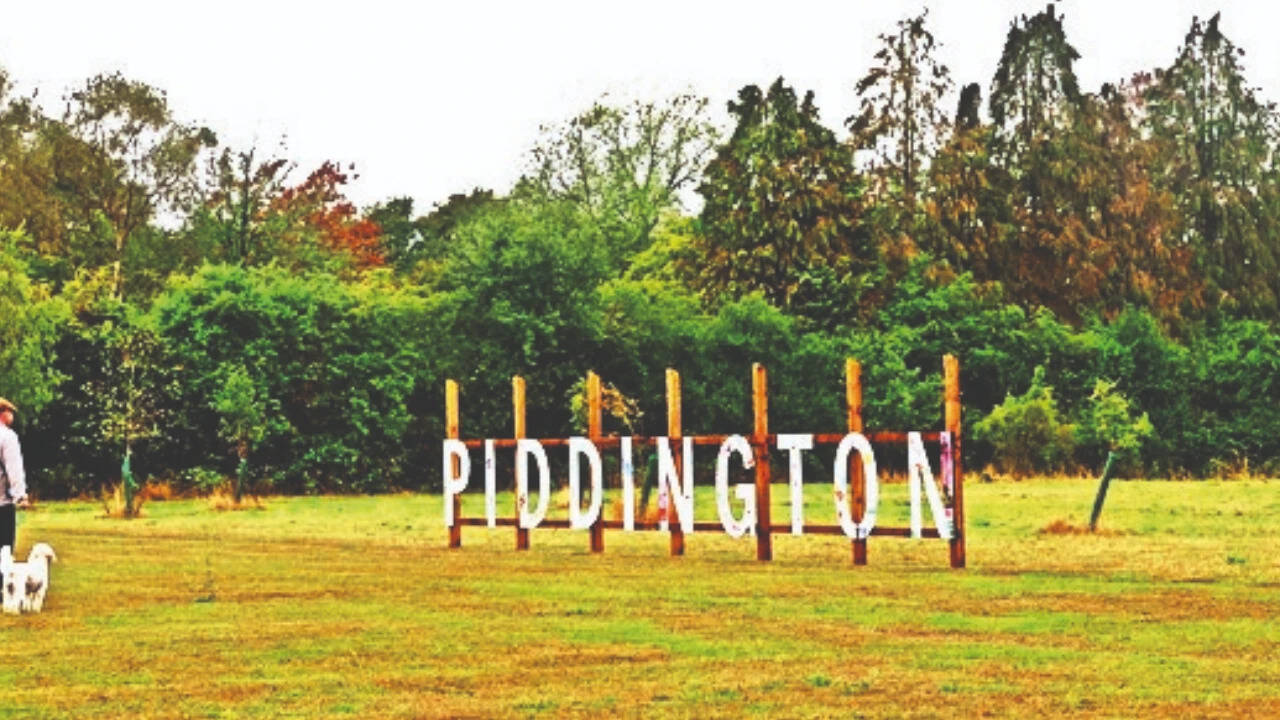
When the residents of Piddington, an Oxfordshire village numbering roughly three hundred and fifty souls, ballots in hand, cast a symbolic vote to secede from the United Kingdom, Westminster chortled. Editorial boards wrote it off as eccentric English whimsy, a quaint pastoral temper tantrum played out against the backdrop of a wearying immigration debate. After all, hamlets do not simply secede because Whitehall issues a planning directive. Villages lack treasuries, passports, and standing armies.
Yet dismissing Piddington as a geographic punchline misses the rot at the foundation of modern governance. The ballot was never about cartography. It was a cry of absolute desperation from citizens who realized that the machinery of the state operates entirely divorced from the communities it is supposed to protect.
The flashpoint was a government scheme to cram more than twelve hundred male asylum seekers into a disused Ministry of Defence site right on the settlement's doorstep. To understand why this triggered a mock declaration of independence, one must look past the headlines and examine the sheer arithmetic of state-imposed demographic shocks. Twelve hundred arrivals do not merely blend into a rural cluster of three hundred and fifty people. They outnumber the native population by nearly four to one. Local infrastructure, already straining under decades of austerity, faces an insurmountable burden.
Whitehall technocrats call this finding "alternative accommodation" to replace costly asylum hotels. To the people living down the narrow country lanes, it looks like an administrative occupation.
The central government's response followed a familiar, calcified script. Local objections were cataloged, filed away, and ultimately overridden by housing and communities secretary Angela Rayner, who granted full planning approval despite fierce local pushback. State power marched forward, indifferent to the friction it left behind. When citizens find every conventional channel of democratic recourse bricked up by bureaucratic fiat, they resort to theatrical defiance. A mock independence vote is what happens when people stop believing that mainstream political participation yields anything other than defeat.
What followed the administrative approval was even more revealing than the ballot itself. Political opportunists descended upon the village like crows to a carcass. Representatives from rival factions turned a local crisis into a shouting match for the cameras. The finger-pointing between political parties over who broke the immigration system in the first place offered zero comfort to residents staring down the barrel of a massive, state-run facility on a former military base.
This is the deeper failure of the modern political class. They treat localized friction as a public relations battle rather than a structural failure. Every policy announcement is calibrated for national media cycles, while the long-term social fabric of rural and semi-rural areas is treated as an acceptable casualty.
Centralized decision-making has created an institutional blindness. Planners sitting in air-conditioned London offices look at spreadsheets, maps, and capacity quotas. They see an empty block of government-owned land near Bicester and view it as an efficient line item. They do not see the single-track roads, the lack of policing resources, or the quiet anxiety of residents watching their community identity get swallowed by an arbitrary ministerial decree.
When communities feel entirely alienated from the decisions affecting their immediate security and environment, trust evaporates entirely. Once that trust is gone, civil disobedience stops being unthinkable. It becomes the only language the state bothers to translate.
Legal challenges are now winding their way through the courts, offering a glimmer of procedural hope to the villagers, but the damage is already done. Piddington has joined a growing catalog of places where the social contract has frayed to the point of snapping.
The government wants an end to expensive asylum hotels, a goal shared by taxpayers tired of fiscal hemorrhaging. Yet solving one administrative failure by bludgeoning local communities into submission does not fix the migration system. It merely relocates the chaos from urban hotel lobbies to rural doorsteps, ensuring that the next Piddington is already waiting in the wings.