The current Ebola outbreak in the eastern Democratic Republic of the Congo (DRC) is the fastest-growing Ebola outbreak ever recorded on the African continent. This crisis represents more than a localized public health emergency; it is a textbook failure of a complex operational system under acute stress. While previous interventions successfully contained outbreaks of the Zaire ebolavirus, the current spread of the less common Bundibugyo virus is accelerating.
To understand why traditional containment strategies are failing, we must analyze the outbreak not as a series of isolated challenges, but as a system of interlocking bottlenecks. The decay of containment is driven by a combination of a stealth biological profile, deep structural underfunding, armed conflict, and labor unrest.
The Viral Variable: Why Bundibugyo Evades Existing Defenses
Most historical containment successes in the DRC relied on the rapid deployment of the Ervebo vaccine and targeted monoclonal antibody therapies, such as Ebanga and Inmazeb. However, these tools are highly strain-specific, engineered exclusively for the Zaire ebolavirus. They offer zero therapeutic or prophylactic protection against the Bundibugyo virus.
The Detection Delay Bottleneck
The outbreak was officially declared on May 15, 2026, but epidemiological reconstructions suggest silent transmission was occurring as early as February 2026. This delay occurred because early diagnostic protocols in local clinics were configured to screen for the Zaire strain. Consequently, active cases of Bundibugyo were misidentified or dismissed, allowing the virus to establish a broad foothold in Ituri province prior to international mobilization.
Biological and Clinical Distinctiveness
The Bundibugyo virus behaves differently from its Zaire counterpart. While its case fatality rate (historically around 30% to 50%) is lower than the Zaire strain (which often exceeds 60% to 90%), its clinical presentation can be more insidious, presenting with mild, non-specific febrile symptoms in its early stages. This milder onset encourages patients to remain mobile and seek traditional medicine or local outpatient care, maximizing the window of community transmission.
The Math of Containment: The Isolation Efficacy Equation
The progression of an infectious outbreak is governed by the effective reproduction number, $R_t$, which defines the average number of secondary cases generated by a single infectious individual at time $t$. To achieve eradication, $R_t$ must be sustained below 1.
The dynamics of transmission can be modeled through the relation:
$$R_t = R_0 \cdot (1 - \theta \cdot \epsilon)$$
Where:
- $R_0$ is the basic reproduction number of the Bundibugyo virus in an unmitigated population.
- $\theta$ is the proportion of active infectious cases successfully isolated.
- $\epsilon$ is the efficacy of the isolation containment protocols (including sanitation, personal protective equipment [PPE] integrity, and safe burial practices).
Computer modeling by the U.S. Centers for Disease Control and Prevention (CDC) illustrates the critical sensitivity of these variables:
| Isolation Rate ($\theta$) | Containment Efficacy ($\epsilon$) | Projected Case Volume (3 Months) | Projected Mortality |
|---|---|---|---|
| 20% | Low (Compromised PPE/Protocols) | 20,000+ cases | 4,000+ deaths |
| 50% | Moderate (Standard Clinical Care) | ~14,000 cases | ~2,800 deaths |
| 70% | High (Optimal Intervention) | ~10,000 cases | ~2,000 deaths |
Currently, real-world data points to an isolation rate $\theta$ hovering at or below 20%. The system is operating on the worst-case trajectory, with over 1,926 confirmed cases and 702 deaths recorded as of July 13, 2026. This trajectory is driven by three systemic failures that depress both $\theta$ and $\epsilon$.
The Conflict-Displacement Loop: Disrupting the Contact Tracing Network
The geographic epicenter of the outbreak, Ituri province, is a highly volatile conflict zone. The presence of the Rwanda-backed M23 rebel group and the Allied Democratic Forces (ADF), an Islamic State-affiliated group, makes systematic epidemiological tracking almost impossible.
                  [Armed Conflict / Rebel Attacks]
                                │
                                ▼
                  [Mass Population Displacement]
                                │
                                ▼
         [Disruption of Contact Tracing & Diagnostics]
                                │
                                ▼
             [Undetected Community Transmission]
                                │
                                ▼
                    [Exponential Case Growth]
The Dispersal of Contact Contacts
Nearly one million individuals have been internally displaced by conflict within Ituri. Traditional contact tracing relies on locating and monitoring individuals who have been exposed to a confirmed case for a 21-day incubation period. In a displaced population, individuals move rapidly between informal camps, dense forests, and remote mining communities. When a contact flees an active combat area, the tracking thread is broken, resulting in undetected community transmission.
The Mining Sector Vector
A primary driver of rapid, untraceable transmission is the high concentration of artisanal miners in northeastern DRC. These workers move constantly between informal, remote excavation sites that lack basic sanitary infrastructure. If a miner contracts the virus, their high mobility ensures the virus is carried across provincial borders before clinical symptoms trigger detection.
The recent discovery of suspected cases in the major urban and transit hubs of Kisangani (Tshopo province) and Goma (North Kivu) is a direct consequence of this migration.
The Capital and Labor Deficit: Infrastructure Decay
Public health interventions cannot succeed without operational capacity. The containment response in the DRC is suffering from a double squeeze: international disinvestment and domestic administrative failure.
The Funding Cliff
Sweeping funding cuts to global health security budgets by major international donors last year significantly eroded local epidemic preparedness. Field teams lack basic hardware:
- Standard personal protective suits and face shields are in critically short supply.
- Testing kits specific to the Bundibugyo strain remain concentrated in centralized labs rather than distributed to remote field clinics.
- The scarcity of secure body bags prevents safe, dignified burials, leaving highly infectious corpses as major transmission vectors.
The Labor Strike Bottleneck
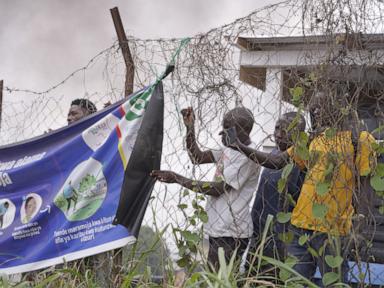
The system's fragility was laid bare on July 13, 2026, when dozens of frontline health workers—including epidemiologists, case investigators, drivers, and gravediggers—went on strike at Rwampara General Hospital in Ituri province. The workers blocked transport access and shuttered the treatment center in protest of unpaid wages and bonuses.
The Congolese Ministry of Health has attributed the payment delays to a bureaucratic auditing process intended to remove "ghost workers" from payrolls. However, the operational reality is that halting salaries for front-line responders during the peak of an epidemic instantly collapses the containment infrastructure. Without active case investigators and gravediggers, the contact tracing coverage rate (already weak at 64%) will plummet, and unsafe community burials will rise.
Experimental Therapeutics: Opportunities and Structural Constraints
With no approved treatments, researchers are deploying experimental clinical trials directly into the field. On July 2, 2026, the World Health Organization (WHO) initiated a randomized clinical trial at the Evangelical Medical Center in Bunia, evaluating two therapeutic compounds:
- Remdesivir (Gilead Sciences): A broad-spectrum nucleotide analog antiviral that has shown in-vitro efficacy against the Bundibugyo virus.
- MBP134 (Mapp Biopharmaceutical): A cocktail of engineered monoclonal antibodies designed to target and neutralize multiple ebolavirus species, including Bundibugyo.
Trial Design and Limitations
The trial is structured to compare the efficacy of remdesivir, MBP134, a combination of both, or the current standard supportive care. However, generating statistically robust clinical data requires a projected sample size of up to 1,000 participants over several months.
The trial’s deployment faces significant operational barriers:
- Cold Chain Logistics: Monoclonal antibodies and antivirals require continuous, climate-controlled storage. Maintaining a reliable cold chain in rural Congo, where electrical grids are non-existent, requires intensive diesel generator fuel and logistics that are vulnerable to rebel attacks.
- Access Limitations: The trial is currently restricted to a single secure facility in Bunia. Expanding the study to treatment centers at the heart of the outbreak is impossible due to the ongoing threat of physical attacks on medical personnel by armed groups and hostile community members.
- Late Clinical Presentation: For antivirals and monoclonal antibodies to prevent severe disease, they must be administered early in the viral replication cycle. Because community distrust and long travel distances delay clinical admission, patients often arrive in advanced stages of multi-organ failure, reducing the real-world efficacy of the trial therapeutics.
Tactical Protocol Realignment
To prevent the Bundibugyo outbreak from replicating the scale of the 2014 West African epidemic, immediate tactical adjustments are required. Standard public health templates must be abandoned in favor of an asymmetric, conflict-adapted operational model.
- Decentralize Diagnostics via Mobile RT-PCR: Relying on central laboratories in Bunia or Kinshasa creates a multi-day diagnostic lag. Outbreak response units must deploy rugged, solar-powered point-of-care testing units to provincial borders and mining transit hubs to isolate cases within hours of symptom onset.
- Establish Direct Cash-Transfer Pay Corridors: To prevent further labor strikes, the administration of payrolls for local epidemiologists, hygienic burial teams, and nurses must bypass complex national bureaucracies. Funding should transition to direct digital or cash payments managed by international partners on the ground, tied to verified biometric check-ins.
- Implement "In-Transit" Contact Tracing: Since population movement cannot be stopped in a conflict zone, contact tracing must shift from static household monitoring to transit-corridor tracking. Surveillance teams must be stationed at major ferry crossings, motorcycle taxi hubs, and mining checkpoints to screen travelers and trace contacts along active migration routes.