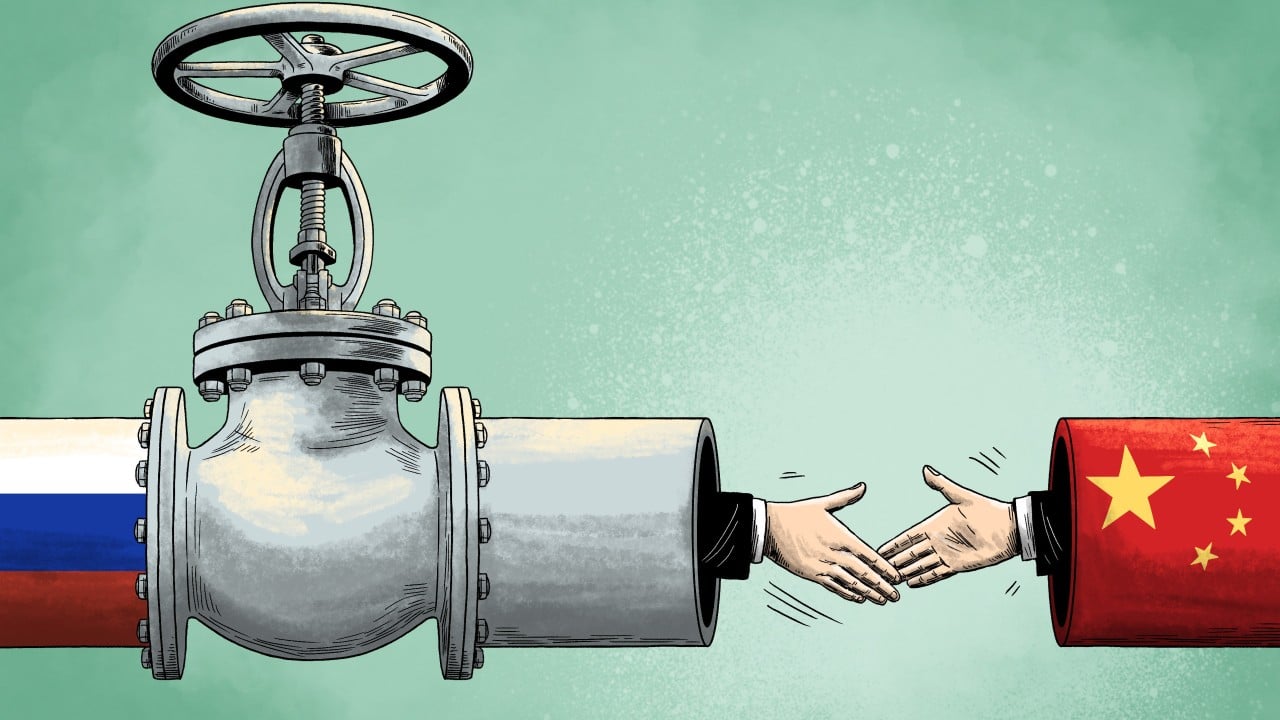
The failure of Russian President Vladimir Putin’s state visit to Beijing to yield a binding contract for the Power of Siberia 2 (PS2) pipeline exposes a profound miscalculation in contemporary energy geopolitics. On paper, the strategic convergence appeared absolute. The war in Iran and the subsequent closure of the Strait of Hormuz cut off a vital artery supplying one-third of China’s oil and 25 percent of its natural gas imports, specifically targeting its primary liquefied natural gas (LNG) suppliers, Qatar and the United Arab Emirates. Simultaneously, Russia sat on stranded western Siberian reserves from the Yamal Peninsula—the very fields that once fed Europe via the defunct Nord Stream network—desperately seeking an alternative fiscal anchor.
Yet, despite a high-profile summit featuring a non-binding memorandum of understanding on technical routing through Mongolia, the multi-billion-dollar megaproject remains deadlocked. The standard narrative attributes this impasse to superficial diplomatic posturing or temporary friction over pricing. The reality is structural. Moscow’s inability to close the deal during an active maritime energy crisis reveals a severe asymmetry in bargaining leverage, driven by game-theoretic dynamics, structural shifts in China’s domestic energy portfolio, and the prohibitive economic cost functions confronting Gazprom. Discover more on a related issue: this related article.
The Three Pillars of Chinese Monopsony Leverage
To understand why the Hormuz crisis did not instantly open the Russian valve, one must deconstruct the bilateral relationship through the lens of asymmetric market power. China acts effectively as a monopsonist buyer for overland Eurasian pipeline gas, while Russia operates as a captive seller with zero near-term alternative infrastructure to redirect its western reserves. This structural imbalance manifests across three distinct strategic pillars.
The Asymmetric Hold-Up Problem
In infrastructure economics, the hold-up problem dictates that once a party sinks capital into a non-fungible, highly specific asset—such as a fixed geographic pipeline—the counterparty can renegotiate terms downward because the asset has no alternative utility. Russia faces an acute version of this problem ex ante. China knows that Russia has already lost its primary high-margin customer base in the European Union. Consequently, Beijing has no incentive to finalize an agreement during a period of peak geopolitical duress for Moscow unless the terms secure long-term economic dominance. More reporting by Business Insider highlights comparable perspectives on the subject.
Portfolio Diversification and the Redundancy Mandate
The closure of the Strait of Hormuz certainly exposed China's maritime vulnerabilities, but it did not trigger a desperate capitulation to Russian terms. Over the past two decades, Beijing has systematically engineered a highly diversified energy procurement portfolio designed precisely to withstand localized chokepoint failures.
                       [Total Chinese Gas Imports]
                                    |
         +--------------------------+--------------------------+
         |                                                     |
 [Pipeline Networks]                                    [Maritime LNG Portfolio]
         |                                                     |
         +--> Central Asia-China (Lines A/B/C/D)               +--> Australia (Long-term Contract)
         +--> Power of Siberia 1 (38 bcm/y)                    +--> Qatar (Hormuz-dependent)
         +--> Far East Pipeline (12 bcm/y, operational 2027)   +--> United States (Spot/Flex)
China does not rely on a single geopolitical partner. Its current gas architecture spans multiple supply corridors:
- The Central Asian Corridor: Active pipelines crossing Turkmenistan, Uzbekistan, and Kazakhstan (Lines A, B, and C), with Line D under active negotiation to inject an additional 30 billion cubic meters (bcm) annually.
- Power of Siberia 1: An operational asset delivering 38 bcm per year under a 30-year contract.
- The Far East Pipeline: A signed 12 bcm per year project scheduled to commence operations in 2027.
This structural redundancy means that while a Hormuz shutdown creates short-term inflationary pressure and localized supply crunches, it does not threaten absolute structural starvation.
The Peak Gas Horizon and Macroeconomic Deceleration
Chinese state planners operate on a multi-decade horizon that accounts for a structural slowdown in domestic economic activity and an aggressive, state-subsidized transition toward renewable energy. The China National Petroleum Corporation (CNPC) projects that China’s domestic natural gas demand will peak within the next decade. Committing to a 30-year, 50 bcm per year take-or-pay contract for PS2 introduces the risk of over-procurement. This risk is amplified by a global wave of new LNG liquefaction capacity expected to hit the market from the United States and non-Hormuz exporters, which threatens to collapse spot prices and make fixed-price pipeline infrastructure economically uncompetitive.
The Price-Volume Cost Function Bottleneck
The operational deadlock between Gazprom and CNPC can be modeled as a fundamental conflict between two incompatible economic cost functions. The negotiations are stuck on two core variables: the base price formula and the structural rigidity of the purchase commitments.
[Gazprom Minimum Viable Price] = f(Production Cost + 2,600km Transit Fees + Capex Amortization)
                                       vs.
[CNPC Maximum Acceptable Price] = f(Subsidized Russian Domestic Rate / Depressed Global LNG Floor)
The price gap is highly specific. Historically, Russia priced its pipeline gas to China using formulas loosely indexed to oil benchmarks or European hubs, resulting in a lower per-unit return than its historical European sales but sufficient to cover capital expenditures. For PS2, however, Beijing is demanding a price point that approximates Russia’s heavily subsidized domestic market rates.
For Gazprom, accepting these terms would be financially catastrophic. The company reported historic revenue losses following the collapse of its European export volumes. Constructing the 2,600-kilometer PS2 corridor through Mongolia requires a projected capital expenditure exceeding $11.5 billion—a cost that is steadily climbing due to inflationary pressures and restricted access to Western specialized machinery. If Gazprom agrees to sell gas at domestic Russian rates, the payback period on the capital investment extends indefinitely, effectively turning the pipeline into a net-negative asset subsidized by the Russian state.
The second operational bottleneck involves the "take-or-pay" framework. Standard long-term gas contracts typically feature a minimum offtake clause of 80 to 85 percent, forcing the buyer to pay for the gas whether they draw it or not. China is aggressively pushing to lower this minimum threshold to 50 percent. By cutting the take-or-pay commitment, Beijing seeks to use PS2 as a swing-producer asset—drawing heavily when global LNG prices spike, and throttling back when cheaper seaborne alternatives emerge. This introduces unacceptable demand volatility for Russia, which requires stable, high-volume flows to maintain pressure and operational integrity across its Arctic extraction fields.
The Strategic Dilemma of the Mongolian Transit Corridor
The geopolitical geography of the proposed route introduces a third layer of friction that commercial data often overlooks. Unlike Power of Siberia 1, which crosses directly from Russian territory into northeastern China, PS2 is designed to traverse Mongolia. This creates a tripartite coordination problem that exacerbates the transaction costs of the negotiation.
[Yamal Fields (Russia)] ===> (Mongolia Transit) ===> [Northern Provinces (China)]
For China, a third-country transit corridor introduces structural risk. While Mongolia maintains highly functional relations with both giants, its presence as a sovereign intermediary introduces potential regulatory, transit-fee, and physical security vulnerabilities that do not exist in direct bilateral corridors. Beijing’s preference has always been to minimize transit-state exposure. The requirement to negotiate tariff structures with Ulaanbaatar adds a friction point that slows down the broader contractual finalization, particularly when China already possesses the leverage to demand that Russia absorb any transit fees imposed by the Mongolian government.
The Emerging Eurasian Energy Order
The outcome of the Beijing summit offers a definitive forecast for the structure of Eurasian energy trade. The pipeline will likely be built eventually—the geographic reality of Russia's stranded assets and China's long-term baseline energy requirements makes the absolute abandonment of the project improbable. However, the terms of the eventual final investment decision will signal a total capitulation of Russian pricing power.
The strategic play for corporate energy strategists and macro analysts is clear: do not interpret the continued delay of Power of Siberia 2 as a sign of a fracturing geopolitical alliance. Instead, view it as a cold validation of Chinese statecraft. Beijing will continue to exploit the Hormuz crisis to absorb heavily discounted Russian crude and short-term LNG spot cargoes via maritime routes, while simultaneously holding the line on PS2 negotiations. By refusing to rescue Moscow with a hasty pipeline contract, China ensures that when the valve is finally opened, it will be entirely on its own economic terms, locking in under-market energy inputs for the next quarter-century while forcing Gazprom to bear the long-term structural risk.
Why Russia and China Can't Reach a Simple Agreement to Make Them Both Rich
This video provides an institutional and economic analysis of the transaction frictions and hold-up problems that prevent Russia and China from finalizing the Power of Siberia 2 pipeline agreement despite the ongoing global energy crisis.