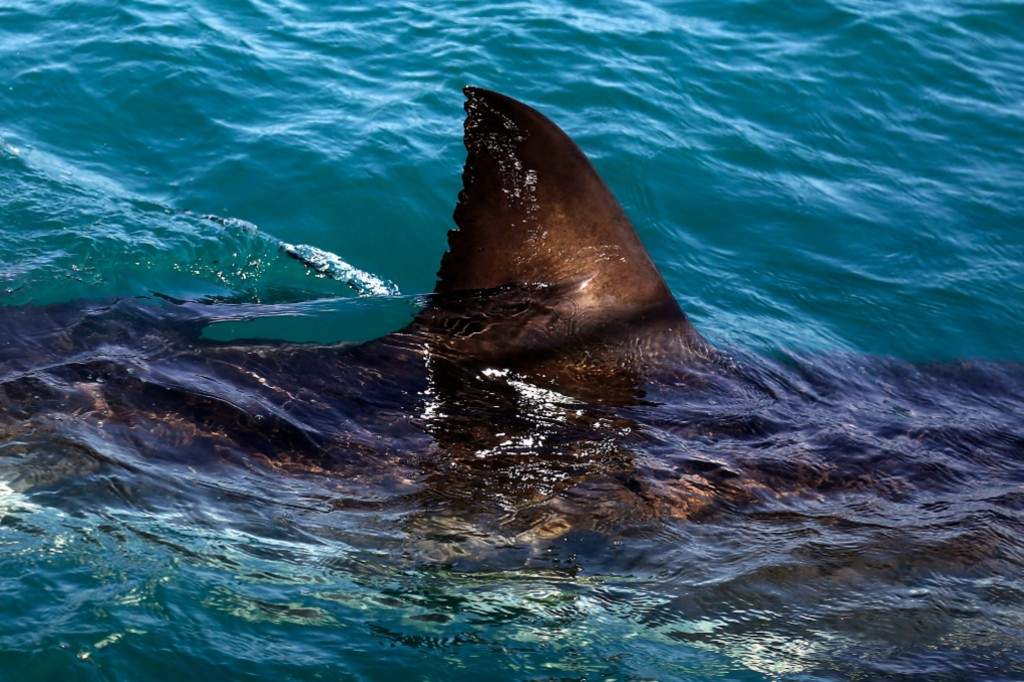
Fatal shark encounters along the South African coastline capture immediate public attention, yet standard breaking-news reports rarely explain why the incident occurred or how coastal risk actually behaves. A headline such as "65-year-old woman killed in shark attack off South African coast" isolates a single tragic outcome from the ecological, hydrographic, and operational variables that produce it. To understand coastal shark risk rigorously, analysts must separate headline shock from base-rate probability, map how predator foraging overlaps with human water use, and evaluate the operational limits of beach management.
Deconstructing Headline Reporting and Base-Rate Error
Standard incident reporting treats a rare, high-consequence event as a standalone spectacle rather than a data point inside a complex system. When a fatality is reported without exposure denominators or environmental context, readers routinely commit base-rate neglect: they overweight vivid mortality while under-weighting the millions of safe human-hours spent in the surf zone.
In analytical terms, incident coverage typically relies on a simple linear narrative: victim demographic, general location, predator presence, and lethal outcome. That structure leaves three critical questions unanswered. First, what was the specific hydrographic and ecological profile of the site at the time of the encounter? Second, which species and behavioral motivation—such as investigatory contact, territorial defense, or opportunistic foraging—align with the observed injury mechanics? Third, how did existing surveillance, barrier infrastructure, or swimmer behavior perform under those exact conditions?
Distinguishing known facts from educated hypotheses is essential whenever a specific case lacks a verified post-incident ecological or forensic report. In the absence of an official species identification, water-visibility measurement, or telemetry record for a given incident, the occurrence of a fatal encounter is a known fact, while attributing it to a specific shark species, migration pulse, or swimmer action remains a hypothesis constrained by regional biology and local conditions.
The Exposure-Hazard-Vulnerability Framework
Coastal shark risk is not a static property of a beach; it is a dynamic interaction of three variables: human exposure, environmental hazard, and physical vulnerability. A fatal encounter requires all three factors to intersect in space and time.
- Human exposure measures how many people enter the water, for how long, at what depth, and during which tidal or light conditions. Swimmers, waders, surfers, paddlers, and divers each occupy distinct zones of the water column and exhibit different surface profiles and movement signatures.
- Environmental hazard reflects the probability that a large predatory shark capable of inflicting fatal trauma is present and actively foraging or patrolling near shore. Along South Africa, coastal waters span multiple marine biogeographical zones—from cool, nutrient-rich Atlantic waters along the west and southwest to the warmer Agulhas Current regime along the south and east coasts—creating sharp shifts in fish biomass, pinniped or teleost prey distribution, and species composition.
- Physical vulnerability captures factors that increase the likelihood of severe injury or delayed rescue once an encounter begins, including reduced water clarity, deeper or unpatrolled water, distance from lifeguards or rapid-response medical care, and the mechanical force of a large predator bite.
This framework reveals a cause-and-effect relationship that simple incident summaries miss. An increase in reported incidents does not automatically prove that individual sharks have become more aggressive toward humans. Rising coastal population, tourism rebounds, year-round water sports, or concentrated gathering of swimmers in specific coves can expand human exposure even if per-hour risk remains low. Conversely, shifts in baitfish schools, river outflows, or sea-surface temperatures can pull predators closer to shore precisely when recreational users enter the water.
Consider two contrasting coastal profiles. Along a wide, gently sloping beach with clear water and continuous lifeguard coverage, a swimmer wading waist-deep faces a different exposure and rescue profile than someone swimming beyond the breaker line near a rocky point or river mouth where turbidity and currents complicate detection. In both cases, risk emerges from the joint distribution of people, prey, and predators rather than from a single isolated factor.
Ecological Drivers and Behavioral Mechanisms
Because exact telemetry and stomach-content or bite-wound data are not uniformly available for every reported event, rigorous analysis focuses on established behavioral and ecological mechanisms rather than guessing specifics. Large coastal sharks—such as white sharks, bull sharks, and tiger sharks in South African waters—rely on a combination of vision, mechanoreception via the lateral line, and electroreception to navigate and hunt.
Several well-documented mechanisms shape how these sensory systems interact with humans in coastal zones:
- Turbidity and sensory ambiguity: Reduced visibility from swell action, sand suspension, or post-rain runoff lowers visual discrimination. When visual cues are degraded, low-frequency vibrations or splashing at the surface can resemble struggling prey or a surface-oriented fish.
- Edge habitats and prey aggregation: Reefs, kelp beds, sandbars, rocky headlands, and estuaries concentrate marine life. Predators patrolling productivity gradients to locate teleost fish, rays, or marine mammals naturally encounter humans who share those same physical features for surfing, swimming, or diving.
- Diel and tidal timing: Dawn, dusk, and changing tides alter light penetration, current velocity, and prey movement. Many marine predators show heightened foraging activity during transitional light periods when human visual detection from shore or water is also impaired.
- Investigatory versus predatory contact: Sharks frequently investigate unfamiliar objects with mouth contact because they lack grasping limbs. Even a single exploratory bite from a large animal can cause catastrophic blood loss or structural damage due to jaw force and serrated dentition, regardless of whether the shark intended sustained consumption.
These mechanisms clarify why demographic attributes such as age—for example, a 65-year-old swimmer—must be interpreted carefully. Age alone does not attract a shark. Rather, physiological differences in tissue resilience, recovery capacity from hemorrhagic shock or cold-water immersion, and swimming speed or endurance can influence survival odds once trauma occurs, while local water depth, distance from shore, and response time dictate whether immediate hemorrhage control is possible.
Operational Trade-Offs in Coastal Risk Mitigation
Coastal authorities and marine managers face a classic resource-allocation problem under uncertainty: budgets, personnel, and ecological tolerance are finite, while ocean conditions change continuously. Every mitigation tool carries operational trade-offs and real limitations.
- Beach exclusion and spotter networks: Closing beaches or posting spotters on elevated vantage points provides rapid, non-lethal risk reduction when sharks are visually confirmed. The primary limitation is detection reliability: glare, chop, turbidity, and submerged depth can hide a shark from visual observers even when conditions appear calm.
- Lethal drumlines and traditional shark nets: Historical beach-protection gear was designed to reduce local shark numbers near bathing beaches. Its major operational drawbacks include substantial non-target bycatch of dolphins, rays, turtles, and non-threatening sharks, ongoing maintenance costs in heavy surf, and failure to guarantee a shark-free zone because animals can swim over, under, or around fixed installations.
- Non-lethal barriers and electronic deterrents: Exclusion enclosures and personal or area deterrents aim to separate humans from hazards or disrupt sensory cues without killing marine life. Exclusion nets require calm-to-moderate wave energy and frequent inspection against storm damage or entanglement, while deterrent efficacy varies across species, distances, and water conditions, making them risk reducers rather than guarantees.
- Public warning systems and swimmer education: Clear signage, water-quality and wildlife advisories, and guidance on avoiding dawn/dusk swims, river mouths, or isolated deep water are low-cost and scalable. Their limitation is behavioral compliance: experienced or recreational users often discount abstract probability when local conditions look inviting.
From an operational standpoint, no single intervention eliminates coastal risk. Effective management treats beach safety as a layered control system—pairing real-time environmental monitoring and lifeguard readiness with clear public communication—while acknowledging that an open ocean environment can never be engineered to zero risk.
Strategic Play for Coastal Operators and Water Users
Municipal beach managers, tourism operators, and coastal policymakers should shift decision-making away from reactive post-incident headlines toward exposure-weighted risk management. Establish standardized incident-response protocols that log water visibility, swell height, tide state, river outflow, and bather density alongside emergency medical response times so officials can evaluate system performance objectively rather than relying on speculation. Pair clear, location-specific advisory triggers—such as heightened alerts after heavy rain plumes or during low-light transitions—with visible lifeguard and rapid-bleeding-control readiness at high-use beaches, while auditing any physical barriers or deterrents against ecological bycatch and storm-failure metrics. For individuals entering South African coastal waters, treat conditions as a dynamic checklist: check local surf and visibility advisories before entry, avoid murky water near river mouths or steep drop-offs at dawn and dusk, and stay within patrolled zones where rapid rescue is feasible.