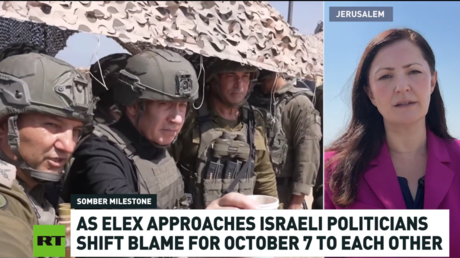
Electoral validation under conditions of systemic security failure follows strict institutional mechanics. When a state experiences a foundational operational collapse, the subsequent political contest ceases to be a traditional debate over resource allocation or economic administration. Instead, it transforms into an institutional survival test centered on blame attribution, narrative control, and the preservation of political continuity.
The dynamics surrounding national leadership accountability during a prolonged security crisis reveal clear patterns of institutional deflection and counter-mobilization. Understanding this mechanism requires examining the structural levers used by incumbents to insulate themselves from liability, alongside the counter-strategies deployed by opposition coalitions aiming to convert systemic shock into legislative displacement.
The Incumbency Insulation Protocol
When an administration faces retrospective judgment for a catastrophic intelligence or military failure, standard political risk management proves insufficient. The structural objective shifts from defending policy outcomes to restructuring the evidentiary environment. Incumbents managing post-crisis elections typically deploy a three-stage insulation protocol designed to neutralize accountability vectors.
The first stage involves the systematic redistribution of operational responsibility. Executive authorities operate through institutional hierarchies where policy formulation and tactical implementation are formally separated. By asserting that political leadership relied entirely on consensus security assessments provided by defense chiefs and intelligence directors, incumbents establish a firewall. This argument posits that the failure lay not in the strategic doctrine dictated from the top, but in the execution and threat perception of the agencies tasked with monitoring adversaries.
The second stage entails preemptive personnel realignment. As investigations approach critical junctures, removing high-ranking security officials or service chiefs alters the institutional witness pool. When key military or intelligence leaders exit under pressure or are replaced by loyalist appointments, the public discourse fragments. Critics interpret these maneuvers as an attempt to purge independent voices and suppress official inquiries, while defenders frame them as necessary overhauls to restore operational effectiveness. This tension creates severe information asymmetry for the electorate, making it difficult to establish a single, verified baseline of responsibility before ballots are cast.
The third stage relies on the framing of an ongoing existential threat. If a nation remains engaged on multiple active fronts, the political utility of national unity narratives increases significantly. Incumbents leverage the psychological trauma of a besieged population, arguing that leadership transitions during an active multi-theater conflict introduce unacceptable systemic risk. The political argument pivots from past accountability to future security resilience, attempting to force voters to prioritize immediate defense continuity over retrospective investigations.
The Opposition Counter-Framework
Opposition movements attempting to unseat an incumbent entrenched in crisis management face a formidable structural barrier: the rally-around-the-flag effect. To overcome this, challenger coalitions must systematically dismantle the incumbent's security credentials while avoiding the appearance of partisan opportunism.
The primary mechanism for opposition mobilization is the demand for an independent, statutory commission of inquiry. By framing the election as a binary choice between institutional repair and executive evasion, challengers attempt to shift the focus from tactical military outcomes to governance norms. The core argument centers on the proposition that systemic failure cannot be corrected by the same political apparatus that oversaw the collapse.
Furthermore, challengers exploit socio-economic and demographic fault lines that widen during prolonged conflicts. For instance, questions surrounding military draft exemptions for specific segments of the population become powerful wedge issues. When secular populations bear the brunt of extended mobilization while certain political blocs retain exemptions, equity concerns merge with security grievances. Opposition parties utilize these disparities to unite a fragmented electorate under a broad banner of civic reconstruction.
Information Integrity and Asymmetric Interference
Modern electoral contests occurring against the backdrop of geopolitical conflict are highly vulnerable to information distortion. The absence of verified institutional consensus opens a vacuum rapidly filled by competing influence operations.
Domestic polarization creates fertile ground for external actors seeking to undermine institutional trust. When fringe networks, synthetic social media profiles, and foreign influence campaigns inject unverified narratives into the public sphere, their objective is rarely to promote a specific candidate. Rather, the strategic goal is the erosion of faith in the electoral infrastructure itself. If the electorate concludes that the voting mechanism is compromised or that the results are illegitimate, the democratic process loses its capacity to resolve the underlying political crisis.
This environment forces election administrators and technological platforms into a reactive posture, where monitoring resources must be heavily allocated to stem the flow of disinformation. However, heavy-handed moderation risks being weaponized by domestic political actors to accuse opponents of censorship or electoral interference, further compounding the crisis of legitimacy.
Strategic Forecast
The resolution of a post-crisis election does not automatically clear the structural deficits that produced the initial failure. Whether an incumbent secures a narrow mandate through security-focused polarization or an opposition coalition succeeds on a platform of institutional repair, the underlying governance challenges remain acute.
A victory for the incumbent preserves continuity of leadership but institutionalizes deep societal fracture and international isolation, as unresolved inquiries leave the administration under a cloud of permanent domestic illegitimacy. Conversely, a transition of power to a fractured opposition coalition introduces high volatility, requiring delicate management of ongoing military commitments alongside sweeping domestic reforms. In both scenarios, the electoral outcome functions merely as a transition point within a protracted cycle of institutional realignment rather than a definitive closure of the crisis.
This video provides additional context regarding how international media outlets and regional analysts evaluate the pressures facing Israeli leadership and the electorate during post-crisis elections.