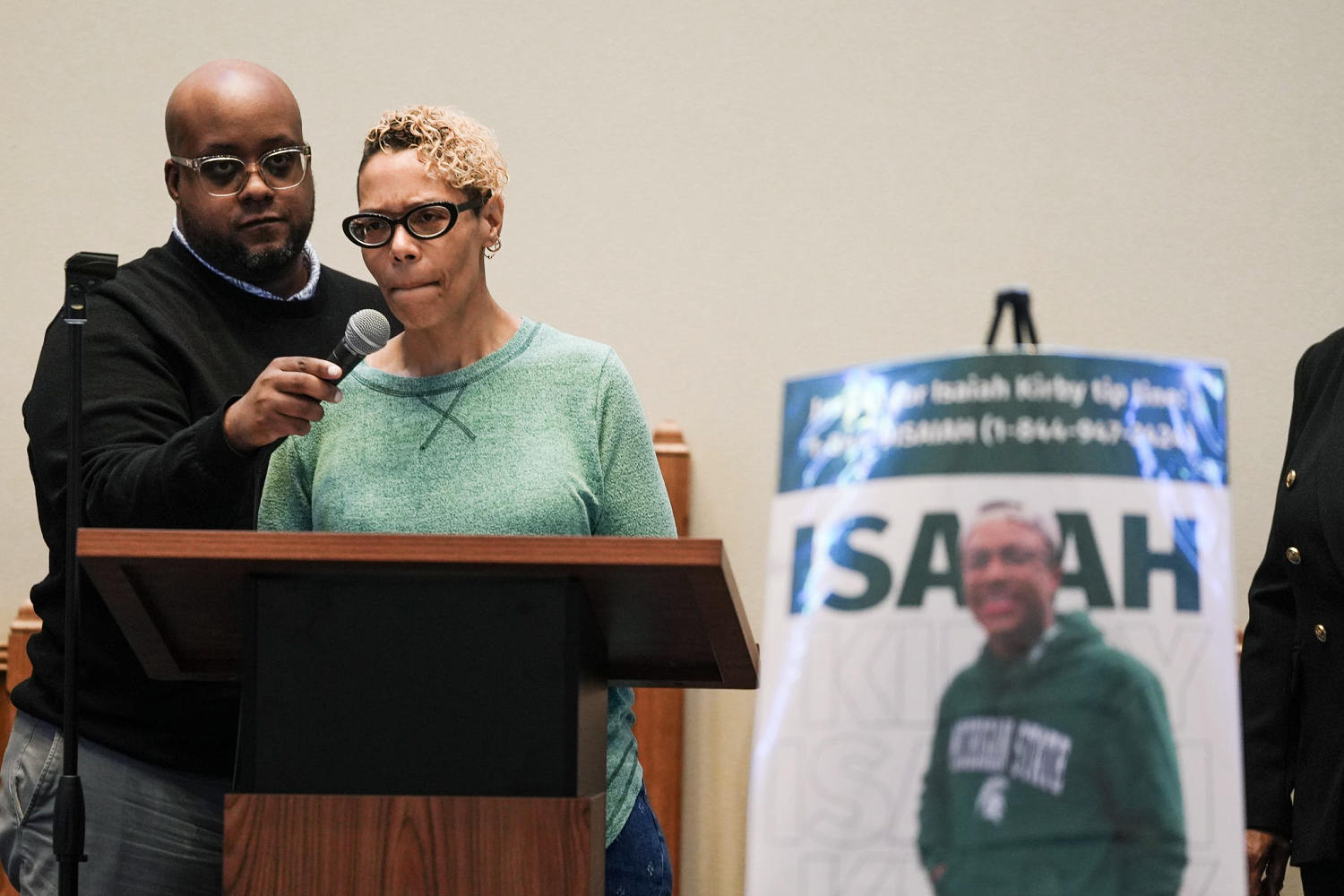
The fatal shooting of Michigan State University senior Isaiah Kirby by the East Lansing Police Department (ELPD) exposes a systematic failure in rapid-response triage, force application, and post-incident institutional transparency. On April 15, 2026, a sequential escalation from a retail theft call to a physical assault, and ultimately to an officer-involved shooting, resulted in a 21-year-old student sustaining at least 17 gunshot wounds. This analysis breaks down the event through three analytical prisms: the operational pipeline of law enforcement dispatch, the mechanics of lethal force allocation, and the structural information asymmetry that occurs during internal police investigations.
Understanding this event requires looking past the localized chaos near the intersection of Abbot and Lake Lansing roads. It demands an examination of the systemic friction points that occur when municipal police departments encounter rapidly shifting, high-stress variables.
The Operational Dispatch Pipeline and Informational Cascades
The initial friction point occurred within the command-and-control framework of the emergency dispatch system. The incident did not begin as a lethal threat; it evolved through a rapid cascade of escalating situational reports that compressed the responding officers' decision-making window.
- The Baseline Ingestion (6:06 p.m.): Dispatch received an initial report detailing a minor retail property crime (theft) at a local business. This specific tier of call establishes a low-intensity tactical posture for responding units, typically dictating standard arrival and contact protocols.
- The Vector Shift (Mid-Response): While units were en route, supplementary information altered the threat matrix from a property crime to a violent felony involving a weapon (theft evolving into a stabbing). The victim, later identified as 63-year-old Douglas Mielock, had sustained severe lacerations.
- The Tactical Bottleneck: This rapid evolution created an informational bottleneck. Responding officers arrived on-scene with highly compressed situational awareness, operating under the assumption of an active, volatile suspect in the immediate perimeter.
When law enforcement arrived, they encountered Kirby, who reportedly had blood on his person and held an ambiguous object. The department's official position states that Kirby ran toward officers and failed to comply with verbal commands to drop the object.
The structural flaw in this pipeline is the absence of an intermediate tactical pause. When a dispatch vector shifts so rapidly, responding officers frequently experience cognitive tunneling—focusing strictly on the highest reported threat level (the stabbing) and treating all proximal subjects displaying ambiguous behavior as an active lethal threat.
The Mechanics of Lethal Force Allocation
The core operational controversy centers on the volume and trajectory of the force deployed. The family's legal counsel reported that an examination of Kirby’s body revealed at least 17 gunshot wounds, including multiple entry points in his back. This volume of fire indicates a specific breakdown in the force-mitigation feedback loop.
The Lethal Force OODA Loop Failure
The standard law enforcement decision cycle relies on the OODA Loop (Observe, Orient, Decide, Act). In high-velocity encounters, this loop can fail in two specific ways:
- The Satiation Threshold Disconnect: Officers are trained to fire until the threat is neutralized. However, when multiple officers simultaneously deploy lethal force, a compounding effect occurs. If three officers fire simultaneously, the volume of kinetic impact scales exponentially before any single officer can observe the results of their initial shot, process the change in the suspect's posture, and decide to cease firing.
- The Trajectory Deficit: The presence of entry wounds in the back suggests a misalignment between the officer's perception of an advancing threat and the physical mechanics of the target's movement. In rapid-fire scenarios, a target's physical orientation can shift (falling, turning, or recoiling) within milliseconds. If the cognitive command to fire has already been executed, the officer continues to discharge their weapon into a rotating or collapsing target, creating rear-entry wounds that contradict the narrative of a sustained forward charge.
The deployment of 17 rounds indicates a failure to utilize less-lethal options. When an individual possesses an ambiguous object, standard defensive tactics dictate the staging of intermediate weapons, such as Electronic Control Devices (Tasers) or kinetic beanbag rounds, alongside lethal cover. The immediate escalation to a mass discharge of lethal ballistic force suggests that the presence of less-lethal alternatives was functionally nullified by the officers' compressed reaction timeline.
Institutional Asymmetry and Narrative Control
Following the application of lethal force, the friction points shifted from tactical execution to institutional transparency. The tension between the City of East Lansing, the Michigan State Police (MSP) as the independent investigative agency, and the Kirby family highlights the mechanics of corporate crisis management within municipal government.
The Edited Timeline Presentation Strategy
On May 7, 2026, police authorities presented a "selectively compiled" and narrated video package to the Kirby family and legal counsel. This approach is a standard institutional mechanism designed to establish a primary narrative framework before raw data enters the public domain. Legal counsel noted significant gaps in this presentation: the face of the subject was obfuscated, and the footage failed to definitively show a weapon or the act of the stabbing itself.
[Raw Law Enforcement Video Footage]
       │
       ▼
[Internal Redaction & Narration Superimposition] ──► Delays Public Release
       │
       ▼
[Targeted Family Review (May 7)] ──────────────────► Generates Legal Friction
       │
       ▼
[Redacted Public Release (May 15)] ────────────────► Preserves Information Asymmetry
This controlled release strategy minimizes immediate liability but maximizes community distrust. By presenting a narrated, curated timeline, the department attempts to control the interpretive context of the footage. This approach directly conflicts with the demands of independent oversight bodies and the victim's family, who require unedited, multi-angle raw data (body-worn cameras, fleet dashcams, and unredacted audio) to verify the sequence of events.
The Breakdown of Local Oversight Mechanics
The systemic insulation of the department is further complicated by recent legislative alterations. In October 2025, the City of East Lansing amended its police oversight ordinance, effectively curtailing the investigative authority of the East Lansing Independent Police Oversight Commission (ELIPOC).
The structural consequence of this policy change became clear during the Kirby investigation. Commission members confirmed that the ELPD has systemically withheld case evidence, refusing to communicate with the oversight body until internal and state-level investigations reach a formal conclusion. This creates a functional vacuum where independent local validation is impossible, leaving the community entirely dependent on the findings of state-level investigators (MSP) who operate outside local municipal accountability loops.
Tactical Reality vs. Systemic Demands
The East Lansing incident demonstrates the critical vulnerability of modern policing models: the inability to dynamically scale down force requirements when an operational environment shifts from structured reports to chaotic physical realities. The family's legal team emphasized that video snippets showed Kirby running with his hands elevated, holding a cell phone, a cup, and an unverified object.
The defense of such shootings traditionally rests on the "reasonable officer" standard established by federal jurisprudence, which evaluates actions based on the perspective of an officer on-scene making split-second decisions under intense stress. However, from a structural analysis viewpoint, relying on split-second human discretion as the sole failure-safeguard is an unstable operational strategy.
When a system regularly requires human operators to make millimeter-level, millisecond-accurate life-or-death evaluations without error, the fault lies within the system's design rather than the individual operator. The lack of documented business surveillance or third-party footage of the foundational stabbing event means the entire state-level review hinges on reconciling the mechanical telemetry of the body-worn cameras with the physical forensic data from the autopsy.
The operational path forward for municipal agencies navigating this tier of institutional crisis requires an immediate overhaul of their information-release protocols. To restore systemic equilibrium, municipalities must decouple the evidentiary compilation process from public relations strategy. Delaying the release of raw footage to construct a narrated timeline consistently yields a compounding deficit in public trust, transforming a tactical tragedy into a prolonged failure of civic governance.