Public health interventions in complex humanitarian crises frequently fail not from a lack of medical efficacy, but from a failure to account for local sociopolitical economies. When biological pathogens intersect with historical exploitation, community resistance becomes a predictable, rationalized systemic response rather than an irrational impediment. In the Democratic Republic of the Congo (DRC), the containment of the Ebola virus epidemic is structurally bottlenecked by a profound crisis of institutional trust. Resolving this friction requires shifting from a model of forced clinical compliance to an operational framework grounded in localized political economy and structural transparency.
The Structural Mechanics of Local Resistance
The friction observed during Ebola containment efforts in the DRC is driven by three distinct systemic variables. Public health models often mischaracterize community non-compliance as ignorance or superstition. In reality, resistance operates as a logical output of historical and contemporary extraction.
[Historical Exploitation] + [Asymmetric Resource Allocation] + [Coercive Medical Practices]
                                     │
                                     ▼
                        [Institutional Distrust Epidemic]
                                     │
                                     ▼
                        [Active Containment Resistance]
The Extraction-Distrust Loop
Decades of armed conflict, state absence, and international resource extraction have conditioned local populations to view external interventions with deep skepticism. When an international apparatus rapidly mobilizes hundreds of millions of dollars exclusively to contain a highly contagious virus—while neglecting endemic killers like malaria, measles, and malnutrition—the local population calculates a profound mismatch in utility. The intervention is perceived not as a humanitarian rescue, but as a biosecurity measure designed to protect the global North from contagion while treating the local populace as vectors rather than patients.
Asymmetric Resource Influx
The sudden injection of capital into impoverished regions creates severe economic distortions. High-paying logistics contracts, vehicle rentals, and per diems for international workers contrast sharply with the deprivation of the host community. This influx generates a political economy of disease where local actors suspect that external entities have a financial incentive to prolong the epidemic. Rumors regarding the artificial manufacture or deliberate spread of the virus are structural mechanisms used by the community to explain the sudden, monetized obsession with a single disease vector.
The Coercion-Resistance Feedback Dynamic
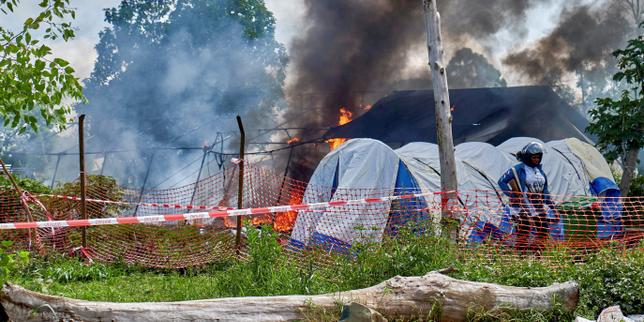
Standard biosecurity protocols often weaponize public health. Forced isolations, the militarized escort of medical teams, and the disruption of highly valued traditional burial practices strip individuals of agency during moments of acute vulnerability. When the state or international agencies deploy armed force to enforce medical compliance, they validate the population's pre-existing fear: that the medical response is an extension of state coercion.
Quantifying the Cost of Friction in Epidemic Response
The operational toll of institutional distrust can be modeled through specific performance metrics that directly impact epidemic velocity and reproduction rates ($R_0$).
| Operational Metric | Trust-Optimized Environment | Distrust-Friction Environment |
|---|---|---|
| Symptom-to-Isolation Latency | < 24 Hours | > 72 Hours (Hidden cases) |
| Contact Tracing Penetration | > 95% of identified network | < 60% due to evasion |
| Safe and Dignified Burials | Uncontested execution | Frequent community interference |
| Security Overhead Cost | < 5% of total budget | > 30% (Armed escorts, fortified bases) |
When community resistance lengthens the latency between symptom onset and isolation, the virus replicates unchecked within domestic units. The transmission chain multiplies exponentially because the surveillance apparatus loses visibility. Contact tracers face evasion, false identities, and physical hostility, rendering predictive modeling obsolete. The primary variable determining epidemic duration is not the efficacy of the vaccine ($rVSV-ZEBOV$), but the access velocity permitted by the host population.
Structural Vulnerabilities in the Current Biosecurity Paradigm
The international community relies on an extractive biosecurity model that prioritizes rapid containment over structural integration. This model suffers from three fatal design flaws.
Ephemeral Infrastructure Insertion
The response infrastructure is designed for rapid deployment and equally rapid liquidation. Treatment centers are constructed as isolated compounds, physically and operationally separated from the existing, underfunded local healthcare network. This isolation confirms the community's suspicion that these facilities are sites of exploitation rather than healing. When the epidemic wanes, the infrastructure is dismantled, leaving no lasting improvement in the region's baseline healthcare capacity.
Cognitive Dissonance in Mortality Prioritization
Local populations manage a portfolio of existential risks daily. When international agencies ignore diseases with higher local mortality rates to focus exclusively on Ebola, the community identifies a profound cognitive dissonance.
$$\text{Risk Disparity} = \frac{\text{Local Mortality Rate of Endemic Diseases (Measles/Malaria)}}{\text{Local Mortality Rate of Epidemic Disease (Ebola)}}$$
When this ratio is high, an exclusive focus on the epidemic disease signals to the population that the intervention is designed to serve external biosecurity priorities rather than local well-being.
Top-Down Communication Architecture
Communication strategies frequently rely on condescending pedagogical models. Information flows unidirectionally from scientific authorities to perceived uneducated populations. This architecture ignores local information ecosystems and structural power dynamics. It fails because it attempts to solve a problem of legitimacy with an influx of information. The population does not lack data regarding Ebola transmission; they lack a reason to trust the source of that data.
De-escalation Architecture: Structural Integration over Coercion
To neutralize the friction delaying containment, public health architecture must be re-engineered. The following framework replaces coercive biosecurity with integrated operational management.
Decentralized, Horizontal Care Structures
The centralized, high-security Ebola Treatment Center (ETC) must be replaced by decentralized isolation units integrated directly into existing community health clinics. These units must be staffed by local healthcare workers who possess pre-existing social capital.
- Visual Transparency: Replace opaque tarpaulins and high fences with transparent plexiglass barriers. This allows family members to view their hospitalized relatives, demystifying the clinical space and dispelling rumors of organ harvesting or deliberate termination.
- Family Co-Care Protocols: Allow family members to participate safely in non-clinical care components (e.g., meal preparation, emotional support) under strict infection prevention and control training. This transforms the family from an excluded, hostile adversary into an active participant in the recovery process.
Horizontal Integration of Healthcare Delivery
Epidemic responses must operate through a diversified healthcare delivery matrix. For every dollar allocated to Ebola-specific isolation and vaccination, a proportional percentage must be directed toward reinforcing the baseline clinical capacity for endemic diseases.
Medical teams must deploy integrated triage systems that diagnose and treat malaria, respiratory infections, and acute watery diarrhea alongside Ebola surveillance. When a patient enters a clinic and receives immediate, effective care for a common ailment, the legitimacy of the entire medical apparatus rises. This integration neutralizes the narrative that the response is solely interested in the biosecurity of distant nations.
Financial Localization and Economic Co-creation
To mitigate the destabilizing economic distortions of humanitarian surges, supply chains must be radically localized.
- Local Procurement Mandates: Outsource all non-specialized logistics, catering, construction, and transport services to local enterprises rather than international contractors.
- Wage Stabilization: Align response pay scales with local economic realities to prevent a brain drain from essential public services (e.g., teachers, local nurses) into short-term response roles.
- Community-Managed Budgets: Allocate a portion of the response infrastructure budget directly to community development councils. Allow these councils to determine which ancillary infrastructure projects (e.g., clean water wells, road repairs) will be executed alongside the health intervention. This shifts the local perception of the response from an extractive enterprise to a collaborative asset.
Operational Constraints and Strategic Trade-offs
This integrated framework is not without operational risk. Decentralizing care models in active conflict zones increases the vulnerability of medical personnel to non-state armed groups. Managing diversified health clinics requires more complex logistics pipelines than operating a single, fortified, centralized ETC. Furthermore, localizing procurement requires rigorous auditing mechanisms to prevent the co-optation of response funds by local political elites or armed factions.
These challenges require a calculated trade-off. The centralized, militarized model offers high internal control but faces severe external resistance, leading to a protracted epidemic footprint. The integrated, decentralized model accepts higher operational complexity and lower immediate control in exchange for a drastic reduction in community friction, ultimately accelerating the trajectory toward zero transmission.
The Strategic Path to Transmission Interruption
The critical path to ending epidemic stagnation requires an immediate operational pivot. Public health authorities must transition from an enforcement posture to an institutional co-investment strategy. Security forces must be removed from the immediate perimeter of clinical operations; their presence creates more security friction than it mitigates.
Future containment strategies must tie epidemiological milestones to permanent local health infrastructure transfers. When a community realizes that cooperating with contact tracers and isolation protocols accelerates the transformation of temporary isolation wards into permanent, fully equipped maternal and pediatric clinics, the incentives align. Compliance is achieved not through sensitization or force, but through structural reciprocity that respects the political economy of the host population. Only when the local community ceases to be the object of the response and becomes its primary stakeholder can the transmission chains be permanently broken.