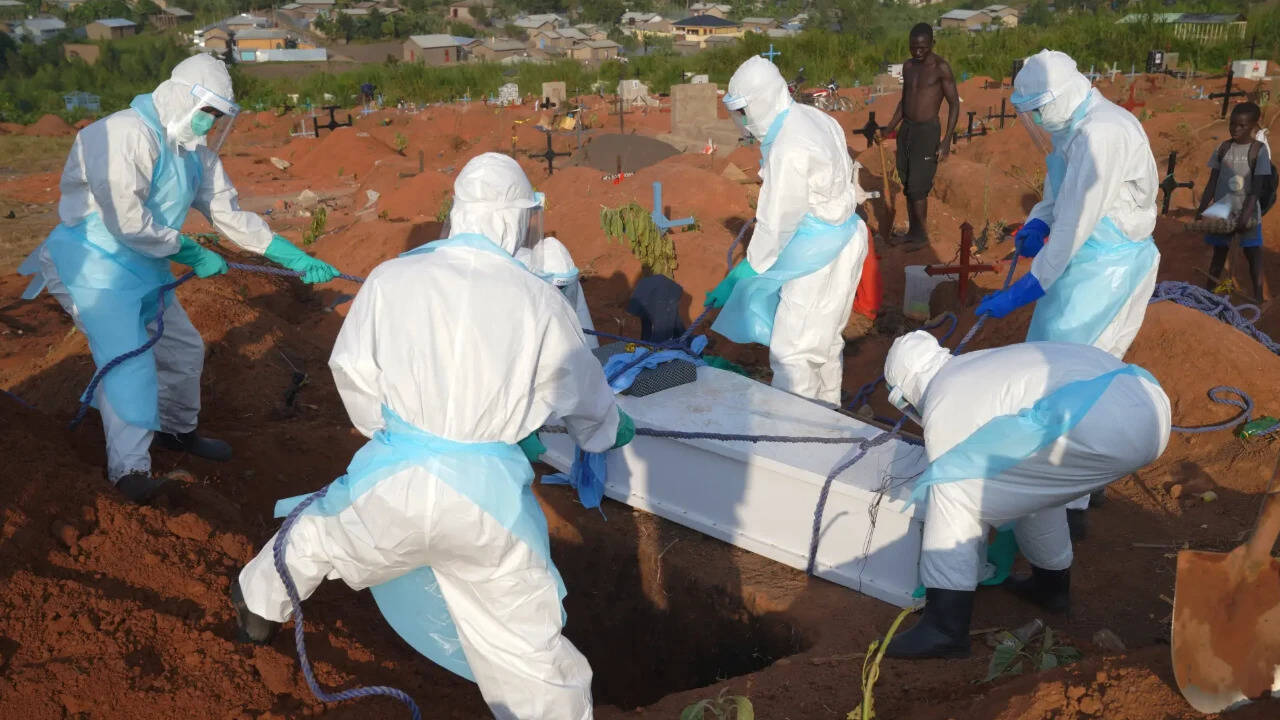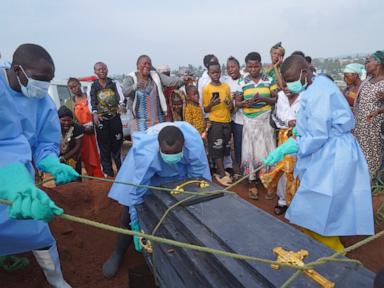
Epidemiological containment relies entirely on mathematical velocity matching. When transmission speed outpaces contact tracing capacity, an epidemic transitions from a localized cluster to a structural systemic failure. The ongoing viral event in the Democratic Republic of Congo has crossed a critical threshold, recording over 6,100 confirmed cases and surpassing 3,000 deaths. Driven by the Bundibugyo species of the orthoebolavirus genus, this crisis represents the fastest-growing outbreak in the nation’s history. Deconstructing the mechanics behind this acceleration exposes the operational breakdowns that sustain viral transmission across six affected provinces.
The primary driver of the current trajectory is the divergence between viral reproduction numbers and intervention deployment speed. Traditional outbreak analyses focus heavily on the crude case fatality ratio, which hovers near forty-eight percent. However, the mortality metric is a lagging indicator. The leading indicator that dictates the curve is the community death rate. When a high percentage of fatalities occur outside designated treatment facilities, it mathematically proves that transmission chains remain unmapped. Every uncontained community death generates multiple secondary exposure vectors within households and informal care networks before isolation protocols can be enforced. For another look, see: this related article.
The Structural Breakdown of Transmission Chains
Containment failure stems from three distinct operational friction points.
The first limitation involves surveillance lag. Early detection depends on passive reporting systems within rural and semi-urban health zones. When diagnostic networks experience transit delays, symptom onset and laboratory confirmation are separated by days. During this window, infected individuals remain mobile within densely populated trading hubs across Ituri and North Kivu provinces. Similar reporting regarding this has been published by Medical News Today.
The second bottleneck is clinical resource allocation relative to patient influx. Treating filovirus infections requires strict ratios of specialized personnel and isolation infrastructure. While laboratory capacity has scaled to process thousands of daily samples, the physical distribution of specialized beds and personal protective equipment faces logistical constraints across rugged terrain and insecure transit corridors.
The third vulnerability lies in community-level friction. Epidemic management requires absolute trust between affected populations and response teams. Historical distrust, combined with the socioeconomic disruption of quarantine measures, drives patients away from formal treatment centers. This behavioral response artificially suppresses reported case numbers early in infection cycles, ensuring that patients arrive at facilities only during advanced, highly contagious stages of organ failure.
The Pathogen Variable
The biological agent dictating the current crisis introduces distinct therapeutic challenges. The Bundibugyo virus differs structurally from the Zaire strain that dominated previous Central African epidemics and the 2014 to 2016 West African crisis. Standard countermeasures, including specific licensed vaccines and monoclonal antibody therapies optimized for the Zaire species, face efficacy hurdles when applied to this specific viral lineage. While cross-protection studies suggest potential utility from existing stockpiles, large-scale clinical trials remain ongoing to validate deployment parameters.
This immunological reality forces response teams to rely primarily on non-pharmaceutical interventions. Barrier nursing, rigorous contact tracing, safe burial practices, and localized quarantines form the entire defensive perimeter. Without a silver-bullet therapeutic or widely deployed specific vaccine, containment efficiency depends entirely on human operational precision.
Strategic Operational Shifts
Halting exponential expansion requires an immediate reallocation of capital and human resources away from reactive treatment and toward aggressive community-level interception. Field units must transition from passive facility management to active door-to-door epidemiological mapping.
Resource deployment should follow a strict geographic prioritization model, concentrating containment bandwidth on high-density transmission nodes rather than diffusing assets uniformly across all affected health zones. Establishing decentralized community care units close to localized flare-ups reduces transit times for suspected cases, directly mitigating the risk of exposure during transit to regional treatment hubs. Integrating local civic leaders into the operational command structure resolves community resistance vectors, neutralizing the behavioral concealment that feeds hidden transmission chains.
Deploy operational mobile diagnostic units directly to regional market centers to reduce sample turnaround times from days to hours, ensuring immediate isolation protocols for positive identifications before secondary transmission occurs.