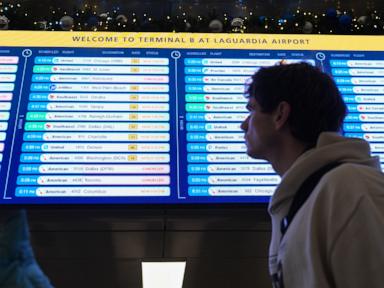
Public scrutiny following an aviation ground stop routinely defaults to pattern-matching rather than root-cause engineering. When the Federal Aviation Administration (FAA) introduces an automated traffic management tool like the SMART AI system alongside a significant airspace disruption, public discourse immediately conflates temporal proximity with causal responsibility. Evaluating whether an artificial intelligence deployment caused a ground stop requires separating algorithmic decision-support architecture from deterministic safety triggers. A ground stop is not an opaque software glitch; it is a deliberate flow-control mechanism triggered when sector demand exceeds operational capacity or when primary communications, navigation, and surveillance (CNS) infrastructure degrades below regulatory minimums.
Deconstructing the Aviation Ground Stop Mechanism
Airspace operations rely on strict deterministic boundaries designed to eliminate single points of failure. To understand why an automated traffic management initiative cannot unilaterally trigger an uncommanded nationwide or regional ground stop, operators must examine the mechanics of Traffic Flow Management (TFM).
A ground stop is a tactical air traffic management initiative requiring aircraft that meet specific criteria to remain on the ground at their departure airports. The FAA Air Traffic Control System Command Center (ATCSCC) issues these directives through formal advisories. The decision chain rests on three operational thresholds:
- Sector Saturation: Every air route traffic control center (ARTCC) divides airspace into sectors with hard Monitor Alert Parameter (MAP) limits. When projected aircraft counts exceed the MAP value—typically due to convective weather compressing usable airspace—traffic management specialists initiate ground stops to prevent controller task saturation.
- Infrastructure Degradation: Primary radar outages, frequency congestion, or failures in the Notice to Air Missions (NOTAM) and flight plan processing pipelines force an immediate reduction in airspace capacity. When redundancy drops below safety margins, holding aircraft on the ground is the only way to guarantee separation standards.
- Terminal Constraints: Runway closures, surface congestion, or low-visibility instrument meteorological conditions (IMC) reduce airport acceptance rates (AAR). If airborne holding patterns reach capacity, upstream departures halt.
In each scenario, the trigger is either a physical environmental constraint or a failure in core legacy infrastructure—such as the En Route Automation Modernization (ERAM) system or the Terminal Flight Data Manager (TFDM)—rather than an advisory AI layer.
Architectural Separation Between Advisory AI and Control Loops
Modernization programs within the National Airspace System (NAS) adhere to a strict architectural boundary between advisory optimization and safety-critical execution. Systems designated under smart traffic management or AI-assisted routing operate on the periphery of the core control loop, functioning within what systems engineers classify as a "human-in-the-loop" advisory framework.
The Ingestion and Inference Layer
Advisory AI models ingest historical flight tracks, convective weather forecasts, wind profiles, and airport surface telemetry. Their mathematical objective is multi-variable optimization: predicting congestion bottlenecks hours before they materialize and proposing reroute trajectories or miles-in-trail restrictions to smooth traffic flow. These models run in parallel to operational displays, processing telemetry without write-access to active flight strips or automated clearance delivery systems.
The Execution Firewall
Between an AI recommendation and an operational directive stands a hard procedural and technical firewall. An AI model cannot publish an ATCSCC advisory, alter a flight plan in ERAM, or transmit a clearance via Controller-Pilot Data Link Communications (CPDLC). Every proposed flow-control adjustment requires validation, modification, and manual execution by certified traffic management coordinators. Because the software lacks actuation authority, an algorithmic error or model hallucination results in a suboptimal recommendation displayed on a planning console—not an automated halt to air commerce.
The Legacy Infrastructure Bottleneck
The actual vulnerability in modern aviation operations stems from the interface between new analytical layers and decades-old foundational databases. When disruptions occur during modernization rollouts, the failure mode rarely originates inside the neural network or heuristic engine. Instead, failures typically occur at the data ingestion bus—where high-frequency queries from modern analytics tools place unexpected read-loads on legacy relational databases, or where corrupted message formatting in older protocols causes downstream parsing errors. Distinguishing between an AI logic failure and an interface throughput bottleneck is critical for accurate post-incident forensics.
The Attribution Fallacy in Complex Socio-Technical Systems
When an aviation disruption coincides with the announcement or early deployment of an AI system, public commentary frequently falls into the post hoc ergo propter hoc fallacy. In high-reliability organizations (HROs), this misattribution is compounded by three structural factors:
- Opacity of Legacy Systems: Few observers outside aviation engineering understand the fragility of legacy telecommunications networks, mainframe flight-data processors, or aging radio-frequency relays. "AI" serves as an accessible, culturally resonant scapegoat compared to explaining a memory leak in a 30-year-old telecommunications router.
- Asymmetric Transparency: Federal agencies routinely publicize modernization milestones to demonstrate legislative accountability, while specific infrastructure vulnerabilities remain restricted under Critical Infrastructure Information (CII) protocols. The public sees the press release about the new AI system; they do not see the routine maintenance logs of aging radar interfaces.
- Normal Accident Theory Dynamics: Sociologist Charles Perrow observed that tightly coupled, complex systems inevitably experience localized component failures. In an airspace network handling over 45,000 daily flights, ground stops occur daily due to localized weather, staffing shortages, or equipment resets. Overlaying a new software rollout onto a baseline of continuous minor disruptions guarantees statistical overlap without establishing causality.
Evaluating System Risk Through Operational Frameworks
To rigorously assess whether an automated system like SMART AI poses systemic risk to airspace continuity, analysts must apply a structured failure-mode evaluation rather than relying on speculative correlation.
1. Coupling and Isolation Analysis
Systems engineers evaluate risk by measuring the degree of coupling between the new software and the legacy core. If the SMART AI system operates via read-only telemetry feeds (such as System Wide Information Management, or SWIM, data streams), its coupling is loose. A complete crash of the AI cluster would leave the underlying SWIM feed and the operational air traffic control screens entirely unaffected. Tight coupling—where the core control system waits for a synchronous response from the AI module before processing a flight plan—would represent an unacceptable architectural flaw that violates FAA DO-278A software assurance standards for ground-based systems.
2. Failure Mode and Effects Analysis (FMEA)
In certified aviation software, every component undergoes FMEA to map how a specific fault propagates through the network:
- Data Starvation: If weather or radar feeds drop, does the AI fail gracefully by alerting the operator, or does it extrapolate false trajectories?
- Alert Fatigue: If an advisory system generates excessive false-positive congestion warnings, traffic management specialists may become desensitized, delaying human intervention during a genuine bottleneck.
- Automation Bias: The primary human-factors risk is not that the AI takes over, but that operators over-rely on its predictions, reducing their manual situational awareness when the model encounters out-of-distribution weather events.
3. Temporal Correlation vs. Telemetry Verification
Establishing a causal link between a software deployment and a ground stop requires verifiable forensic markers:
- Timestamp synchronization between software patch deployment or high-compute batch jobs and the exact onset of system latency.
- Error logs from core operational databases showing thread exhaustion or packet drops originating from the new system's IP subnet.
- Official ATCSCC advisory texts, which explicitly record the operational cause code (e.g., Weather, Equipment, Volume, Runway) for every ground stop issued.
Without documented alignment across these three telemetry sources, claims linking an advisory AI tool to an operational ground stop remain unsupported hypotheses.
Known Facts Versus Unverified Hypotheses in Aviation AI
Maintaining analytical rigor requires separating documented operational realities from speculative narratives surrounding FAA modernization.
Established Operational Facts:
- The FAA utilizes machine learning and advanced analytics within its Traffic Flow Management System (TFMS) and SWIM architectures to forecast convective weather impacts, optimize trajectory-based operations, and predict terminal congestion.
- All predictive AI tools currently deployed in active US airspace operate strictly in an advisory capacity; human air traffic controllers and traffic management specialists retain exclusive authority over separation and flow-control directives.
- Ground stops are standard, recurring tactical tools used daily to balance airspace demand against safe operational capacity, governed by transparent advisory logs issued by the ATCSCC.
Unverified Hypotheses and Analytical Blind Spots:
- The assumption that early-stage AI deployments possess automated actuation privileges over flight clearances or ground-stop advisories contradicts existing federal aviation safety certifications.
- The hypothesis that indirect infrastructure strain—such as excessive API polling from new analytical tools degrading legacy server performance—contributes to peripheral slowdowns remains an ongoing engineering concern during any NAS modernization phase, requiring continuous network telemetry monitoring rather than reactive speculation.
- Long-term human-factors degradation, specifically how algorithmic decision-support alters controller cognitive load during sudden system reverts to manual operations, remains an active area of empirical study rather than a settled operational metric.
Strategic Framework for Airspace Modernization Governance
Deploying machine learning inside safety-critical national infrastructure demands a governance model that prioritizes verifiable isolation over rapid feature integration. As the FAA expands predictive analytics across en route and terminal environments, engineering leadership and oversight bodies must enforce three non-negotiable operational controls:
First, enforce strict unidirectional data diodes between operational safety systems and analytical AI clusters. Predictive engines must ingest telemetry exclusively from replicated data buses, ensuring zero possibility of upstream packet injection, query-induced latency, or cascading faults into active flight-data processors.
Second, mandate transparent post-incident telemetry disclosures whenever major airspace disruptions coincide with system upgrades. Publishing anonymized root-cause architectural metrics—distinguishing between telecommunications hardware faults, legacy software exceptions, and advisory tool updates—eliminates speculative narratives and maintains institutional credibility with airlines and the traveling public.
Third, institutionalize degraded-mode operational drills where traffic management teams execute complex flow-control scenarios with advisory AI displays intentionally disabled. Validating that human operators can seamlessly absorb full cognitive load without algorithmic assistance ensures that artificial intelligence remains a resilient force multiplier rather than a single point of operational dependency.