The U.S. Department of Justice charged 48 foreign nationals across Pennsylvania, California, Florida, New York, and Nevada with election-related offenses in late October 2026, exposing a multi-layered administrative failure where state-level registration friction intersects with federal naturalization audits. Rather than revealing an organized conspiracy to alter electoral outcomes, the indictments document an enforcement mechanism driven by retrospective data cross-referencing—specifically, the collision between automated state voter rolls and federal immigration vetting. Among the defendants are two Indian lawful permanent residents in California, Amandeep Kaur and Kamlesh Navnitlal Shah, whose distinct charging profiles illustrate the exact legal and procedural thresholds separating misdemeanor unlawful voting from felony naturalization fraud.
Standard reporting treats these prosecutions as isolated headlines or partisan talking points, obscuring the institutional architecture that produces both the violations and the arrests. Understanding the operational reality requires breaking down the prosecutorial mechanics, the statutory tiering of offenses, the friction between state election administration and federal databases, and the asymmetric immigration consequences for lawful permanent residents.
The Structural Architecture of Non-Citizen Voting Prosecutions
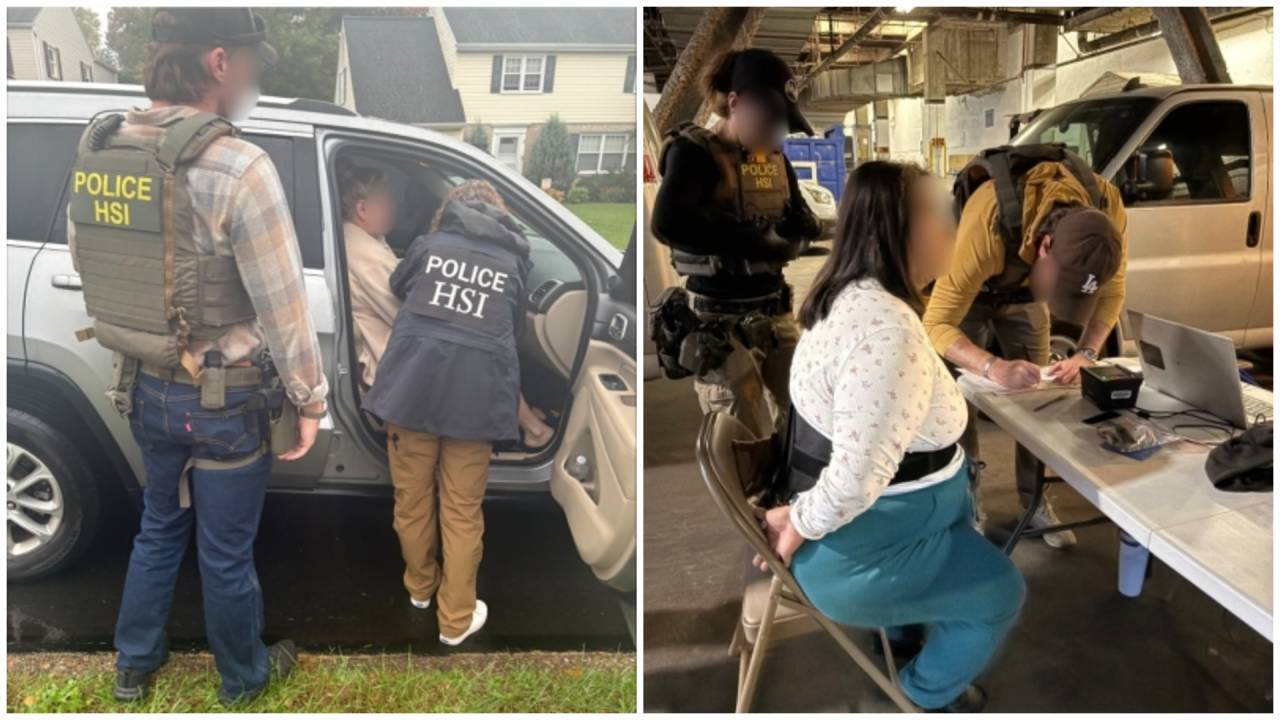
Federal election enforcement operates through a multi-agency pipeline rather than real-time polling-place policing. When the Department of Justice announces coordinated charges across five states, the underlying cases rarely originate from poll workers challenging ballots on Election Day. They emerge from retrospective database reconciliations triggered years after the ballot is cast.
Three distinct institutional mechanisms drive this pipeline:
- The Naturalization Audit Trap: Lawful permanent residents (green card holders) frequently remain on state voter rolls undetected until they apply for U.S. citizenship via Form N-400. U.S. Citizenship and Immigration Services (USCIS) conducts mandatory background checks against state voter registration databases. When an applicant answers "no" to questions regarding prior voter registration or voting history—or when USCIS cross-checks reveal an active registration record—the administrative application converts into a criminal referral.
- State-Federal Data Asymmetry: States manage voter registration under the National Voter Registration Act (NVRA), which relies heavily on attestation models during Department of Motor Vehicles (DMV) transactions or same-day registration windows. Because states lack direct, automated access to federal immigration status databases at the point of registration, non-citizens can enter the rolls through administrative error, misunderstanding of eligibility, or intentional misrepresentation.
- Targeted Federal Task Forces: In 2026, federal prosecutors expanded coordinated sweeps across key jurisdictions, resulting in over 113 charges nationwide within a concentrated enforcement window. This surge reflects an operational shift toward treating individual registration anomalies as prosecutable federal offenses to establish deterrence, even when the aggregate vote count represents a microscopic fraction of the more than 227 million registered voters nationwide.
Statutory Tiering and the Mechanics of Prosecutorial Exposure
A critical failure in surface-level news coverage is conflating "election fraud" into a single monolithic crime. Federal prosecutors rely on distinct statutory instruments depending on the defendant's intent, the timing of the registration, and whether the individual subsequently interacted with federal immigration authorities.
Misdemeanor Unlawful Voting Under 18 U.S.C. § 611
The baseline offense for a non-citizen casting a ballot in a federal election carries a statutory maximum sentence of one year in federal prison. Prosecutors utilize this charge—often filed via criminal information rather than a grand jury indictment—when the evidentiary record establishes the physical act of registration and voting without proving an elaborate secondary cover-up.
Consider the case of Kamlesh Navnitlal Shah, 67, charged in the Eastern District of California. Federal filings allege Shah registered on the day of the November 2024 general election and cast a ballot that same day. Same-day registration compresses the verification timeline, allowing a ballot to be cast before county registrars can audit eligibility. Because the alleged violation centers directly on the unlawful ballot without an accompanying false statement on a subsequent federal citizenship application, the government pursued the standalone misdemeanor charge of voting by a non-citizen.
Felony Naturalization and Citizenship Misrepresentation
The legal exposure escalates dramatically when a non-citizen falsely claims U.S. citizenship to register (18 U.S.C. § 1015(f)) or conceals voting activity during naturalization proceedings (18 U.S.C. § 1015(a) or 18 U.S.C. § 1425). Felony indictments carry multi-year prison sentences and trigger mandatory immigration consequences.
The case of Amandeep Kaur, 30, filed in the Central District of California, demonstrates how the naturalization timeline alters prosecutorial strategy. Kaur, a lawful permanent resident actively seeking U.S. citizenship, allegedly registered to vote in December 2022 and voted in the November 2024 election. Within the Central District of California, where 13 defendants faced felony counts, prosecutors specifically targeted individuals whose voting records intersected with naturalization applications. When an applicant signs Form N-400 under penalty of perjury denying prior voter registration, they create a documentary paper trail that satisfies the mens rea (criminal intent) requirements for felony false-statement charges.
Geographic Concentration and Jurisdictional Friction
The distribution of the 48 charges across Pennsylvania, California, Florida, New York, and Nevada is not random. It maps directly onto states with large lawful permanent resident populations, high-volume automated registration systems, and active federal-state disputes over voter roll maintenance.
California accounted for the largest concentration of defendants in the October 2026 sweep, with 28 foreign nationals charged across the Central, Eastern, and Northern Districts. This geographic clustering stems from a structural conflict between state election administration and federal oversight:
- Automated Registration Volume: California's Motor Voter framework automatically registers eligible individuals interacting with the DMV unless they actively opt out. While designed to maximize citizen participation, automated opt-out interfaces create high-friction edge cases for non-citizens who misread prompts or assume green card status confers local or general voting rights.
- Database Access Deadlocks: Federal prosecutors and California state officials have clashed over the methodology used to flag roughly 20,000 potentially ineligible registrants and the federal government's demand for expanded access to state voter registration data. Without real-time interoperability between state DMV records and Department of Homeland Security (DHS) Systematic Alien Verification for Entitlements (SAVE) databases, ineligible registrations sit dormant on rolls until an election cycle triggers a ballot mail-out or a federal audit flags the discrepancy.
In contrast, cases in states like Florida, Pennsylvania, New York, and Nevada frequently involve multi-cycle voting patterns—such as defendants registering years earlier and voting across the 2020, 2022, and 2024 federal cycles. Once a non-citizen enters a state voter roll, inertia takes over. Election systems treat active registrants as verified voters, automatically mailing ballots or listing them on precinct poll books in subsequent cycles until an external audit breaks the loop.
The Asymmetric Cost Function for Lawful Permanent Residents
For a U.S. citizen, a misdemeanor election violation typically results in fines, probation, or brief incarceration. For a lawful permanent resident, the criminal penalty is secondary to the catastrophic immigration cost function.
Under the Immigration and Nationality Act (INA), voting in a federal election in violation of any federal, state, or local law renders a non-citizen deportable (8 U.S.C. § 1227(a)(6)) and inadmissible (8 U.S.C. § 1182(a)(10)(D)). Crucially, a false claim to U.S. citizenship made on or after September 30, 1996, carries a permanent statutory bar to admissibility with virtually no waiver available for green card holders.
This creates a severe operational asymmetry:
- Strict Liability in Immigration Court: Even if a criminal prosecutor agrees to a plea deal reducing a felony false-claim charge to a misdemeanor unlawful voting count—or even if criminal charges are dropped entirely—immigration judges evaluate the underlying conduct independently. Establishing that a green card holder checked a "U.S. Citizen" box on a voter registration form is sufficient to revoke permanent residency and initiate removal proceedings.
- Permanent Bar to Naturalization: An unlawful voting conviction or admission destroys the "good moral character" requirement mandatory for naturalization under 8 U.S.C. § 1427. For individuals like Amandeep Kaur, who entered the enforcement radar precisely because she sought citizenship, the administrative act of applying for naturalization directly triggered the legal mechanism that permanently forecloses it.
Analytical Limitations and Systemic Blind Spots
Evaluating the broader significance of the October 2026 indictments requires separating prosecutorial capability from systemic scale. Two major analytical constraints govern this enforcement model:
First, selection bias distorts prevalence estimates. The 48 defendants identified across five states represent individuals who generated detectable paper trails—primarily by applying for naturalization, utilizing same-day registration with immediate data flags, or appearing in targeted federal audits. This cohort measures enforcement detection efficiency, not the total population of non-citizen registrants. Conversely, comparing 48 indictments against 227 million registered voters demonstrates that confirmed violations remain statistically negligible relative to national turnout margins, undermining claims of widespread electoral distortion while confirming localized administrative vulnerabilities.
Second, intent remains difficult to isolate at scale. Federal statutes require proof that a defendant knowingly violated the law or willfully misrepresented citizenship. In high-volume DMV environments, language barriers, complex touch-screen prompts, and confusion over municipal versus federal voting rules create genuine ambiguity. Prosecutors solve this evidentiary hurdle by selecting cases with unambiguous documentary proof—such as repeated voting across multiple cycles or explicit false denials under oath on Form N-400—leaving thousands of borderline administrative registrations unresolved on state rolls.
Strategic Imperatives for Election Administration and Immigration Compliance
Eliminating the structural friction exposed by these 48 prosecutions requires targeted institutional intervention at both the point of registration and the point of immigration filing:
- Mandate Point-of-Sale Citizenship Verification: State election authorities must replace passive attestation models at DMVs and same-day registration sites with automated, real-time API queries against federal SAVE databases. Preventing an ineligible applicant from entering the voter roll eliminates downstream criminal exposure before a ballot is ever issued.
- Decouple Automated DMV Workflows for Non-Citizens: States utilizing opt-out voter registration must programmatically suppress registration prompts whenever an applicant presents a permanent resident card, employment authorization document, or foreign passport during driver's license issuance.
- Pre-Filing Voter Roll Audits for Naturalization Applicants: Immigration counsel and lawful permanent residents preparing Form N-400 must execute formal public-records searches across every county of prior residence to verify that no dormant or accidental voter registration exists prior to submitting federal citizenship paperwork under penalty of perjury.