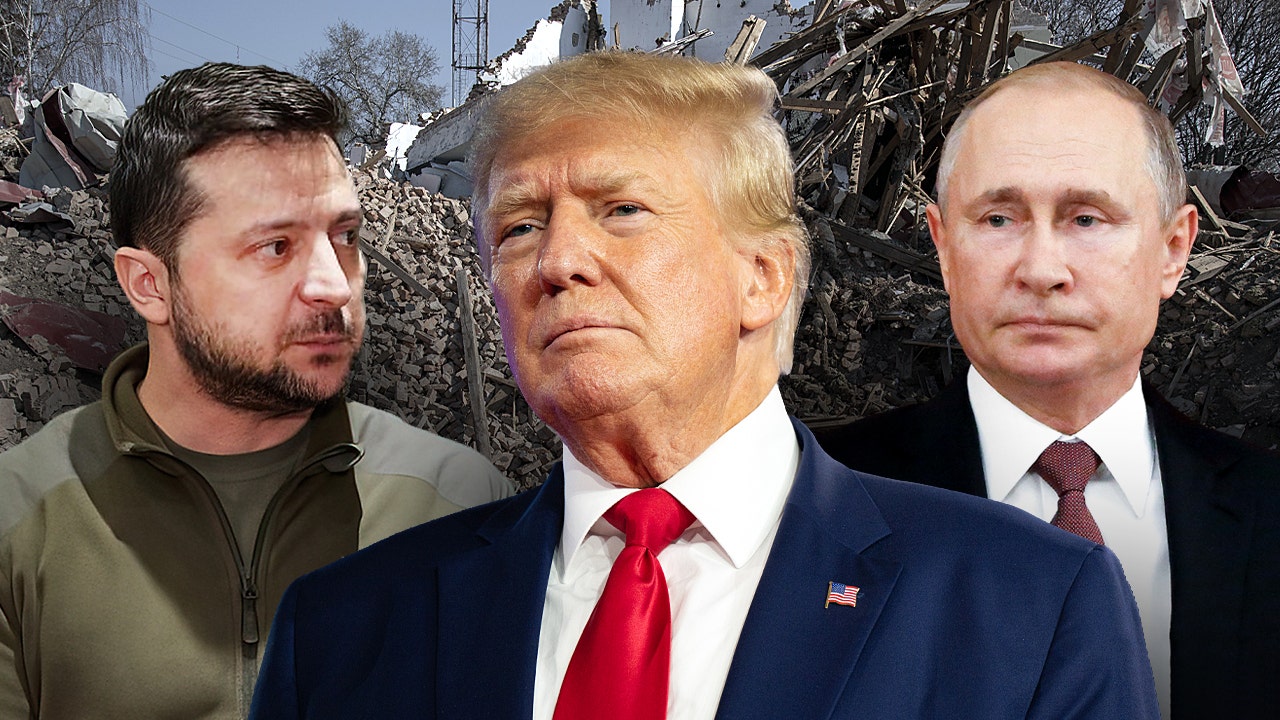
The room was heavy with the silence of two empires. In the high-stakes theater of international diplomacy, every breath is calibrated, and every blink is a data point. When Donald Trump and Xi Jinping sat across from one another at the G20 summit, the air wasn't just filled with the scent of expensive coffee and floor wax; it was thick with the friction of history.
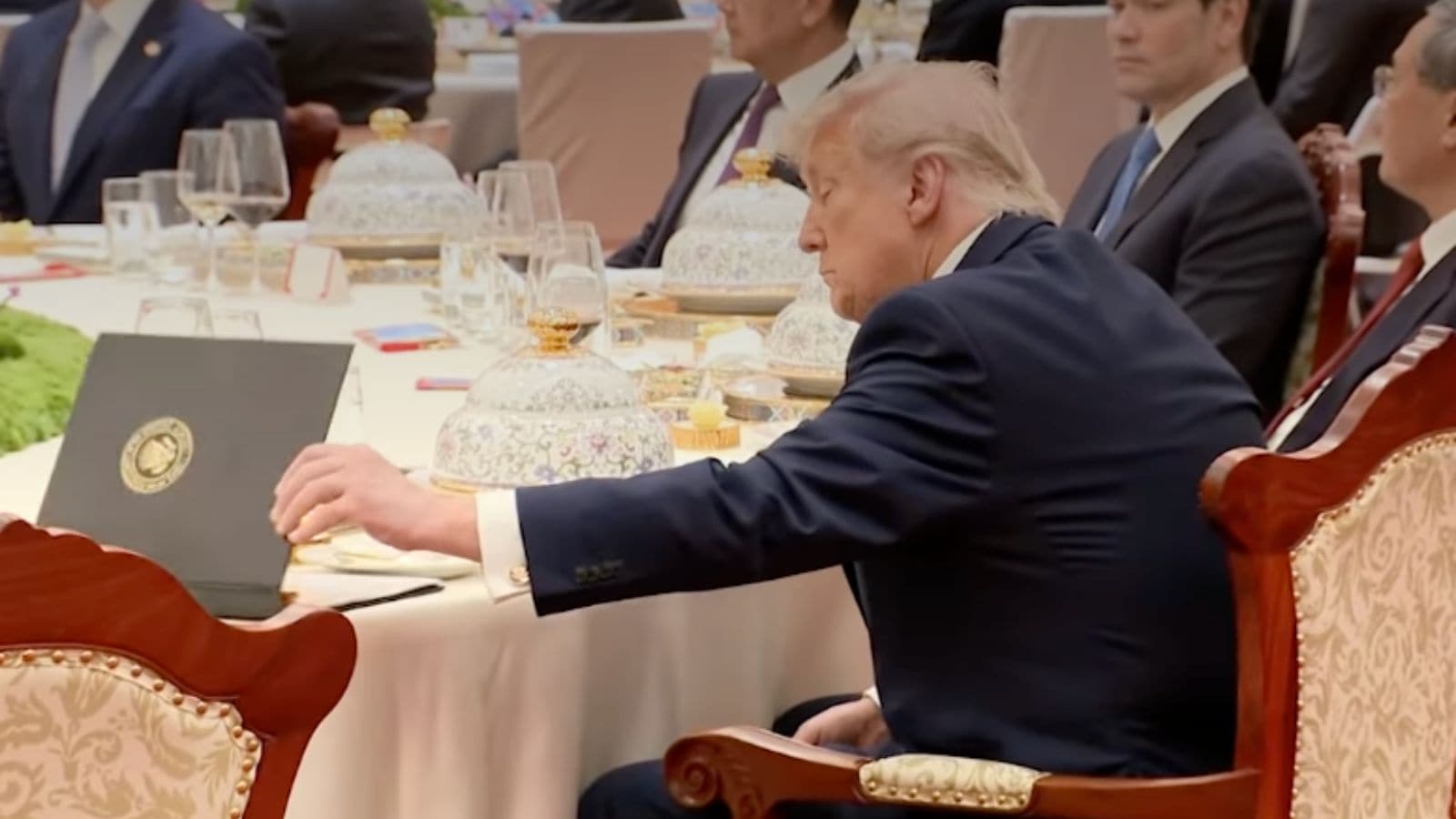
Millions of eyes watched the grainy footage of that encounter. On a tiny screen, through the jagged compression of a viral social media clip, it looked like a heist. Trump leans in. His eyes dart toward a notepad. The internet erupted. "He’s spying!" the captions screamed. "He’s stealing secrets in plain sight!"
But reality is rarely as cinematic as a thumb-scrolled conspiracy.
To understand what actually happened in that sliver of time, you have to look past the political theater and into the mechanical reality of how these men move. Diplomacy at this level isn't a poker game played with cards; it is a choreography of optics. If you’ve ever sat in a meeting where you felt the person across from you was trying to read your thoughts through your forehead, you know the discomfort. Now, magnify that by the weight of global trade wars and nuclear posturing.
The video in question shows a moment of profound human awkwardness masquerading as international espionage. Trump, a man whose entire public persona is built on the dominance of the "deal," leans toward the Chinese leader. His gaze shifts. It lands on the table. In the digital court of public opinion, this was the smoking gun.
It wasn't.
The Physics of the Paper
Consider the logistics of a state secret. Xi Jinping does not carry his most sensitive nuclear codes or trade concessions on a legal pad in a room full of cameras. The notes on that table are the product of a massive, invisible machine. Dozens of aides, translators, and strategists spend weeks preparing those bullet points. They are written in Mandarin. They are often printed in a font size meant for the reader alone.
For an American president to "spy" on these notes in a three-second glance would require more than just a wandering eye. It would require a mastery of a complex foreign language, the ability to read upside down from a distance of four feet, and a photographic memory capable of capturing technical data in a heartbeat.
We want the drama. We crave the idea that the fate of nations can be altered by a sneaky glance. It makes the world feel smaller, more manageable. It turns the terrifyingly complex machinery of geopolitics into a scene from a high school hallway.
The Mirage of the Viral Lens
Digital video is a liar. It flattens three-dimensional space into two. It strips away the context of the wider room—the dozens of photographers clicking shutters, the Secret Service agents standing like statues, the translators whispering into ears. When you crop a video down to two faces, you create a vacuum.
In that vacuum, a simple adjustment of posture becomes a predatory lean. A momentary distraction becomes a targeted surveillance mission.
I remember watching a similar phenomenon during a local town hall meeting years ago. A politician checked his watch while a constituent was speaking. On camera, it looked like a devastating act of cold-hearted dismissal. In the room, we knew the truth: a fly had been circling his head for ten minutes, and he was actually tracking its movement to avoid getting hit in the eye.
The camera captured the movement but missed the truth.
The Trump-Xi clip is the ultimate Rorschach test. If you see a bully, you see a man trying to intimidate his rival by invading his personal space. If you see a master negotiator, you see a man looking for a tactical edge. But if you look at the mechanics of the room, you see something much more mundane: the inevitable friction of two powerful people forced to sit close enough to smell each other’s cologne while the world waits for them to blink.
The Invisible Stakes of Misinformation
The danger of the "spying" narrative isn't that it harms Donald Trump or Xi Jinping. They are figures of such immense scale that a viral clip is just a mosquito bite on an elephant. The real victim is our collective grip on what is real.
When we choose to believe the sensationalized "heist" over the boring reality of diplomatic protocol, we lose the ability to critique what actually matters. While the internet argued over whether Trump saw a handwritten note about soybean tariffs, actual policies were being signed that affected the lives of millions.
We are distracted by the glimmer of the counterfeit coin while the gold is being moved out the back door.
Truth in the modern age requires a specific kind of stamina. It requires us to look at a five-second clip and ask, "What am I not seeing?" It requires us to acknowledge that our eyes can be deceived by our biases.
The Weight of the Gaze
If you watch the full, unedited footage—not the looped, slowed-down version designed to trigger an algorithm—the moment vanishes. It becomes a flicker in a long afternoon of grueling talk. Trump moves. Xi shifts. They are two tired men navigating a labyrinth of expectations.
There were no secrets stolen that day, at least not via a notepad. The real information was being exchanged in the subtext: the firmness of the handshake, the length of the silence, the decision of who would speak first. Those are the things that move markets and shift borders.
A notepad is just a prop.
We live in an era where the flicker of an eyelid can be turned into a headline. We are the architects of our own confusion, building cathedrals of theory on the head of a pin.
The next time a video tells you that you’ve caught a world leader in a moment of clandestine brilliance or buffoonery, remember the fly in the town hall. Remember the Mandarin characters on the page. Remember that the most important things in the room are usually the ones the camera isn't pointed at.
The silence between the leaders continued long after the cameras were turned off, and the notes, whatever they contained, were shredded and turned to dust before the sun went down.