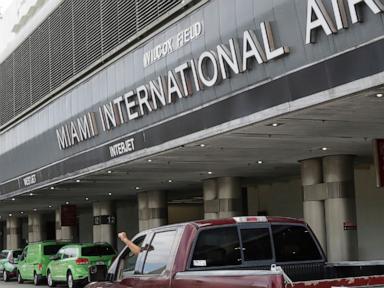
Two commercial aircraft colliding on the tarmac at Miami International Airport with only minor injuries represents a textbook case of low-kinetic-energy impact paired with high-consequence systemic friction. Standard news coverage treats such events as isolated strokes of luck, focusing entirely on the absence of fatalities. That framing misses the structural reality of modern commercial aviation. When two airframes make contact on an active ramp or taxiway, the physical damage to aluminum and composite skin is rarely the primary financial loss. The real cost lies in the immediate cascading failure of gate schedules, the mandatory grounding of high-value capital assets, and the exposure of latent vulnerabilities in surface movement control.
To evaluate a tarmac collision properly, analysts must separate the physics of the impact from the economics of the aftermath. A ground collision at taxi speeds—typically between 5 and 15 knots—generates negligible g-forces compared to an in-flight upset or a runway excursion. Because passengers are generally seated with seatbelts fastened during taxiing, or in the final stages of deplaning, minor injuries are the statistical norm rather than a miraculous anomaly. What transforms a minor scrape into a major operational crisis is the strict regulatory architecture governing airworthiness. Under Federal Aviation Administration (FAA) regulations and manufacturer structural repair manuals, any unscheduled physical contact between an aircraft and another object requires an immediate halt to operations, a formal investigation, and a comprehensive non-destructive testing (NDT) protocol before either airframe can return to revenue service.
The Mechanics of Surface Movement Failure
Ground collisions at high-density hubs like Miami International Airport (MIA) rarely stem from a single catastrophic error. Instead, they follow the Swiss Cheese Model of accident causation, where multiple defensive layers fail simultaneously. Surface operations rely on a tightly coupled system involving air traffic control (ATC) ground controllers, ramp tower personnel, flight crews, and ground handling agents. When throughput peaks during international banking hours at MIA, spatial margins shrink while cognitive loads spike.
Spatial Compression and Wingtip Clearance
Modern commercial airframes, particularly widebody jets and newer narrowbodies with large, high-aspect-ratio winglets, push the geometric limits of legacy airport infrastructure. Taxiways and apron lanes designed decades ago often leave minimal wingtip clearance when two aircraft pass in opposite directions or when one aircraft pushes back into an active alley.
- The Visual Blind Spot Problem: Flight crews sitting in the cockpit cannot see their own wingtips. On a Boeing 737 or Airbus A320, the wingtips sit dozens of feet behind and below the flight deck's line of sight. Pilots rely entirely on painted taxiway centerlines, marshallers, and ground radar to guarantee clearance.
- Pushback Transition Zones: The highest-risk phase of ground movement occurs when an aircraft transitions from tug control to under-its-own-power taxiing. Miscommunication between the ramp tower (controlled by the airport or dominant carrier) and the FAA ground controller (managing active taxiways) frequently creates contested jurisdiction right at the apron boundary.
- Environmental Degradation: Heavy rain, glare off wet asphalt, and nighttime lighting arrays at South Florida hubs routinely obscure painted lead-in lines, forcing crews to rely on spatial estimation rather than visual precision.
Known Facts Versus Analytical Hypotheses
In evaluating the specific Miami ground collision, strict discipline separates confirmed operational realities from standard aviation safety hypotheses.
Confirmed Baseline Facts:
- Two aircraft made physical contact on the ground within the Miami airport environment.
- Kinetic energy was low enough to prevent structural hull breach, fire, or severe trauma, resulting only in minor injuries.
- Both aircraft were immediately removed from active service, triggering passenger re-accommodation and regulatory reporting.
Systemic Hypotheses Based on Operational Precedent:
- Hypothesis A: Ramp-to-Taxiway Handoff Friction. In congested terminal alleys, one aircraft may have been pushing back under ramp control while another was taxiing under FAA ground control, leading to a convergence in a non-radar-monitored blind spot.
- Hypothesis B: Wingwalker Omission or Misalignment. If the collision occurred during pushback or gate arrival, the absence, distraction, or mispositioning of ground wingwalkers is a primary causal factor in allowing a wingtip or horizontal stabilizer to breach the safety envelope.
- Hypothesis C: Cockpits Heads-Down Distraction. During taxi-out, flight crews execute checklists, verify takeoff performance data, and monitor frequency changes. High workload inside the flight deck reduces external visual scanning, particularly when taxiing on familiar routes where expectation bias overrides active verification.
The Three Pillars of Tarmac Collision Economics
When media outlets report "only minor injuries," readers often assume the incident is an insignificant fender-bender. In aviation operations, a ground collision triggers a severe financial bleed across three distinct operational pillars.
1. Direct Structural Remediation and AOG Costs
Aircraft structures are engineered for extreme aerodynamic loads in flight, not lateral shearing forces on the ground. A low-speed impact to a winglet, flap track fairing, or vertical stabilizer can transmit stress waves deep into the primary wing box or fuselage frames.
- Composite Delamination: Modern aircraft rely heavily on carbon-fiber-reinforced polymers for winglets and control surfaces. Unlike aluminum, which visibly dents, composites can suffer internal delamination from a minor bump without showing extensive surface trauma. Technicians must use ultrasonic scanning to map internal damage.
- Aircraft on Ground (AOG) Status: An AOG event halts revenue generation immediately. A narrowbody jet generates tens of thousands of dollars in daily contribution margin; a widebody generates multiples of that. If replacement parts—such as a specialized winglet or rudder assembly—are not stocked locally in Miami, the aircraft remains parked for days or weeks while parts are air-freighted in.
2. Network Cascade and Crew Legality Expiration
Miami functions as a primary fortress hub and international gateway, particularly for Latin American and Caribbean traffic. Hub-and-spoke networks operate on synchronized "banks" where dozens of flights arrive and depart within tight windows to maximize passenger connections.
When two aircraft collide on the tarmac, the disruption extends far beyond those two tail numbers:
- Gate Starvation: The immobilized aircraft block active taxiways or occupy prime gates, forcing arriving flights to hold on the tarmac.
- Crew Timeout Cascades: Flight attendants and pilots operate under strict FAA Part 117 duty-time limits. A two-hour ground delay caused by a blocked taxiway can push multiple flight crews past their legal duty windows, forcing the airline to cancel downstream flights due to a lack of legal crew—even when the aircraft themselves are undamaged.
- Misconnected International Passengers: Missing a once-daily international departure out of MIA requires airlines to pay for hotel accommodations, meal vouchers, and rebooking fees on partner carriers, eroding route profitability for the entire quarter.
3. Regulatory Scrutiny and Insurance Recalibration
Every ground collision generates a mandatory report to the FAA and, depending on damage thresholds, the National Transportation Safety Board (NTSB). Repeated surface incidents at a single hub invite targeted FAA safety audits, stricter local taxi procedures, and increased spacing requirements that permanently reduce the airport's hourly arrival and departure rates. Simultaneously, hull and liability insurers factor ground attrition rates into annual fleet premiums, raising fixed operating costs across the carrier's entire network.
Deconstructing the Human-Machine Interface on the Tarmac
The persistence of ground collisions highlights a glaring technological asymmetry in commercial aviation. In the air, pilots are protected by Traffic Collision Avoidance Systems (TCAS), Enhanced Ground Proximity Warning Systems (EGPWS), and satellite-based ADS-B tracking. On the ground, that technological safety net largely vanishes.
While major hubs like Miami deploy Airport Surface Detection Equipment, Model X (ASDE-X) to track aircraft and vehicles on runways and major taxiways, this system has critical limitations in the terminal ramp area. ASDE-X is designed primarily to prevent high-speed runway incursions, not low-speed wingtip scrapes in crowded terminal alleys. Inside the non-movement area—the apron spaces directly surrounding the terminal gates—air traffic control exercises no direct authority. Movement there relies on human visual judgment, handheld wands, and radio calls on congested ramp frequencies.
This creates a dangerous operational cliff: an aircraft transitions from a heavily instrumented, radar-monitored environment into an analog, line-of-sight environment at the exact moment it enters the most congested physical space on the airfield.
Limitations of Current Mitigation Strategies
Aviation authorities and airline safety departments routinely propose technological and procedural fixes following tarmac collisions, yet every intervention carries distinct operational trade-offs.
- Mandatory Wingtip Cameras and Proximity Sensors: Installing outward-facing optical sensors or ultrasonic proximity alerts on wingtips seems like an obvious fix. However, retrofitting legacy fleets requires Supplemental Type Certificates (STCs) from the FAA, adding weight, maintenance complexity, and false-alarm fatigue in tight gate environments where ground service equipment legitimately operates inches from the fuselage.
- Expanded Ground Radar Coverage: Extending high-resolution surface radar into every terminal alley improves controller visibility, but radar cannot resolve vertical separation differences—such as a high-mounted horizontal stabilizer passing over a low-slung tug—without creating constant nuisance alerts that degrade controller trust.
- Increased Taxi Separation Buffers: Mandating larger spacing between taxiing aircraft and enforcing strict stop-and-hold protocols during pushbacks directly reduces collision risk. The trade-off is an immediate drop in airfield capacity, leading to longer taxi times, higher fuel burn, and chronic schedule delays during peak travel windows.
Strategic Operational Adjustments for High-Density Hubs
Eliminating ground collisions at constrained hubs like Miami requires shifting away from reactive disciplinary measures toward structural risk engineering. Airport authorities and hub carriers must execute three concrete operational adjustments to compress the probability of surface contact:
- Enforce Hard Stops at Ramp-to-Taxiway Boundaries: Eliminate rolling handoffs between ramp control and FAA ground control. Aircraft pushing back from terminal alleys must come to a complete, braked stop at designated clearance lines, requiring explicit two-way verbal confirmation before entering active taxiway airspace.
- Deploy Automated Visual Guidance Systems (A-VDGS) Across All Gates: Replace human marshallers in high-traffic gates with laser-guided docking systems that provide pilots with real-time azimuth, closing rate, and stopping distance directly on cockpit-visible displays, removing human depth-perception errors during night and weather operations.
- Audit Wingtip Clearance Envelopes Against Fleet Up-Gauging: As airlines replace older regional jets and standard narrowbodies with larger, longer-winged variants, airport authorities must dynamically re-strip apron taxilanes and restrict specific adjacent gate pairings rather than relying on legacy spatial approvals.