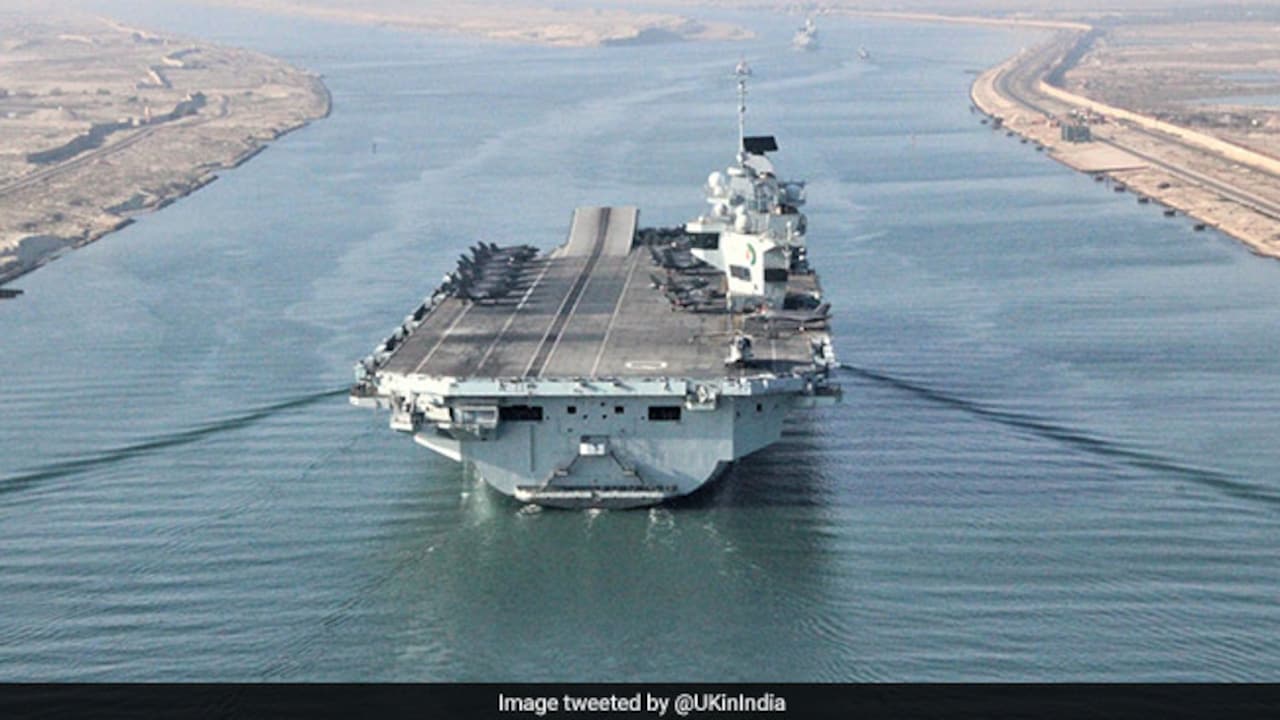
The cancellation of the Type 83 guided-missile destroyer program marks the end of the traditional large-hull blue-water combatant as the primary instrument of British naval power. By redirecting capital from a legacy air defence platform toward a minimum of six Common Combat Vessels (CCVs), the Ministry of Defence (MoD) is adjusting to an inescapable fiscal and operational reality. Concentrating multi-billion-pound combat systems into a small number of concentrated targets is no longer viable in an environment defined by low-cost, asymmetrical precision-guided munitions and persistent autonomous surveillance.
The strategy shifts the structural design of the fleet away from centralized platforms toward a distributed, network-centric architecture. This structural transformation relies on three core operational pillars, a reconfigured cost function for maritime power projection, and an entirely new ecosystem of uncrewed auxiliary platforms designed to assume the risks previously borne by crewed hulls.
The Three Pillars of the Hybrid Fleet Architecture
The transition from the Type 45 air defence destroyer to the Common Combat Vessel architecture represents an optimization strategy that addresses the systemic vulnerabilities of concentrated tonnage. This architecture stands on three interdependent operational pillars.
Geographic Dispersion and Sensor-Effector Decoupling
Traditional naval doctrine relies on a single capital ship acting as both the primary sensor node and the primary effector platform. A Type 45 destroyer detects an incoming aerial threat with its radar suite and neutralizes it using its internal vertical launch cells. This integration creates a single point of failure; disabling the radar renders the weapons useless, and depleting the missile cells leaves the radar undefended.
The CCV architecture unbundles these functions. The crewed command ship functions primarily as a mobile, well-defended processing node. The physical sensors and weapons systems are distributed across multiple autonomous platforms separated by kilometers of open ocean. The three distinct operational networks that manage this dispersion are:
- Atlantic Bastion: A localized defensive network optimized for shallow and littoral chokepoints, designed to restrict adversary deployment.
- Atlantic Shield: A wide-area, persistent defensive screen focused on the early detection and interception of sub-surface and aerial threats targeting critical national infrastructure.
- Atlantic Strike: An offensive configuration that pools distributed missile cells to generate overwhelming mass against high-value targets.
Mass Inflation Without Personnel Scaling
The Royal Navy faces a structural constraint in human capital. Crewing a fleet of highly complex, manually intensive traditional destroyers requires extensive training pipelines and high retention rates, both of which are under severe strain.
The CCV framework breaks the linear correlation between a fleet's total missile cell count and its total personnel requirements. By utilizing a lean-crewed central hub to command multiple autonomous platforms, the Navy can deploy thousands of tons of additional combat displacement and hundreds of vertical launch cells without a proportional increase in personnel accommodation requirements on board.
Asymmetrical Risk Allocation
In modern maritime conflict, the financial equation favors the attacker. A multi-million-pound crewed warship can be mission-killed or entirely destroyed by a salvo of low-cost anti-ship cruise missiles or uncrewed surface vessels costing a fraction of the target's value.
The hybrid architecture realigns this economic imbalance. By shifting the perimeter of detection and engagement to low-cost, uncrewed hulls, the high-value human assets and command infrastructure remain outside the enemy’s immediate high-threat engagement zone. The platforms entering high-risk environments are mass-produced, modular, and attrition-tolerant.
The Cost Function of Modern Surface Combatants
Evaluating naval efficacy through hull counts or total displacement is an obsolete metric. The strategic logic behind abandoning the Type 83 concept in favor of six CCVs is understood by analyzing the capital cost function of modern naval procurement.
The total cost of a traditional surface combatant program can be modeled through four primary variables:
$$\text{Total Cost} = C_{\text{hull}} + C_{\text{systems}} + C_{\text{integration}} + C_{\text{lifecycle}}$$
Where:
- $C_{\text{hull}}$ represents the raw material, shipyard labor, and physical construction of the platform.
- $C_{\text{systems}}$ accounts for the proprietary radars, sonars, command management suites, and missile silos.
- $C_{\text{integration}}$ represents the compounding engineering friction of embedding hyper-complex electronic warfare, sensing, and kinetic systems into a single hull.
- $C_{\text{lifecycle}}$ represents the long-term operational costs, including maintenance, mid-life upgrades, and large crews over a 30-year span.
In large-hull programs like the Type 83, $C_{\text{integration}}$ scales non-linearly. As more capabilities are packed into a single vessel to justify its multi-billion-pound price tag, the electromagnetic interference, power distribution requirements, and software complexities increase exponentially. This reality explains why the initial £13.5 billion allocation for the Defence Investment Plan (DIP) was entirely inadequate to support a Type 83 fleet alongside ongoing commitments, forcing the resignation of former defence officials and a subsequent £1 billion emergency correction by the Treasury to reach a baseline of £14.5 billion.
The CCV framework suppresses the non-linear growth of $C_{\text{integration}}$ by decoupling the physical platforms. Instead of engineering a single hull to withstand underwater acoustic pressure, manage massive anti-air radar power demands, and house heavy offensive missile silos simultaneously, these requirements are compartmentalized across specialized, autonomous offboard modules.
The Uncrewed Ecosystem: Component Classifications
The success of the CCV depends entirely on the deployment of a highly specific ecosystem of auxiliary uncrewed platforms. These platforms are not mere accessories to the crewed fleet; they are the primary sensor and effector nodes that make the architecture functional. The MoD has classified this distributed force into four distinct types, working alongside existing Type 26 and Type 31 frigates.
Type 91 Missile Platform
The Type 91 is a low-profile, long-endurance uncrewed surface vessel (USV) designed with a singular purpose: carrying vertical launch system (VLS) cells. It possesses minimal organic sensing capability, relying on encrypted datalinks to receive targeting information from the CCV command hub. By operating several kilometers ahead of or flanking the crewed ship, the Type 91 extends the fleet’s kinetic reach while masking the true origin of the fleet's defensive and offensive missile arrays.
Type 92 Underwater Sensing Platform
Optimized for the North Atlantic and the High North, the Type 92 addresses the surge in adversarial submarine activity near critical undersea infrastructure and data cables. Equipped with passive towed sonar arrays and advanced acoustic processing software, these platforms operate in autonomous packs. They map sub-surface anomalies and pass telemetry up to the CCV via satellite or high-frequency line-of-sight communication when surfaced.
Type 93 Extra-Large Uncrewed Underwater Vehicle (XLUUV)
The Type 93 is a deep-diving, long-range autonomous submarine. Unlike the smaller Type 92, which focuses on passive detection, the Type 93 is built for offensive deterrence and mine countermeasures. It can deploy payload containers containing autonomous loitering munitions, sea mines, or specialized electronic warfare decoys to disrupt enemy acoustic tracking.
Type 94 Sensor Platform
The Type 94 acts as the elevated eyes of the hybrid fleet. Utilizing high-altitude, long-endurance uncrewed aerial systems or advanced aerodynamic surface hulls, this platform hosts active electronically scanned array (AESA) radars and multi-spectral electro-optical sensors. Its operational goal is to extend the radar horizon, detecting low-flying sea-skimming cruise missiles long before they can appear on the surface-level sensors of the CCV command hub.
Technical and Operational Risks of Distributed Architecture
The transition to a hybrid fleet introduces a series of complex technical challenges that must be overcome for the system to remain viable under combat conditions.
Bandwidth Bottlenecks and Electronic Warfare Vulnerability
A distributed fleet relies entirely on the continuous exchange of high-density data across hundreds of nautical miles. This reliance creates a massive surface area for electronic warfare intervention. If an adversary successfully jams satellite up-links or disrupts local line-of-sight laser and radio communications, the uncrewed nodes become isolated. Without real-time command authorization, autonomous effector platforms like the Type 91 cannot legally or operationally release weapons, effectively neutralizing the fleet's firepower without firing a shot.
Autonomy and Rules of Engagement
Operating lethal weapons systems via uncrewed platforms creates immense legal and procedural friction. The command management software must possess sufficient localized artificial intelligence to execute evasive maneuvers, manage power budgets, and prioritize targets without human input during communication dropouts. However, the final authority to release kinetic force must remain with a human operator inside the CCV hub. The latency of this human-in-the-loop validation chain could prove catastrophic when defending against hypersonic or high-volume saturated missile attacks.
Industrial Capacity and Maintenance Lifecycles
While uncrewed platforms reduce onboard crewing demands, they shift the burden to shore-based maintenance facilities. Autonomous hulls operating for extended periods in harsh environments like the Arctic Circle experience rapid mechanical and structural degradation. The UK’s domestic shipbuilding and repair infrastructure, already constrained by historical underinvestment, must adapt to service, calibrate, and rapidly turn around a highly fragmented fleet of specialized vessels.
Strategic Action Plan for Fleet Transition
To prevent the CCV program from degrading into a series of delayed prototypes, the National Armaments Director Group must execute a strict, phased implementation plan that prioritizes software maturity and modular industrial standards.
- Enforce Open-Architecture Hull Standards: The MoD must reject proprietary hulls from individual defense contractors. The CCV and its accompanying uncrewed platforms must utilize standardized physical interfaces and modular containerized payload spaces. This guarantees that systems developed by different industrial partners can be swapped out within 48 hours to meet changing mission profiles.
- Prioritize the Re-Code Software Foundation: Immediate capital allocation must be directed toward the modernization of the Royal Navy's Core Combat Management System under the Re-Code contract. The software layer that translates raw sensor telemetry from a Type 94 drone into actionable targeting data for a Type 91 missile platform must be stabilized before the physical hulls are laid down in the early 2030s.
- Establish High North Operational Testbeds: The Navy must immediately deploy existing experimental autonomous platforms, such as the Triton trimaran demonstrator concepts, into the harsh environment of the High North. Testing the limits of satellite communication degradation, ice accumulation on autonomous sensors, and battery performance under near-freezing conditions is vital to refining the final requirements for the Type 92 and Type 93 platforms.
- Reconfigure Commando Insertion Craft: The £500 million allocated for littoral strike capabilities must be bound directly to the CCV ecosystem. High-speed commando insertion craft must be re-engineered to act as local data relays, allowing rapid-response forces to feed tactical tracking data straight into the wider Atlantic Strike network, transforming tactical infantry actions into strategic sensor inputs for the wider fleet.