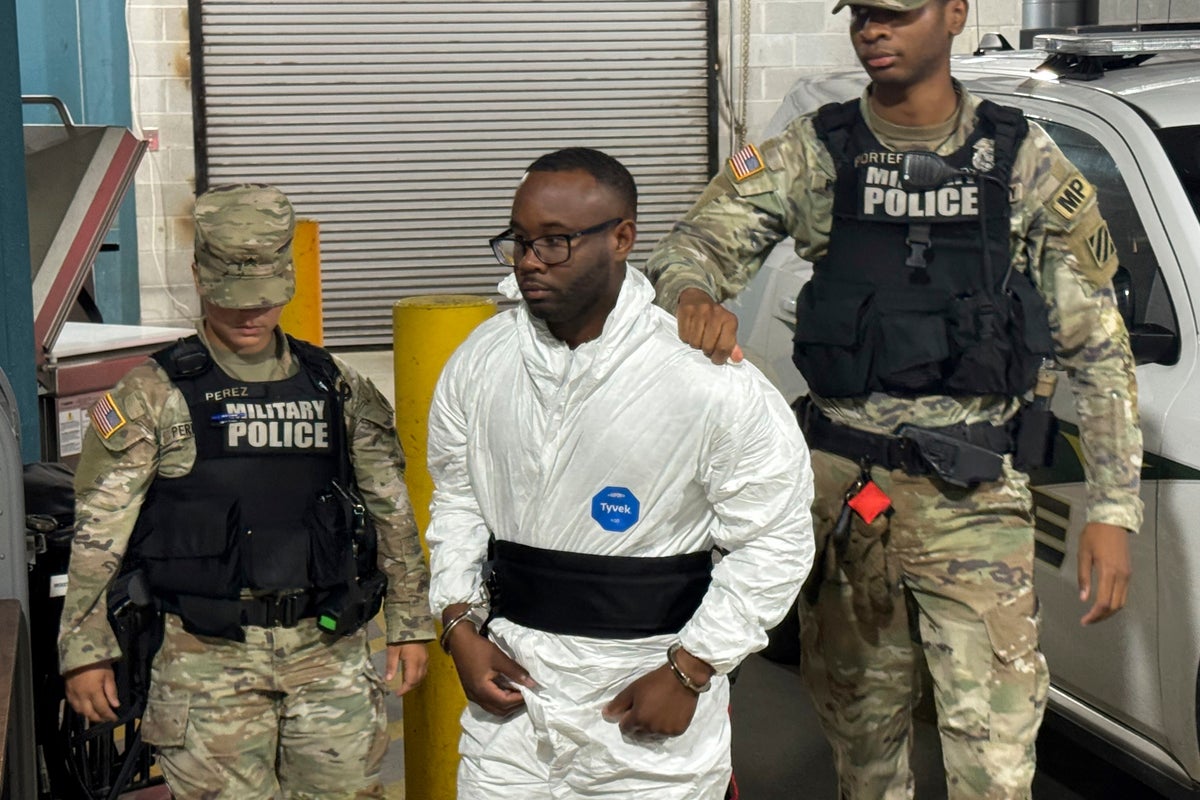
An insider threat within a secure military apparatus functions as a catastrophic system failure because it bypasses the primary defensive perimeter. When an automated logistics sergeant turned a personal weapon against his own formation at Fort Stewart, Georgia, the event exposed a critical vulnerability: the absolute reliance on intra-unit trust within tactical operational centers. The subsequent sentencing of the soldier to six consecutive life sentences brings structural closure to the legal proceedings, but the operational mechanics of the attack reveal a distinct failure mode in modern military risk-mitigation frameworks.
Analyzing this breakdown requires mapping the intersection of domestic escalation, localized geographical intent, and the rapid failure of immediate peer intervention protocols.
The Architecture of the Escalation Sequence
The kinetic event did not materialize in a vacuum; it followed a linear cascade from a domestic friction point to an active shooter scenario within a secure installation. The progression can be divided into three operational phases.
Phase 1: Pre-Apprehension and Perimeter Breach
The failure sequence initiated at a private residence following an domestic dispute between the soldier and his fiancé. The soldier departed the residence in possession of a loaded, unauthorized personal handgun. The fiancé, identifying acute indicators of psychological distress—specifically potential suicidal ideation—followed the soldier to Fort Stewart.
The primary security vulnerability occurred at the installation gate. Garrison access control points are configured to screen for external vectors and unauthorized personnel. Because the individual was an active-duty noncommissioned officer with valid credentials, the system processed him as a low-risk internal actor. This allowed the weapon to clear the perimeter undetected.
Phase 2: The Parking Lot Engagement
The immediate physical catalyst occurred in the unit's parking lot, creating a localized containment failure. The fiancé attempted de-escalation protocols in an unsecure, open environment. The soldier immediately escalated to lethal force, discharging the firearm and wounding the fiancé. This initial kinetic action marked the transition from a domestic crisis to an active, localized threat vector.
Phase 3: Interior Penetration and Target Selection
Following the initial shooting, the soldier advanced into the physical workspace of A Company, 703rd Brigade Support Battalion, 2nd Armored Brigade Combat Team. The trajectory inside the building demonstrates a deliberate structural targeting mechanism rather than a random chaotic sweep:
- Geographical Vector: The perpetrator moved methodically across two distinct administrative offices and a centralized conference room.
- Target Classification: The engagement specifically selected the leadership elements of the supply unit.
- Kinetic Impact: The shooter engaged five total human targets inside the structure, wounding four soldiers and missing a fifth. Emergency medical reports later confirmed trauma profiles including direct impacts to the face, chest, abdomen, and back.
The Defensive Disruption Dynamics
The attack was terminated not by technical surveillance systems or garrison law enforcement, but by organic peer intervention. The unit's response serves as an operational case study in close-quarters physical remediation under fire.
When an active shooter operates inside a confined office layout, standard administrative response times create an operational lag. The personnel inside the office building bypassed standard evacuation routes to execute physical containment. Unarmed soldiers engaged the shooter directly, using physical force to restrain, disarm, and pin him to the floor until military police arrived.
The immediate medical response utilized tactical combat casualty care principles. Personnel applied field dressings and direct pressure to staunch severe arterial bleeding prior to the arrival of civilian emergency medical services. This rapid application of battlefield first-aid protocols is the direct variable that prevented five severe trauma profiles from degrading into fatalities.
Judicial Accounting and Systemic Accountability
The military justice system processed the event through a general court-martial, bypassing a traditional panel (jury) in favor of a proceeding decided solely by a military judge. The defense argued a mitigation strategy based on a severe, acute mental health crisis combined with an immediate admission of guilt to lesser charges of aggravated assault and domestic violence.
The prosecution countered by proving intent to kill, securing convictions on two specifications of attempted premeditated murder and four specifications of attempted unpremeditated murder. The resulting sentence executed a total stripping of military status and long-term asset forfeiture:
- Confinement: Six consecutive life sentences with the possibility of parole, to be executed at the United States Disciplinary Barracks at Fort Leavenworth, Kansas.
- Status Stripping: Total reduction in rank to Private (E-1) paired with a formal dishonorable discharge.
- Financial Asset Forfeiture: Complete forfeiture of all current and future pay and allowances, eliminating veteran benefits eligibility.
Technical Risk Mitigation and Command Frameworks
The structural failure at Fort Stewart highlights a severe limitation in modern garrison defense strategies: the inability to parse internal psychological deterioration before it converts to kinetic violence. To prevent identical operational failures, command elements must implement a dual-track security protocol.
First, physical security architectures must integrate passive, non-line-of-sight weapon detection technologies at the entry points of unit headquarters, removing the assumption that an active identification card equals a zero-risk asset.
Second, behavioral threat assessment models must decouple from traditional self-reporting chains. When a soldier exhibits acute crisis indicators, automated tracking logs within unit administrative systems should flag sudden deviations in baseline performance metrics, triggering mandatory command-directed evaluation before a domestic friction point escalates into a secure workspace breach.
Fort Stewart Base Shooting News Report
This news broadcast provides critical local context regarding the immediate response of law enforcement and the lockdown protocols executed at Fort Stewart during the initial phases of the active shooter event.