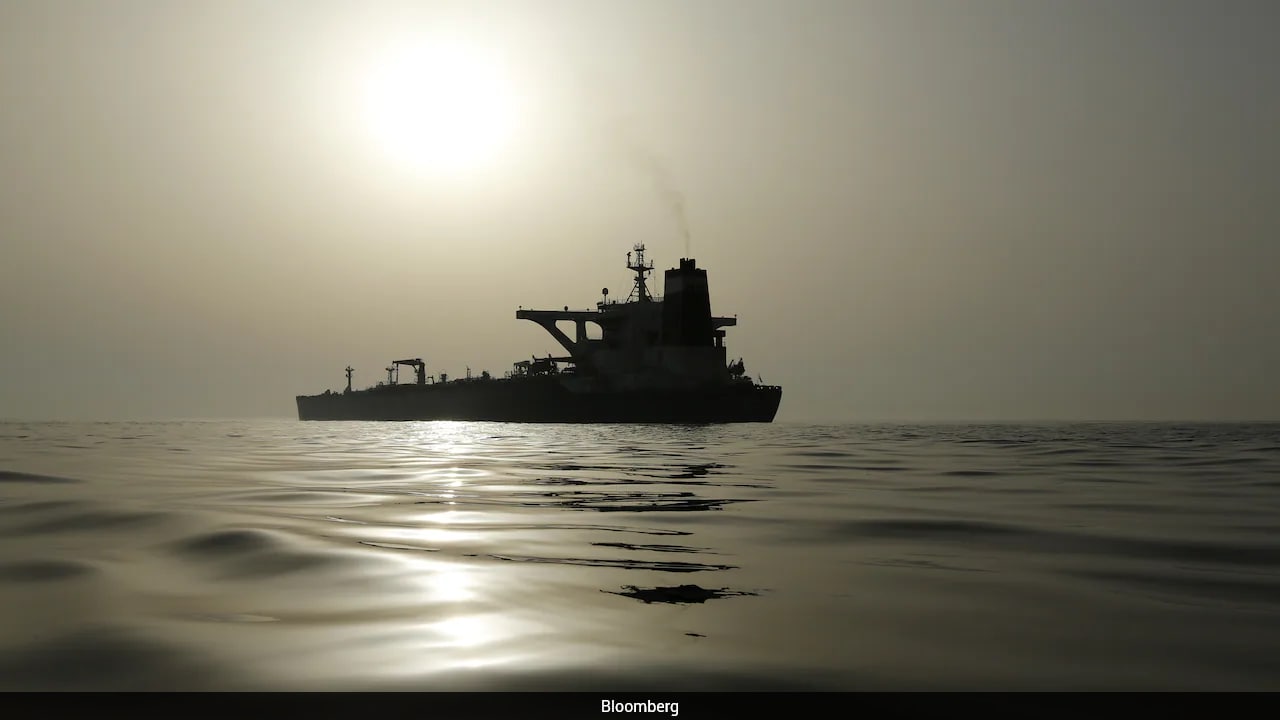
Geopolitical disruptions do not destroy market demand; they warp infrastructure distribution and reassess risk premiums. The capacity to extract outsized economic rents during conflict depends entirely on the execution of non-linear logistics frameworks. The operational architecture behind the strategic partnership between Abu Dhabi National Oil Co (Adnoc) and Chung Ga-hyun’s Sinokor Group reveals how a highly leveraged, counter-cyclical capital allocation strategy captured a significant portion of Middle Eastern energy logistics during the escalation of the conflict between the United States and Iran.
By analyzing the mechanics of the "Hormuz Shuttle" operation, we expose how specialized private maritime fleets exploit structural fragmentation, operate outside standard institutional risk parameters, and capture millions in risk-adjusted arbitrage margins. In other developments, take a look at: What Most People Get Wrong About India Trade With Indonesia.
The Tri-Partite Freight Arbitrage Engine
The maritime shuttle framework executed in the Strait of Hormuz is governed by three underlying operational constraints. Standard long-haul shipping routes operate on a point-to-point optimization model designed to minimize idle time and maximize speed over long distances. High-risk choke points break this model, requiring a structural bifurcation of the supply chain.
[Persian Gulf Loading Terminals]
       │
       ▼ (Phase 1: High-Risk "Dark" Transit via VLCC)
[Strait of Hormuz Choke Point]
       │
       ▼ (Phase 2: Ship-to-Ship Transfer Outside Choke Point)
[Waiting Long-Haul Tankers / Floating Storage]
       │
       ▼ (Phase 3: Standard Delivery to Global Markets)
[Global Destination Ports]
1. Risk-Insulated Short-Haul Shuttles
Rather than exposing a standard long-haul vessel to prolonged transit risk within the Persian Gulf, operators isolate the danger zone. High-capacity Very Large Crude Carriers (VLCCs) load crude at primary Emirati or regional ports and perform rapid, localized transits through the Strait of Hormuz. These vessels operate under strict emissions and signal controls, moving "dark" by disabling automatic identification system (AIS) transponders to reduce targeting profiles. Investopedia has analyzed this fascinating subject in extensive detail.
2. Off-Choke Ship-to-Ship Transfer
The high-risk shuttle does not deliver cargo directly to end-markets in Asia or Europe. Instead, the vessel exits the immediate hazard zone to pre-designated deep-water anchorages outside the choke point, typically off the coast of Oman or Fujairah. The crude is transferred via Ship-to-Ship (STS) protocols to conventional long-haul tankers waiting in safe waters, or held temporarily in floating storage units.
3. Fleet Standardization and Asset Velocity
Executing short, repetitive runs requires extreme asset control. The shorter the transit distance, the higher the frequency of port turnarounds and mooring operations. Sinokor allocated a substantial portion of its massive fleet—built through a rapid consolidation phase backed by Mediterranean Shipping Co (MSC) founder Gianluigi Aponte—to guarantee a continuous pipeline of empty hulls ready to rotate back into the Gulf. This constant availability minimized terminal congestion in Abu Dhabi and stabilized export volumes when global fleets refused to enter the waterway.
The Mathematics of the Risk Premium Cost Function
To understand how three Sinokor tankers generated between $60 million and $120 million in revenue within a two-month window, the financial model must be broken down into its component cost and revenue drivers. Standard spot freight rates are calculated via the Worldscale index, modified by market dynamics. In a conflict zone, standard economics dissolve, replaced by a specialized risk premium function:
$$R_f = B_w + P_w + I_w + D_c$$
Where:
- $R_f$ is the total daily freight revenue.
- $B_w$ represents the baseline market Worldscale rate for the vessel class.
- $P_w$ is the localized war-risk premium demanded by the owner to expose the asset.
- $I_w$ represents the hyper-inflated hull and machinery war-risk insurance premium passed directly to the charterer.
- $D_c$ represents the daily demurrage and operational handling fees associated with specialized STS operations.
Under standard market conditions, a VLCC might command a spot rate of $40,000 to $60,000 per day. When the Strait of Hormuz experienced heightened kinetic risk, international insurers increased war-risk premiums to as high as 1% to 2% of the hull’s total value per transit. For a modern VLCC valued at $120 million, a single transit could incur an insurance surcharge exceeding $1.2 million.
By positioning a massive, privately controlled fleet directly inside the trade ecosystem, Sinokor internalized these calculations. The structural advantage was clear: because the company controlled roughly 10% of the global VLCC fleet through aggressive acquisitions, it possessed the scale to self-insure across a wider asset pool or negotiate bulk fleet-wide insurance structures unavailable to single-ship owners.
The company passed these structural savings down while charging Adnoc premium rates for guaranteed capacity. When daily structural yields for shuttle runs surged to several multiples of standard global averages, the revenue generation outpaced the capital depreciation of the older, second-hand hulls Sinokor selectively deployed for high-risk operations.
Strategic Asset Accumulation: Chronology of a Counter-Cyclical Bet
The ability to capture nearly half of the United Arab Emirates’ crude exports during a geopolitical crisis is not an accident of timing; it is the result of aggressive, counter-cyclical asset accumulation executed months prior.
- Late 2025: Sinokor shifts from its core container footprint and a modest tanker presence into aggressive acquisition of second-hand VLCCs. While public companies faced pressure to divest from older, high-emission tonnage to meet ESG mandates, Sinokor acquired these assets at steep discounts.
- Early 2026: Sinokor secures a critical financing partnership with MSC, offloading 50% of its tanker business to unlock billions in working capital. This liquidation event allows for a rapid expansion of the fleet just as the US issued licenses for Venezuelan crude, creating an artificial shortage of western-bound supertankers.
- Mid-April 2026: As geopolitical friction in the Persian Gulf escalates into active kinetic disruptions, mainstream international fleets pull back. Sinokor immediately deploys its newly aggregated fleet to Adnoc under private charter arrangements, initiating dark shuttle runs.
- June 2026: Sinokor-controlled vessels carry approximately 1.4 million barrels per day out of the UAE, representing nearly half of the nation's maritime oil exports.
Structural Vulnerabilities and Boundary Conditions
The profitability of the Hormuz shuttle framework is fundamentally tied to a high-risk equilibrium. The strategy possesses distinct operational limitations and failure points that threaten long-term asset viability.
First, the physical degradation of the fleet is accelerated under shuttle conditions. Continuous short-haul operations require frequent mooring, unmooring, and high-pressure cargo pumping during STS transfers. These activities inflict severe structural wear on older hulls compared to long, steady open-ocean voyages. The probability of mechanical failure, hull stress fractures, or auxiliary system breakdowns rises exponentially over successive short cycles.
Second, the strategy is highly vulnerable to sudden regulatory changes and shifts in enforcement. While the UAE utilized these dark transits to stabilize its economic output prior to the interim peace deal, international maritime regulators and naval forces maintain the authority to penalize vessels that systematically disable AIS transponders. A strict enforcement crack-down by international coalitions or a shift in port-state control protocols in major Asian import hubs could suddenly freeze the operations of an entire dark fleet, leaving the operator with highly leveraged, unchartered assets.
Finally, the unwinding of the geopolitical risk premium represents an immediate threat to revenue. As diplomacy progresses—exemplified by recent positive developments in bilateral talks—the artificial inflation of freight rates collapses. When conventional global fleets return to the Gulf, the supply of available tonnage rises sharply, eroding the specialized war-risk premium. The operator is then left holding a massive, high-maintenance fleet acquired at premium valuations during a period of high inflation, forcing them to compete on razor-thin margins in a normalized spot market.
Allocating Capital in Normalizing Freight Markets
The tactical phase of the high-risk Hormuz shuttle is concluding as the regional energy trade returns to formal shipping lanes. Operators holding excess VLCC capacity must pivot their assets before a rapid expansion of global tonnage collapses the remaining freight rate premiums.
The optimal strategic play is to immediately transition under-contract shuttle hulls into long-term time charters with sovereign oil majors in secondary, rising production zones. The company's recent actions—including the strategic positioning of at least 18 supertankers into the Persian Gulf to load from stable Iraqi terminals—signal an aggressive shift toward capturing high-volume, long-haul contracts to lock in baseline revenues before spot market yields normalize completely.
Concurrently, the older, high-wear assets utilized during the dark transits must be systematically liquidated through scrap or secondary sales to private operators in less regulated jurisdictions. This moves capital off the balance sheet, reduces debt loads accrued during the late-2025 acquisition spree, and insulates the broader corporate entity from the impending downward correction in global maritime asset valuations.