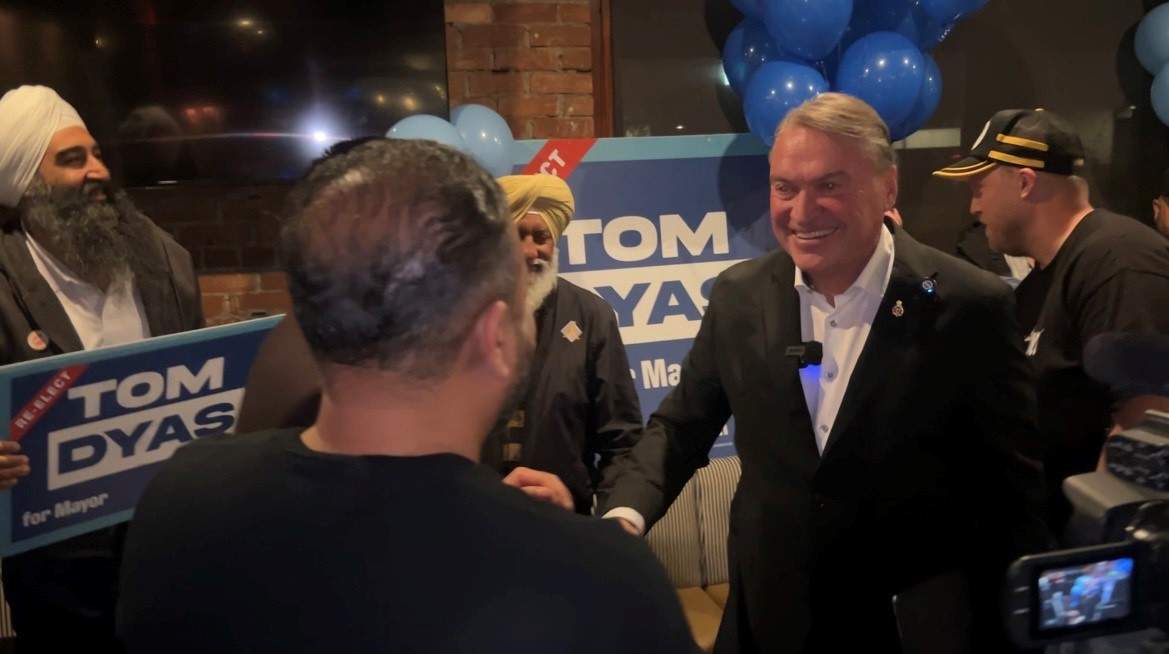
Electoral outcomes in mid-sized urban centers are rarely determined by uniform swings. Instead, municipal victories emerge from the strategic aggregation of localized geographic blocks and divergent voter coalitions. Deconstructing the dynamics of local governance requires examining how distinct demographic and spatial segments respond to incumbent performance, economic pressures, and institutional friction.
The mechanics of the mayoral race offer a clear study in urban-suburban political fragmentation. While surrounding jurisdictions across the region unseated incumbent leadership, the contest concluded with the incumbent retaining office by a narrow margin of 969 votes, securing approximately 50.5 percent of the total ballots cast. This outcome forces an operational assessment of the underlying geographic and structural variables that drove the result.
Spatial Alignment and Geographic Polarization
Electoral geography within the municipality demonstrated a stark spatial division between core urban polling stations and peripheral suburban districts. Voting records indicate a geographic inversion compared to prior election cycles.
The incumbent initially built political visibility in working-class suburban nodes on the city's periphery. However, the retention strategy relied on a decisive shift in central urban precincts. Conversely, the primary challenger captured the majority of suburban polling stations. This dynamic exposes a structural bottleneck:
- The Urban Core Coalition: Characterized by denser housing stock, higher transit utilization, and a greater concentration of renters or multi-family property residents. These voters prioritized continuity in municipal administration, density management, and downtown revitalization initiatives.
- The Suburban Perimeter Coalition: Comprising lower-density residential zones where infrastructure costs, property taxation rates, and vehicular mobility dominate voter sentiment. Dissatisfaction with municipal bureaucracy and spending velocity concentrated heavily in these areas.
When a candidate fails to bridge the urban-suburban divide, elections reduce to turnout efficiency. The incumbent secured victory not through universal appeal, but by optimizing performance in central polling stations to offset losses on the periphery.
The Economics of Institutional Friction
The fault lines of the campaign were defined by disagreements over capital expenditure prioritization and administrative oversight. Municipal governance operates under strict financial constraints, where every major infrastructure commitment triggers opportunity costs elsewhere in the budget.
The primary point of policy divergence centered on high-cost public capital projects, specifically multi-million-dollar recreation infrastructure. The friction points revealed two competing economic philosophies within municipal management:
- The Delegated Administrative Model: Supported by the incumbent, this approach favors internal municipal planning structures, counter-petition processes for major capital borrowing, and centralized project execution designed to accelerate timelines despite higher upfront public expenditures.
- The Direct Democracy Model: Advocated by the challenger, this framework emphasizes direct public referendums for major capital outlays, aggressive reduction of bureaucratic overhead within senior management, and rigid caps on tax increases relative to external inflation metrics.
This divergence created a clear choice for the electorate. Voters favoring stability and predictable capital project delivery absorbed the incumbent's fiscal record, while those prioritizing administrative restructuring and expenditure restraint coalesced around the challenger.
Turnout Metrics and the Cost of Apathy
With total voter turnout resting near 31.4 percent of eligible electors, the outcome was dictated by a highly motivated minority. Low-turnout municipal environments amplify the influence of organized special interests and hyper-local constituency groups.
The low participation rate introduces a structural risk for the incoming administration. A mandate derived from a narrow numerical margin within a low-turnout framework lacks broad consensus. This structural reality limits the political capital available for contentious zoning decisions, tax adjustments, or controversial infrastructure deployments during the subsequent term.
Strategic Execution for the New Term
To navigate a fractured municipal landscape, the administration must abandon broad consensus assumptions and adopt targeted stakeholder management. The structural priority requires addressing suburban fiscal anxieties while maintaining the urban density initiatives that secured the core.
Municipal leadership should establish transparent, data-driven cost-benefit metrics for all upcoming capital projects before moving to procurement phases. By tying spending directly to measurable tax-rate impacts, the administration can neutralize the primary critique raised by suburban opponents, transforming a contested victory into durable operational stability.
Kelowna's Tom Dyas won a tight race for mayor but incumbents lost in Lake Country and Peachland
This video provides an on-the-ground report regarding how Kelowna's mayoral race contrasted with broader regional trends across the Okanagan.