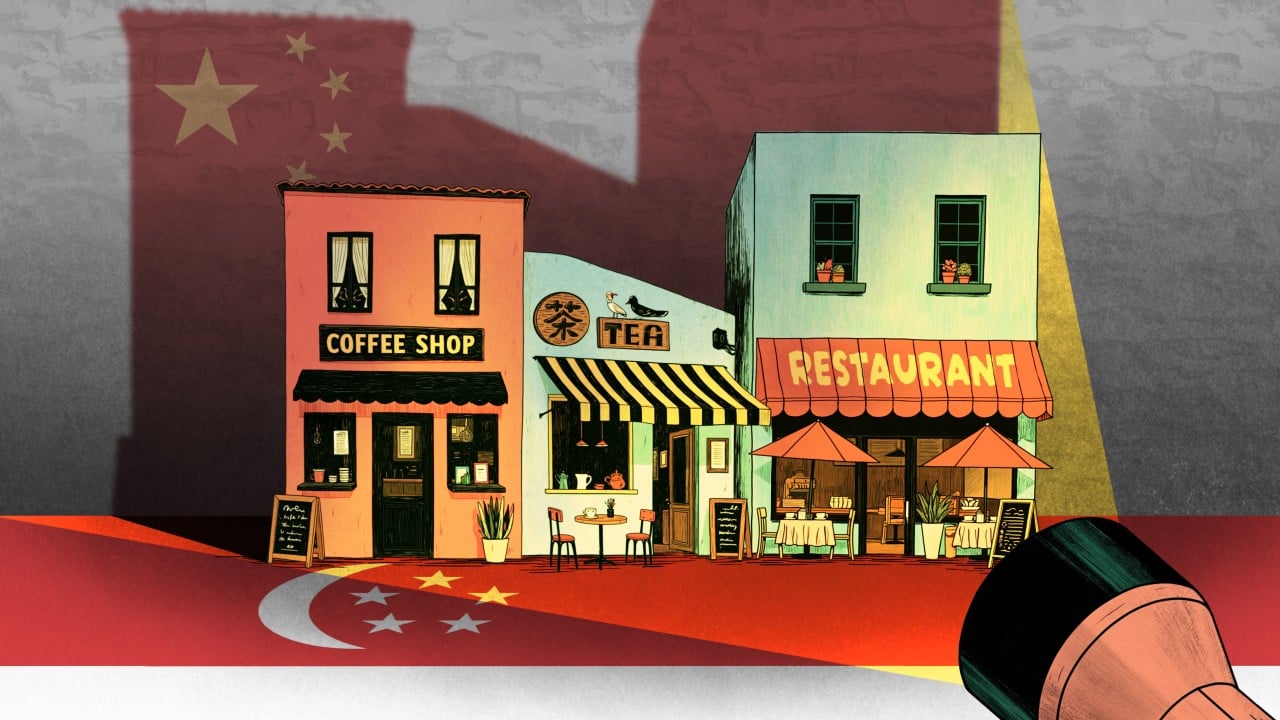
Protectionist trade policy operates on a fundamental accounting error by treating bilateral trade deficits as net capital losses rather than structural reflections of integrated supply chains. When Canadian diplomatic leadership warns that U.S. tariffs drive up domestic production costs and threaten cross-border capital allocation, the underlying mechanism is not diplomatic friction—it is the sudden introduction of an artificial tax wedge into a single, deeply co-dependent industrial base.
To understand the true economic impact of broad-based import duties between the United States and Canada, analysts must discard standard retail-import models. Trade between these two nations does not consist primarily of finished consumer goods competing for shelf space. Instead, it is defined by intermediate production inputs crossing the border multiple times before final assembly. Imposing a tariff on this architecture does not merely penalize a foreign exporter; it taxes the domestic American manufacturer at every iterative stage of value creation.
The Structural Reality of Co-Production
Standard macroeconomic commentary frames trade policy as a zero-sum contest between domestic producers and foreign competitors. In the North American context, this framework fails entirely. The United States and Canada do not simply trade with one another; they build things together.
Consider the operational mechanics of the North American automotive, aerospace, and heavy machinery sectors. A single component—such as an aluminum casting or a precision-machined transmission housing—frequently crosses the Windsor-Detroit or Buffalo-Fort Erie corridors up to six or seven times before a finished vehicle rolls off an assembly line in Ohio or Michigan. At each crossing, specialized regional labor adds incremental value.
When a blanket tariff is applied to Canadian imports, it functions as a cascading value-added tax without a rebate mechanism.
- Primary Input Taxation: Raw materials—specifically Canadian softwood lumber, primary aluminum, steel, and heavy crude oil—enter the U.S. market at an artificially inflated baseline cost.
- Intermediate Margin Compression: U.S. fabricators process these raw materials into sub-assemblies. Because domestic supply cannot rapidly scale to replace Canadian volume, the U.S. fabricator absorbs the tariff cost or passes it downstream.
- Final Assembly Price Escalation: By the time the finished good reaches the American consumer or industrial buyer, the tariff has been compounded across multiple corporate balance sheets, each applying standard margin markups to the inflated cost of goods sold (COGS).
This structural reality explains why diplomatic warnings emphasize domestic cost inflation over foreign retaliation. The primary damage to the U.S. economy occurs automatically at the border before Ottawa drafts a single retaliatory measure.
The Cost Function of Border Friction
To quantify how tariff threats degrade corporate performance, operations managers evaluate three distinct variables: direct duty expenditure, working capital lockup, and compliance overhead. Together, these form the true cost function of trade protectionism.
Direct Duty Incidence and Price Elasticity
In classical trade theory, the incidence of a tariff—who actually pays the tax—is determined by the relative price elasticities of supply and demand. If a foreign supplier has no alternative markets and domestic buyers can easily switch to local substitutes, the foreign exporter must lower their pre-tariff price to absorb the duty.
In the U.S.-Canada bilateral relationship, the elasticity dynamics favor the Canadian input supplier in several critical verticals:
- Energy and Petrochemicals: U.S. Midwest refineries are chemically configured to process heavy, sour crude oil sourced primarily from Western Canada. Re-engineering these refineries to process light, sweet crude from the Permian Basin requires billions of dollars in capital expenditure and years of downtime. Because short-term demand is highly inelastic, U.S. refiners and American drivers absorb the vast majority of any energy tariff.
- Primary Aluminum: The United States lacks the domestic smelting capacity and low-cost hydroelectric power required to produce primary aluminum at scale. Over half of U.S. primary aluminum consumption relies on Canadian imports. Tariffs on this input directly raise costs for U.S. beverage packaging, aerospace manufacturing, and construction firms.
- Potash and Agricultural Inputs: U.S. agricultural yields depend heavily on Canadian potash for fertilizer. Restricting or taxing this flow acts as a direct input tax on American farmers, reducing farm net income and inflating domestic food prices.
Working Capital Lockup and Liquidity Drag
Beyond the headline tariff rate, customs duties create an immediate liquidity drag on corporate balance sheets. Tariffs are payable at the port of entry upon physical importation, often months before the manufacturer converts the raw material into a finished product and collects accounts receivable from the end customer.
For mid-market American manufacturers operating on tight revolving credit facilities, a 10% to 25% tariff forces a sudden expansion in working capital requirements. Cash that would otherwise fund research and development, facility automation, or workforce expansion is trapped in customs bond collateral and duty payments.
Administrative and Compliance Overhead
The third component of the cost function is non-tariff friction. Even when exemptions or exclusion processes exist, navigating them requires specialized legal, customs brokerage, and supply chain auditing teams. Companies must trace the exact country of origin for thousands of individual sub-components to prove compliance with rules-of-origin thresholds under the United States-Mexico-Canada Agreement (USMCA). This administrative burden functions as a regressive tax, disproportionately harming small and medium-sized enterprises that lack the internal compliance infrastructure of multinational conglomerates.
Capital Allocation Under Policy Uncertainty
The second major warning from Canadian diplomatic channels centers on the threat to U.S. inbound investment. To understand why tariffs deter capital expenditure within the United States, one must examine how institutional investors and corporate boards price regulatory risk.
Capital allocation is fundamentally an exercise in discounting future cash flows. When a multinational corporation—whether headquartered in Toronto, Tokyo, or Munich—evaluates building a manufacturing facility in the United States, it models a 15-to-20-year operational horizon. That financial model relies on predictable input costs and guaranteed access to export markets.
Tariff regimes introduce radical variance into both sides of that equation:
- Input Cost Volatility: If a foreign firm builds a plant in the American Midwest, it relies on the broader North American supply base. Sudden tariffs on Canadian steel, lumber, or electronic components instantly invalidate the facility's projected unit economics.
- Retaliatory Export Exclusion: Foreign direct investment (FDI) into the United States is rarely aimed solely at servicing the domestic U.S. market; companies use U.S. plants as export hubs for the broader Americas and Europe. When Washington imposes unilateral tariffs, trading partners inevitably respond with targeted retaliatory tariffs on politically sensitive U.S. exports. A foreign firm considering a U.S. factory realizes that locating inside the U.S. customs territory exposes its global exports to retaliatory trade barriers.
In financial terms, trade policy volatility forces investment committees to raise their internal hurdle rates—the minimum rate of return required to approve a capital project. When the hurdle rate rises to compensate for political risk, marginal projects are canceled, and mobile capital redirects toward jurisdictions with stable, predictable trade frameworks. Canadian pension funds and institutional investors, which represent one of the largest sources of foreign direct investment in U.S. infrastructure, real estate, and energy, face immediate pressure to pause or reallocate deployments when bilateral trade architecture destabilizes.
The Myth of Rapid Reshoring
A core assumption driving protectionist policy is that tariffs act as a forcing function to reshore manufacturing capacity back to the United States. In operational practice, this thesis encounters severe physical and temporal bottlenecks.
Industrial reshoring is not a software update; it is a multi-year physical engineering challenge. Even if a 25% tariff makes domestic production theoretically profitable on a spreadsheet, a manufacturer cannot materialize a domestic supply chain overnight.
- Permitting and Environmental Review: Constructing new smelting facilities, chemical processing plants, or heavy manufacturing hubs in the United States requires navigating federal, state, and local environmental permitting processes that routinely span three to five years.
- Skilled Labor Deficits: The U.S. manufacturing sector already faces a chronic shortage of specialized machinists, industrial electricians, and process engineers. A sudden surge in domestic facility construction bids up wage rates without expanding the underlying labor pool, further eroding the cost competitiveness of the reshored facility.
- Capital Equipment Lead Times: High-precision industrial machinery, transformers, and automated tooling frequently carry order backlogs exceeding 18 to 24 months.
During the multi-year gap required to build domestic capacity, the U.S. economy endures the full inflationary impact of the tariffs without realizing any of the promised domestic employment gains. By the time a new domestic facility comes online, the trade policy environment may have shifted entirely under a subsequent political administration, leaving the newly built plant stranded with uncompetitive cost structures.
Asymmetric Retaliation and Sectoral Vulnerability
Trade disputes between asymmetric economies—where the United States possesses a vastly larger domestic market than Canada—do not play out through symmetrical dollar-for-dollar tariff matching. Instead, smaller trading partners utilize game-theoretic targeting to maximize political pain while minimizing domestic economic self-harm.
Canadian trade strategists historically respond to U.S. protectionism by constructing surgical retaliatory lists. Rather than imposing blanket tariffs that penalize Canadian consumers, Ottawa targets specific U.S. agricultural, consumer, and industrial exports produced in congressional districts held by key legislative leaders.
This creates a bifurcated economic impact inside the United States:
- Broad, Diffuse Costs: Every American household and manufacturer pays slightly more for energy, housing materials, and consumer goods due to U.S. import tariffs.
- Concentrated, Acute Pain: Specific U.S. export industries—such as bourbon distillers in Kentucky, dairy farmers in Wisconsin, orange growers in Florida, and recreational vehicle manufacturers in Indiana—face sudden, catastrophic drops in export volume as Canadian buyers shift to alternative suppliers.
Furthermore, Canada possesses structural leverage in critical minerals and energy transmission. The North American electrical grid is deeply integrated, with hydro-rich provinces like Quebec and British Columbia supplying baseload and peak-shaving power to New York, New England, and the Pacific Northwest. Similarly, Canada holds vast reserves of cobalt, lithium, nickel, and rare earth elements essential for U.S. defense aerospace and electrification supply chains. Weaponizing trade across the northern border compromises U.S. national security supply chains by driving allied resource extraction toward Asian and European off-take agreements.
Limitations of Corporate Mitigation Tactics
When confronted with impending North American tariffs, corporate supply chain executives typically deploy three standard mitigation tactics: inventory front-loading, tariff engineering, and supplier diversification. While necessary, each tactic carries strict operational limitations and offers no permanent insulation from broad protectionism.
Inventory Front-Loading involves purchasing and importing excess raw materials before tariff implementation dates. This strategy provides a temporary buffer of 60 to 180 days. However, it rapidly consumes warehouse capacity, increases insurance and carrying costs, and exposes the company to inventory obsolescence if end-market demand softens. Once the pre-tariff inventory is depleted, the firm faces the exact same margin compression.
Tariff Engineering attempts to alter the physical state or classification of a product so it enters the country under a lower-duty Harmonized Tariff Schedule (HTS) code. For example, importing components slightly disassembled rather than as a complete unit. Modern customs enforcement agencies aggressively audit classification shifts, and broad, across-the-board tariffs applied to all imports from a specific country eliminate the arbitrage opportunities between different HTS codes.
Supplier Diversification seeks to replace Canadian inputs with vendors from non-tariffed jurisdictions. In practice, shifting away from a contiguous land-border partner to an overseas supplier in Asia or South America substitutes tariff costs for ocean freight volatility, extended lead times, and geopolitical maritime risk. For heavy, low-value-to-weight commodities like lumber, cement, aggregates, and heavy crude, transoceanic shipping economics are fundamentally unviable.
Strategic Execution for Cross-Border Operators
Organizations operating across the U.S.-Canada corridor cannot rely on diplomatic resolution to protect operating margins. Leadership teams must treat trade friction as a permanent structural variable and execute immediate operational adjustments to preserve liquidity and market share.
- Audit Tier-2 and Tier-3 Sub-Assembly Exposure: Move beyond direct import tracking. Map the entire bill of materials to identify hidden Canadian inputs embedded within domestic U.S. vendor components. Quantify the exact margin erosion at 10%, 15%, and 25% duty tiers to establish automatic price-escalation triggers in customer contracts.
- Restructure Incoterms and Customs Bond Capacity: Shift procurement contracts toward Delivered Duty Paid (DDP) terms where market leverage permits, forcing upstream suppliers to share duty incidence and administrative burden. Simultaneously, expand continuous customs bond limits immediately; bond sufficiency formulas automatically scale with duty outlays, and an under-funded bond will halt shipments at the border regardless of corporate liquidity.
- Segregate U.S. Domestic and Export Production Lines: For manufacturers producing goods in the United States for both domestic consumption and international export, utilize Foreign Trade Zones (FTZs) or duty-drawback programs. Bringing Canadian inputs into a U.S. FTZ allows the manufacturer to defer duty payments until the product enters U.S. commerce, and entirely eliminates tariff liability on finished goods re-exported to global markets.
- Re-Index Capital Expenditure Hurdle Rates: Freeze non-essential capacity expansion projects reliant on cross-border input stability until USMCA review cycles conclude. Direct available capital expenditure strictly toward domestic operational automation and yield optimization technologies that reduce unit labor and material waste, offsetting tariff-induced cost inflation through internal efficiency gains.