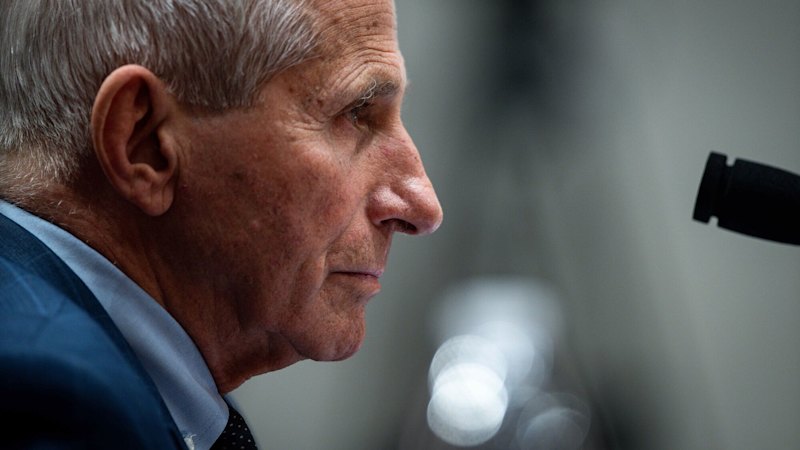
The congressional hearing room smelled of floor wax, stale coffee, and ancient panic. Under the fluorescent glare, rows of lawmakers leaned into their microphones, their expressions calibrated for the evening news clips. Across the table sat Anthony Fauci, flanked by legal counsel, blinking behind wire-rimmed glasses. To the gallery and the millions watching through digital feeds, the spectacle was billed as a final reckoning. It was supposed to provide closure. It was supposed to deliver accountability for school closures, mask mandates, and the chaotic erosion of public trust during a planetary health crisis.
Instead, it did something far more dangerous. It institutionalized a permanent state of national grievance.
When political theater meets raw public trauma, the result is rarely justice. It is theater that hardens into doctrine. For years, observers have tried to diagnose American anger as a temporary byproduct of pandemic isolation, economic stress, or media polarization. That diagnosis is wrong. The fury surrounding Anthony Fauci and the broader public health apparatus is not a transient symptom. It is a structural feature of modern civic life. The congressional inquisitions did not create this rage; they provided it with a permanent address, a standardized script, and a recurring broadcast schedule.
To understand why this anger endures, we have to look past the partisan theater and examine the mechanics of institutional failure.
The Architecture of Institutional Miscalculation
Public health agencies built their authority on a foundation of absolute certainty. For decades, institutions like the Centers for Disease Control and Prevention and the National Institutes of Health projected an aura of infallible science. They operated like priesthoods, handing down edicts from high ivory towers with the expectation of unquestioning compliance. Science, however, is not a static set of tablets brought down from a mountain. It is a messy, iterative process of trial, error, correction, and doubt.
When the crisis hit, the apparatus panicked. Fearing that the public could not handle the nuance of shifting scientific data, officials chose message management over radical transparency. They lied about masks to preserve supplies for hospitals. They presented shifting behavioral restrictions as absolute scientific laws. They weaponized consensus to silence dissenting epidemiologists who pointed out the long-term harms of school closures and blanket lockdowns.
When authorities treat the public like children who must be managed rather than adults who must be informed, they forfeit the right to be believed when the crisis deepens.
This dynamic created an inevitable trust deficit. When the public discovered that policy prescriptions were often driven by political expediency rather than pure empirical data, the shockwaves were profound. People felt tricked. Parents who watched their children slip into academic regression and severe depression while parks were chained shut did not forget. Small business owners who lost life savings while big-box stores remained packed did not forgive.
The congressional hearings served as a lightning rod for these accumulated grievances. But because the hearings were organized along party lines, they failed to offer a genuine reckoning. Republicans used the time to score soundbites for campaign fundraisers. Democrats used their minutes to shield the witness and lecture the opposition about disinformation. Neither side engaged in the hard, unglamorous work of institutional reform. They simply mined the public's trauma for short-term political capital.
The Weaponization of Memory
Memory is a battleground. How a society remembers a crisis dictates how it handles the next one. Right now, the collective memory of the pandemic is profoundly fractured, split into mutually exclusive realities that share no common ground.
In one reality, heroic public health officials battled an invisible killer against impossible odds, constantly undermined by anti-science extremists and political saboteurs. In the other, an overreaching technocratic elite seized unprecedented control over daily life, destroying civil liberties, crushing dissent, and ruining millions of livelihoods under the guise of safety.
Neither narrative is entirely true, yet both are fiercely defended. The hearings did nothing to bridge this chasm. In fact, they widened it. By reducing complex policy failures to a referendum on a single man, the political establishment ensured that the debate would remain emotional rather than analytical.
Consider the debate over mandates. A rigorous post-mortem would examine the cost-benefit analysis of every intervention, weighing viral transmission rates against mental health metrics, economic destruction, and developmental delays in children. It would ask hard questions about emergency powers, bureaucratic overreach, and the concentration of decision-making authority in unelected hands.
Instead, the public got a circus. They watched politicians posture about emails, grant money, and social distancing feet while the underlying architecture of emergency governance remained completely untouched. No oversight boards were created. No emergency powers were curtailed. No institutional safeguards were put in place to prevent future abuses. The theater of accountability replaced actual accountability.
The Psychology of Enduring Rage
Why does the anger persist long after the emergency has faded?
Human beings can endure immense hardship if they believe the hardship is fair, necessary, and temporary. What breaks the social contract is the perception of hypocrisy and double standards. When citizens were ordered to cancel family funerals, wedding celebrations, and small gatherings, while political leaders were repeatedly caught dining maskless at high-end restaurants or attending private galas, the social contract fractured beyond repair.
This hypocrisy created a deep psychological wound. It triggered a sense of profound disrespect. People felt that the ruling class viewed ordinary citizens as subjects rather than partners in a democratic republic.
The hearings brought those old wounds back to the surface. Every time a clip of a congressional exchange went viral on social media platforms, it reignited the initial sting of powerlessness. Outrage is a powerful emotional adhesive. It binds communities of the aggrieved together, offering a sense of belonging and moral clarity in a world that feels increasingly rigged.
Politicians know this. Media algorithms reward this. The outrage economy thrives on perpetual motion. There is no financial or political incentive for closure. Admitting that everyone made mistakes under extraordinary pressure does not generate clicks, donations, or votes. Demonizing the opposition does.
The Cost of Unresolved Trauma
A nation that cannot process its recent history is condemned to repeat its worst mistakes. The enduring rage over the pandemic response is not just a cultural nuisance; it is a systemic vulnerability.
When the next public health crisis arrives—and history suggests it is a matter of when, not if—the baseline level of public compliance will be near zero. Trust in institutional guidance has been hollowed out. If federal agencies recommend a new vaccine or a new containment protocol tomorrow, a massive segment of the population will reject it out of hand, not necessarily because the science is bad, but because the messengers have been thoroughly discredited.
This is the hidden cost of the political theater we witnessed in Washington. By turning public health into a partisan blood sport, our leaders have compromised national security. They have traded long-term public safety for short-term political theater.
The anger is real, and it is entirely justified in its origins. But until our political and institutional leaders abandon the urge to deflect, spin, and weaponize our collective trauma, that anger will continue to simmer, waiting for the next spark to ignite a system that has forgotten how to tell the truth.