National milestones historically function as public goods, designed to generate non-partisan civic capital and unified cultural consumption. The launch of the Great American State Fair on the National Mall in Washington demonstrates a structural shift from this model, executing a strategy of political monopolization. By leveraging a centralized executive task force—Freedom 250—rather than the congressionally mandated, non-partisan America250 entity, the executive branch has successfully converted a macro-national commemoration into an exclusive branding engine. This operational pivot reallocates public space, federal infrastructure, and national historical symbols to maximize political return, altering the economics of civic events and redefining how modern administrations utilize state resources for electoral positioning.
To understand how a multi-week national festival scales down into a campaign-style rally, one must analyze the mechanisms of structural appropriation, supply-chain disruptions in talent acquisition, state-level participation dynamics, and the commercialization of public space.
The Architectural Mechanics of Civic Monopolization
The institutional friction underlying the event stems from an operational duplication of state functions. Congress originally established America250 to oversee the semiquincentennial celebrations through a distributed, bipartisan governance framework. The current administration bypassed this structural friction by chartering a distinct entity: Freedom 250, officially organized as the White House Task Force on Celebrating America’s 250th Birthday.
This administrative substitution changes the financial and regulatory parameters governing the celebration. The institutional mechanics operate through three primary structural vectors.
- Donor Access Optimization: Freedom 250 functions as a highly targeted fundraising mechanism. By offering private executive receptions to entities contributing seven-figure sums, the organization converts public commemorative infrastructure into premium corporate access. Corporate and private entities facing pending federal regulatory decisions can leverage these tax-deductible donations to bypass standard lobbying friction, establishing direct proximity to executive leadership.
- Narrative Centralization: Standard civic events decentralize content production across regional, historical, and multi-ethnic sub-committees. Freedom 250 centralizes narrative control within the executive office. Historical program modules are systematically audited. Executive orders aimed at eliminating what the administration defines as ideological indoctrination have resulted in the removal of park materials detailing slavery, Indigenous histories, and climate data. The public history presented is heavily curated to align with the populist economic nationalism of the executive branch.
- Infrastructure Aesthetic Realignment: Physical space on the National Mall has been systematically modified to reflect this centralized branding. The $14.1 million renovation of the Lincoln Memorial Reflecting Pool—engineered specifically to tint the water a distinct flag-blue color using polyurethane liners—illustrates the prioritization of immediate visual messaging over structural maintenance. When technological failures occur, such as the peeling of the liner and subsequent algae blooms, the administrative apparatus frames the systemic maintenance deficit as malicious external sabotage ("thugs and bad people"), shifting the narrative back to a conflict model.
Labor Defections and the Economics of Talent Substitution
The strategic objective of the Great American State Fair was to present an inclusive, high-market-value cultural showcase featuring cross-demographic musical headliners like the Commodores, Martina McBride, and Young MC. The execution encountered a rapid labor market correction when these artists realized that their participation would signal an implicit endorsement of the executive branch's partisan platform.
This systemic talent defection illustrates a clear market mechanism. The marginal revenue generated by performing at a federally funded event is heavily outweighed by the structural risk to an artist's broader intellectual property and consumer goodwill. When mainstream artists face the threat of audience polarization or long-term brand dilution, they opt out.
The administration managed this contraction of the talent supply chain by implementing a rapid economic substitution strategy.
[Mainstream Artists Pull Out] ──> [Brand Protection Choice]
                                         │
                                         ▼
[Executive Value Shift] ─────────> [High-Ideology, Low-Cost Talent]
                                         │
                                         ▼
                                   [Targeted MAGA Rally]
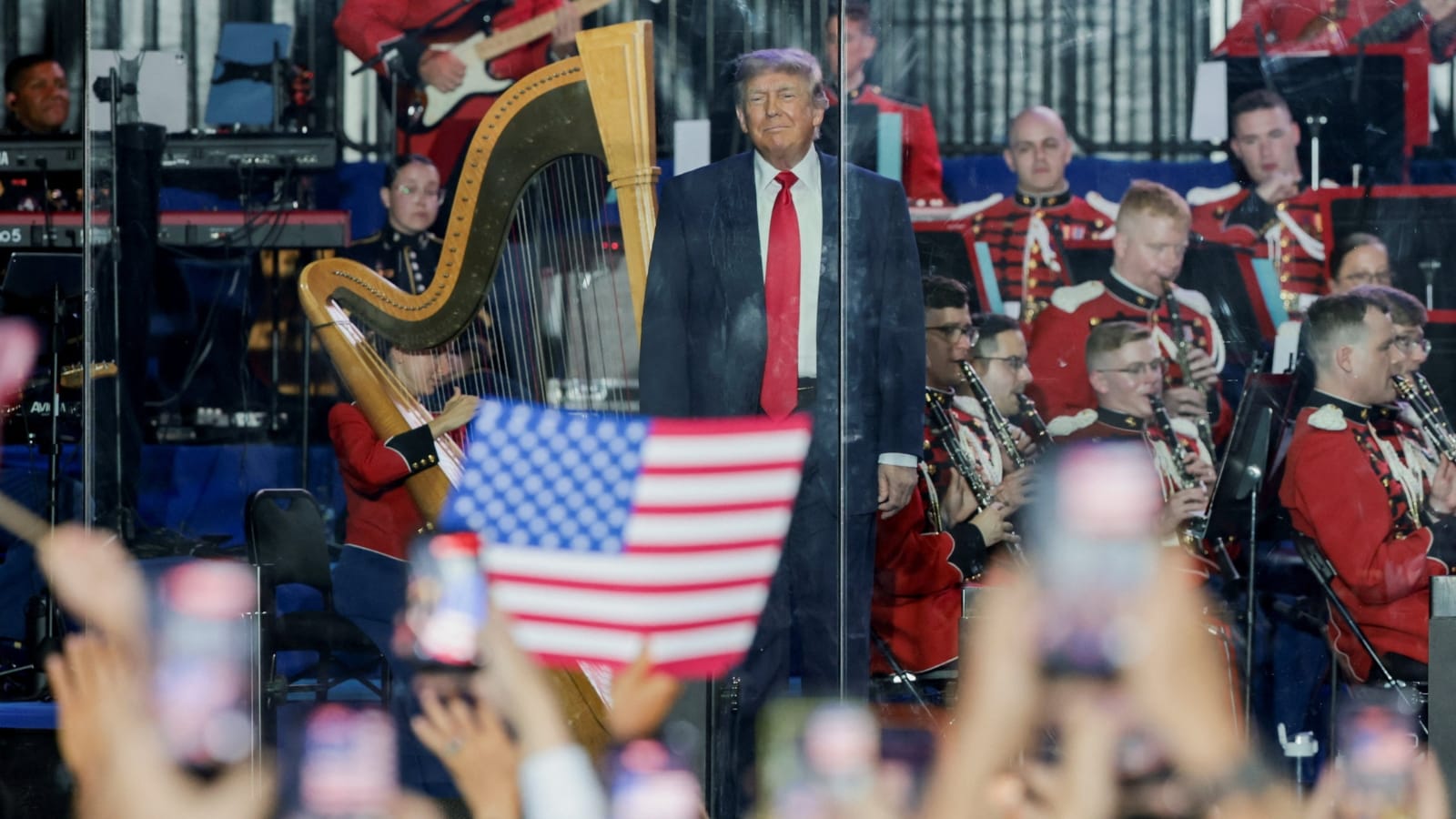
This substitution mechanism shifts the event's functional utility. Instead of operating as a broad cultural draw with a high cost-per-impression among non-aligned voters, the stage transitions to lower-cost, high-ideology performers whose career models are structurally independent of mainstream cultural distribution channels. Replacing pop and country cross-over acts with hyper-targeted cultural fixtures like Lee Greenwood and Christopher Macchio transforms the event from an expansive public fair into an intensive mobilization asset for the incumbent's base. The appearance of Alexis Wilkins—performing the national anthem amid family ties to FBI Director Kash Patel—further emphasizes that institutional loyalty has supplanted market-rate star power as the primary qualification for participation.
State-Level Participation Failures and Fiscal Deficit Metrics
The administrative design of the state pavilions required individual states to allocate independent public funding and logistical resources to secure a physical footprint on the National Mall. This operational requirement created a secondary friction point, leading to explicit boycotts by at least eight state governments, including Oregon, Washington, Massachusetts, Illinois, North Carolina, and Pennsylvania.
An analysis of these state-level departures reveals two distinct motivational variables: fiscal optimization and partisan risk management.
- The Fiscal Constraints: Democratic and fiscally constrained state executives leveraged explicit cost-benefit analyses to justify their absence. Washington state officials cited severe regional budgetary deficits, choosing to retain capital for localized, community-level celebrations rather than absorbing the high logistical costs of federal fair participation. Similarly, Oregon officials identified single-line logistical expenses, such as an estimated $70,000 in shipping fees alone, as an inefficient use of public taxpayer funds.
- The Partisan Risk Premium: Massachusetts Governor Maura Healey openly criticized the federal monetization strategy, noting that charging sovereign states fees to participate in a federally managed national anniversary was an unprecedented distortion of civic governance. State executives recognized that allocating taxpayer capital to an event branded heavily with current executive campaign slogans carried a significant domestic political penalty.
To preserve the appearance of complete geographic representation, Freedom 250 bypassed elected state leaders entirely by outsourcing empty pavilions to private regional entities, local historical societies, and aligned corporate interest groups. For instance, when the state government of Illinois declined to participate, a private museum from Peoria was integrated to curate the space. This structural workaround effectively masks the breakdown in federal-state cohesion, replacing authentic governmental representation with curated private interest proxies.
The Commercialization of Public Space and the UFC Paradigm
The expansion of the semiquincentennial calendar beyond traditional civic events into corporate sports entertainment—highlighted by high-profile mixed martial arts bouts hosted within public park boundaries—presents an advanced iteration of public asset monetization.
The integration of the Ultimate Fighting Championship (UFC) onto public lands creates an acute ethical and economic precedent. Public park land, managed under strict federal conservation mandates, operates under non-commercial legal frameworks. By granting a highly profitable, private sports entertainment conglomerate exclusive access to public spaces on the National Mall, the administration establishes an untraditional commercial paradigm.
The transaction operates as a mutual resource exchange. The private enterprise receives an elite, highly historicized backdrop that elevates its global brand equity and drives unprecedented pay-per-view metrics. In return, the executive branch receives a massive, culturally captive audience of prime demographic voters who are structurally insulated from standard political messaging but highly receptive to the themes of hyper-masculinity and combative nationalism that define the current administration's rhetorical style. This synthesis effectively transforms public real estate into an exclusive venue for commercialized political theater.
Strategic Forecast and the Midterm Electoral Balance Sheet
The operational deployment of the Great American State Fair indicates that the administration views the nation's 250th anniversary not as a static historical commemoration, but as an active logistical runway leading directly to the critical November midterm elections. Every architectural choice, talent substitution, and corporate partnership is designed to manage specific macroeconomic and political vulnerabilities.
The primary strategic vulnerability facing the executive branch is an entrenched 37% public approval rating, driven by prolonged economic anxiety and previous geopolitical entanglements in the Middle East. The fair represents a coordinated counter-offensive to reset these metrics. By staging high-frequency military flyovers, announcing highly visible bilateral developments like the interim maritime agreements in the Strait of Hormuz to lower fuel costs, and branding new executive initiatives like the "One Big Beautiful Bill Act" (eliminating taxes on tips) as modern equivalents to the Boston Tea Party, the administration is executing a comprehensive economic rebranding campaign.
The 16-day fair is engineered to function as an unceasing political incubator. Programs such as "Make America Healthy Again Mondays" systematically codify partisan health platforms into family-friendly state fair modules. Meanwhile, competitive youth initiatives like the Patriot Games use a modest $125,000 scholarship payout to capture localized media markets and project an image of meritocratic civic investment.
The final strategic move is already locked into the operational calendar. The entire multi-week infrastructure on the National Mall exists to establish a physical and media monopoly ahead of July Fourth. By transforming the traditional non-partisan holiday fireworks display into an explicit campaign-style event hosted directly by the president, the administration creates an inescapable media bottleneck. Corporate sponsors, regional networks, and public spectators will be structurally compelled to consume and amplify a highly politicized message, finalizing the transition of America’s semiquincentennial from a shared public legacy into a proprietary executive asset.