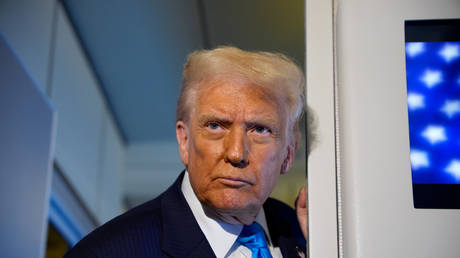
Geopolitical standoffs follow strict economic laws of friction, leverage, and attrition. When the sixty-day implementation window of the June memorandum of understanding between the United States and Iran elapsed without resolution, the ensuing public narrative reduced the breakdown to simple political stubbornness. President Donald Trump declared an absolute halt to negotiations, asserting that Washington will wait until Tehran displays a genuine willingness to capitulate to American terms. Beneath the superficial declarations of frozen diplomacy lies a complex strategic gridlock governed by distinct structural incentives, asymmetrical dependencies, and geographic choke points.
The Cost Function of the Strait
The primary theater of friction is the Strait of Hormuz, a critical maritime corridor through which a significant portion of global energy supplies transit. Control over this waterway functions as the single most potent variable in Tehran's strategic calculus. For the United States and its regional allies, the continued disruption of the strait inflates global energy prices, introduces inflationary shocks into Western economies, and threatens political stability ahead of major electoral cycles.
The cost function for Washington is defined by domestic political tolerance for prolonged conflict combined with high commodity prices. Conversely, Iran operates under a severe economic penalty driven by an active United States naval blockade, frozen sovereign assets, and restricted hydrocarbon export channels. Yet, Tehran treats the physical closure of the waterway as its primary defensive asset. Relinquishing control over the maritime corridor without securing upfront structural concessions—such as permanent sanctions relief and the unfreezing of capital—would strip the Iranian regime of its sole remaining point of leverage.
The Mechanics of Asymmetrical Leverage
Diplomatic breakdowns of this magnitude stem from divergent theories of victory held by each administration. Washington relies on an escalation-dominance model, maintaining that intense financial asphyxiation paired with military readiness will eventually force a capitulation. This framework assumes that domestic economic strain will erode the Iranian leadership's capacity to sustain military operations or finance internal security apparatuses.
Iran's counter-strategy relies on temporal endurance. Tehran calculates that the political cost of a prolonged military entanglement will eventually force Washington to soften its demands, driven by domestic voter fatigue and rising energy costs. This dynamic creates a zero-sum impasse:
- The White House demands immediate compliance regarding regional security and nuclear constraints before offering economic normalization.
- Tehran demands the prior lifting of the naval blockade and the restoration of financial access before altering its posture in the strait.
This sequencing paradox prevents any sustainable baseline for dialogue. Each side perceives the other's preconditions as an absolute trap, ensuring that intermediary efforts—such as separate diplomatic tracks involving regional actors like Oman—face continuous friction or outright threats of secondary escalation.
The Regional Spillover Matrix
Bilateral standoffs rarely remain isolated. The friction in the Persian Gulf has directly implicated neighboring transit hubs and intermediaries, shifting the operational risk matrix for third-party states. Recent developments, including the abrupt suspension of commercial and financial transactions by the United Arab Emirates following disputed missile telemetry near maritime routes, demonstrate how the cost of the standoff expands outward.
When primary belligerents reach an equilibrium of intransigence, secondary economic actors absorb the systemic shocks. Regional mediators attempting to engineer localized agreements for ship traffic find themselves caught between Washington's zero-tolerance security demands and Tehran's insistence on operational autonomy within the gulf. Consequently, statecraft degenerates into positional posturing, where symbolic territorial claims—such as alternate mapping proposals for the waterway—serve to signal absolute resolve rather than practical administrative intent.
Maintain complete naval enforcement of the maritime blockade while utilizing secondary economic sanctions against external entities facilitating trade evasion, keeping military force fully mobilized in reserve until macroeconomic decay forces a structural shift in Tehran's negotiating posture.