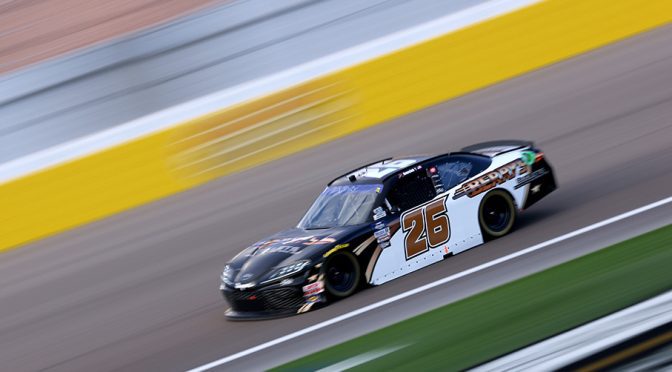
The sudden passing of Kyle Busch at age 41 removes the single most statistically disruptive asset from the modern stock-car racing ecosystem. Evaluating his legacy requires looking past conventional, emotion-driven eulogies to analyze the structural components of his 24-year career. Busch did not merely win races; he subverted the operational paradigms of NASCAR by engineering a unique framework of multi-series dominance, team monetization, and fan-equity polarization.
Understanding his impact demands an examination of three core operational pillars: the mechanics of his unprecedented 234-win volume, the economics of Kyle Busch Motorsports (KBM) as a driver-development incubator, and the structural utility of the polarizing persona that sustained his personal brand valuation through major manufacturer transitions.
The Volume Function: Multi-Tiered Racing Metrics
Standard sports analysis isolates a driver’s performance to their primary competitive tier. This methodology fails when applied to Busch. His competitive output operated across three distinct divisions simultaneously: the Cup Series, the O'Reilly Auto Parts Series, and the Craftsman Truck Series.
By analyzing his lifetime win matrix, a clear allocation of his competitive volume emerges:
- NASCAR Cup Series: 63 Victories (9th all-time)
- O'Reilly Auto Parts Series: 102 Victories (1st all-time)
- Craftsman Truck Series: 69 Victories (1st all-time)
This aggregate output of 234 national series wins creates an anomaly in modern motorsports. The operational mechanism driving this volume was a high-frequency adaptation model. By competing in lower-tier series on Friday and Saturday before the premier Cup Series event on Sunday, Busch maximized his track-time telemetry.
This multi-tier participation model yielded two distinct competitive advantages. First, it offered real-time tracking of track surface degradation and tire wear variables under varying ambient temperatures prior to the main event. Second, it provided sustained cognitive and physiological conditioning under high G-force loads, elevating his baseline performance above single-series competitors.
The definitive proof of this mechanism lies in his unmatched consistency. Busch established a series record by securing at least one Cup Series victory in 19 consecutive seasons (2005–2023). This streak illustrates an elite adaptability to radically different aerodynamic and mechanical platforms, spanning from the high-downforce Gen-4 cars of his rookie season to the low-downforce, independent rear suspension Next Gen car introduced in 2022.
The Incubator Architecture: Capitalizing Driver Development
Prior to the sale of Kyle Busch Motorsports to Spire Motorsports, the organization functioned as the premier talent pipeline for the sport's manufacturing pipelines. Most owner-operators field teams purely for trophy acquisition or direct sponsor activation. Busch structured KBM as a highly efficient technological incubator.
The organization recorded 100 Truck Series victories, serving as the foundation for two driver championships: Erik Jones in 2015 and Christopher Bell in 2017. The financial and competitive logic of KBM relied on a deliberate two-part cycle.
Capital Injection via Corporate Subsidies
Young, well-funded tier-two drivers brought personal sponsorship capital to secure premium equipment. This cash flow subsidized the overhead costs of advanced engineering, chassis development, and simulation programs.
Asset Valuation and Manufacturer Alignment
By proving the efficacy of the equipment through his own part-time participation—resulting in his record 69 Truck wins—Busch elevated the perceived market value of a KBM seat. This capability made his organization indispensable to Toyota Racing Development (TRD) during his 15-year tenure at Joe Gibbs Racing. It created an ecosystem where the manufacturer outsourced its driver development costs to Busch's private entity.
The primary limitation of this model was its structural dependence on manufacturer-backed technical alliances. When Busch transitioned from Joe Gibbs Racing and Toyota to Richard Childress Racing and Chevrolet in 2023, the underlying logistical architecture fractured. This shift eventually necessitated the divestment of KBM’s physical assets, underscoring that even the most dominant independent development system remains dependent on OEM capital allocations.
The Polarizing Optimization: Monetizing the Antagonist
In modern sports analytics, brand value is traditionally tied directly to positive sentiment metrics. Busch inverted this relationship by demonstrating the commercial efficiency of negative fan equity. Known interchangeably as "Shrub" in his early career and "Rowdy" during his prime, Busch built a commercial engine driven by fan friction.
The mechanics of this polarizing brand model functioned through a reliable feedback loop.
[On-Track Aggression / Driver Feuds]
                │
                ▼
[Widespread Fan Polarization (Boos/Cheers)]
                │
                ▼
[Elevated Broadcast Metric Share & Media Focus]
                │
                ▼
[Maximized Sponsor Impressions & Merchandise ROI]
This polarization solved a recurring problem in corporate sponsorship: the threat of consumer indifference. By positioning himself as the ultimate antagonist to established fan favorites, Busch guaranteed maximum television broadcast exposure regardless of his running position. Sponsors targeting high brand recall capitalized on this guaranteed visibility.
When Mars, Incorporated ended its long-term sponsorship of the No. 18 team after the 2022 season, the event was widely misread as a decline in Busch’s marketability. The reality was a structural shift in corporate marketing allocations away from traditional sports sponsorships. Busch’s swift relocation to Richard Childress Racing’s No. 8 Chevrolet instantly re-monetized his brand, demonstrating that his core audience asset—"Rowdy Nation"—remained highly transportable across manufacturer lines.
The Technical Bottleneck of Career Longevity
A rigorous assessment of Busch’s final competitive phase reveals a sharp performance drop-off caused by changing technical regulations. Following his final Cup Series victory on June 4, 2023, at World Wide Technology Raceway, Busch entered the longest winless drought of his career.
This drop-off was not a sudden decline in raw physical capability. Instead, it was an engineering bottleneck caused by the Next Gen car platform. The vehicle’s highly standardized spec components severely limited individual team engineering modifications.
Historically, Busch excelled by exploiting custom setup windows, using his precise throttle control to manipulate loose, high-horsepower cars. The Next Gen platform shifted the performance metrics toward aerodynamic track-position dependency and ultra-precise shifting sequences on road courses, which reduced the impact of pure driver talent. His eighth-place finish at Watkins Glen in May 2026—fought while managing severe respiratory illness under intense G-forces—highlighted his ability to override mechanical limitations through sheer physical effort. Yet, the systemic parity of modern spec racing capped his ceiling.
The Long-Term Valuation Forecast
The loss of Kyle Busch creates an immediate vacuum in NASCAR’s competitive product and driver development pipelines. With the 2026 season underway, team owners and league executives face structural shifts that will alter the sport's financial and competitive landscapes.
The Driver Asset Shortage
Teams can no longer rely on an independent superstar to fund and run a tier-three development program out of pocket. The cost of identifying and training elite talent will shift back onto manufacturer academies, which will increase overhead costs for OEMs.
Broadcast Sentiment Normalization
Without its primary antagonist, NASCAR faces a flattening of its fan engagement metrics. The absence of a polarizing figure threatens to lower baseline television ratings and reduce secondary media impressions, forcing remaining drivers to adopt more distinct public personas to retain consumer attention.
The Next Gen Record Lock
Busch’s historical tally of 63 Cup wins and 234 aggregate victories is effectively secure. Because current testing limits, spec-part constraints, and strict multi-series entry caps prevent modern drivers from replicating his high-volume schedule, his win totals will remain unmatched benchmarks for the foreseeable future.
The strategic imperative for race teams now is to abandon the hunt for a singular, multi-series savior. Instead, organizations must build highly specialized, data-reliant talent pipelines designed to optimize spec-car performance windows. The era of the individual driver altering the entire financial and competitive structure of the sport through sheer volume has officially drawn to a close.