The scent of cardamom and salt always lingers longest at the water’s edge. Stand on the docks of Chabahar at dawn, and you can smell the centuries. Dhows with wooden ribs carved from teak rise and fall on the swell, their hulls carrying the weight of an unbroken commercial memory. For thousands of years, these waters have whispered secrets between the Persian plateau and the western shores of India. Men have traded spices for textiles, silver for timber, and promises for safe passage across a sea that refuses to be tamed by empires or ideologies.
Today, that ancient conversation sounds a little different. Meanwhile, you can find other events here: The Structural Mechanics of Cross Strait Gray Zone Operations.
When the leadership of the Islamic Republic of Iran stepped up to mark India’s 80th Independence Day, the diplomatic cables hummed with the usual vocabulary of bilateral summits. Words like strategic partnership and mutual growth drifted through the air-conditioned boardrooms of Tehran. But step away from the podiums and the press releases, and you find a much more visceral reality. This is not merely a transaction between governments staring at spreadsheets. It is a lifeline forged in granite and ambition, designed to outlast the shifting winds of global sanctions and geopolitical turbulence.
Consider what happens when a container ship slips out of an Iranian harbor, bound for Mumbai or Gujarat. Inside those steel boxes are not just manufactured goods or bulk commodities. There is history, ambition, and the quiet determination of two nations refusing to let distant capitals dictate their economic survival. To see the complete picture, check out the excellent report by NPR.
To understand why Tehran views its ties with New Delhi as a truly valuable asset, you have to look at a map through the eyes of a merchant who hates paying tolls.
For decades, the path from India to Central Asia and Europe was a labyrinth of closed doors and choked corridors. Overland routes demanded passage through unstable territories. Sea lanes demanded long, expensive detours around the horn of Africa or through congested straits. Then came the vision of the Chabahar Port—a deep-water harbor on the Gulf of Oman that effectively bypasses the traditional bottlenecks of the region.
Imagine standing on the salt flats of Chabahar today. Cranes stretch toward a blinding sky like metallic palms. Warehouses hum with the low, steady drone of forklifts. Trucks line up for miles, their diesel engines rumbling as drivers wait to haul goods northward toward Afghanistan, Turkmenistan, and beyond. This is the North-South Transport Corridor taking physical form. It transforms a brutal desert expanse into a bustling highway of commerce.
For India, a rising economic powerhouse hungry for energy and access to Eurasian markets, this port is an open door. For Iran, isolated by sweeping international sanctions and desperate for reliable trade partners, India is a steady anchor in a churning sea.
Yet, numbers on a trade balance sheet rarely capture the human cost of isolation or the sweet relief of connection.
I remember talking to an aging customs official in Bandar Abbas a few years ago. His hands were calloused from decades of thumbing through manifestos written in Persian, English, and Gujarati. He looked out over the harbor, squinting against the glare of the midday sun, and spoke with a quiet candor. Politics, he told me, changes like the desert wind. One day you are an ally; the next you are a pariah. But cargo? Cargo wants to move. People want to trade. Bread wants to find a mouth, and steel wants to find a bridge.
That is the hidden engine driving this relationship. It is the stubborn human impulse to trade, regardless of what the grandmasters of geopolitics are plotting on their boards in Washington, Brussels, or Beijing.
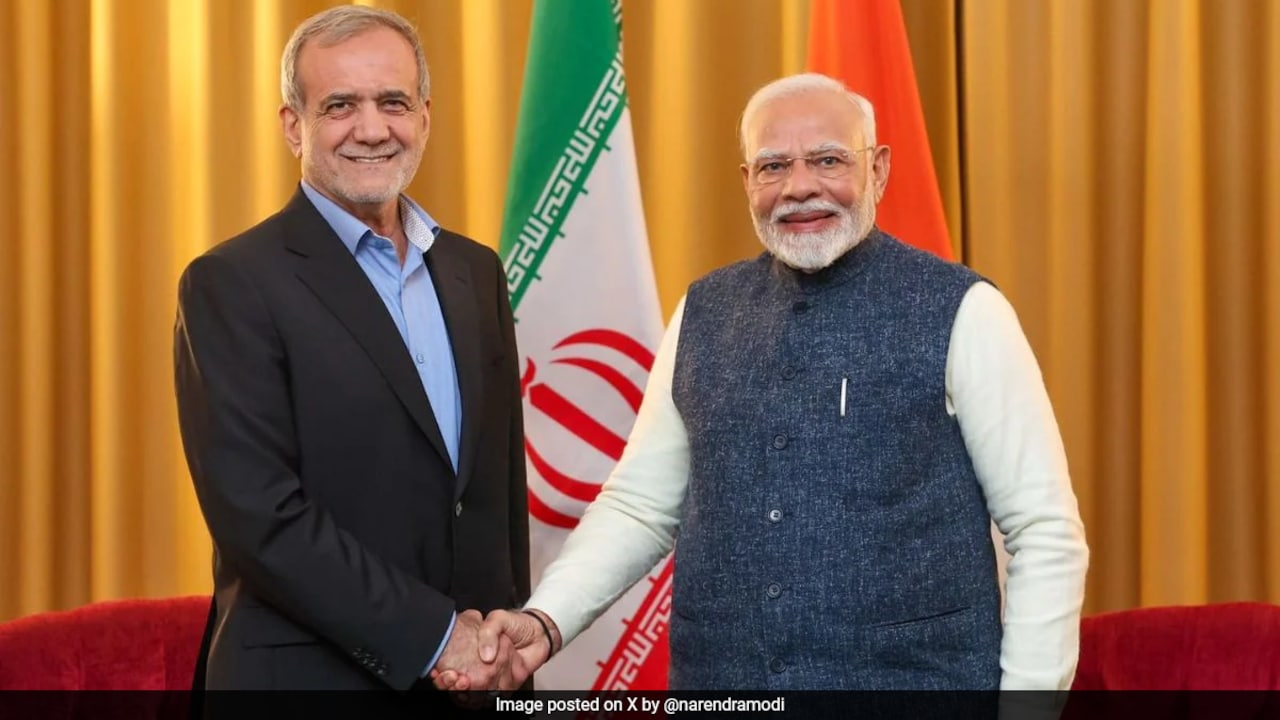
When Iranian President Masoud Pezeshkian emphasized the immense value of ties with India on the occasion of the subcontinent's 80th Independence Day, he was speaking the language of pragmatism wrapped in historical grace. India’s journey from colonial subjugation to sovereign democracy is a narrative deeply respected across the Global South. It represents the triumph of endurance against immense odds—a theme that resonates deeply within the Iranian national consciousness.
Both nations carry the scars and the pride of ancient civilizations that refuse to be relegated to footnotes in someone else’s history book.
Look closer at the mechanics of this partnership. It is built on energy security, yes, but also on connectivity, education, and cultural exchange. Thousands of Iranian students study in Indian universities, learning software engineering, medicine, and advanced sciences, taking those skills back home to build a modern infrastructure under the heavy weight of economic restrictions. Meanwhile, Indian engineers and technicians have poured sweat and expertise into developing the terminals of Chabahar, defying whispered warnings from Western diplomats who view every transaction through a lens of suspicion.
Risk is the currency of survival in this part of the world.
To ignore the complexities would be foolish. This relationship is not a fairy tale of unblemished harmony. It is a delicate dance constrained by the watchful eyes of global superpowers. India must walk a tightrope, balancing its deepening strategic embrace of the United States and Israel with its historical, energy-dependent ties to Tehran. Iran, facing crippling economic pressures, must navigate the delicate task of maintaining its sovereignty while courting foreign investment from powers that sometimes bend to Western pressure.
Every diplomatic handshake is weighed down by these invisible tensions. Every cargo manifest is scrutinized by intelligence agencies halfway across the globe.
And yet, the ships keep sailing.
Why? Because geography is destiny. You can move embassies, you can rewrite treaties, and you can impose sanctions that starve hospitals of medicine and citizens of prosperity. But you cannot move the mountains of the Hindu Kush, you cannot drain the Caspian Sea, and you cannot erase thousands of years of shared vocabulary, poetry, and commerce.
The warmth between New Delhi and Tehran is not built on fleeting political convenience. It is forged from the realization that in a fractured world, true security lies in diversification, in finding partners who look at the horizon and see an opportunity rather than a threat.
As the sun dips below the horizon in the Gulf of Oman, casting long, bruised purples and golds across the water, the silhouette of a cargo ship cuts through the twilight. It is carrying steel, grain, and the quiet hope of two ancient peoples. They are charting a course through stormy waters, proving that some bonds are too stubborn to break, and too valuable to ignore.


