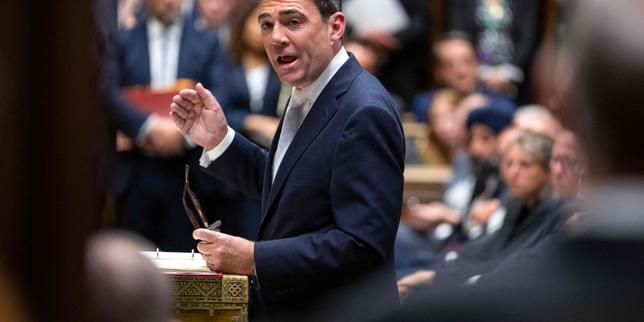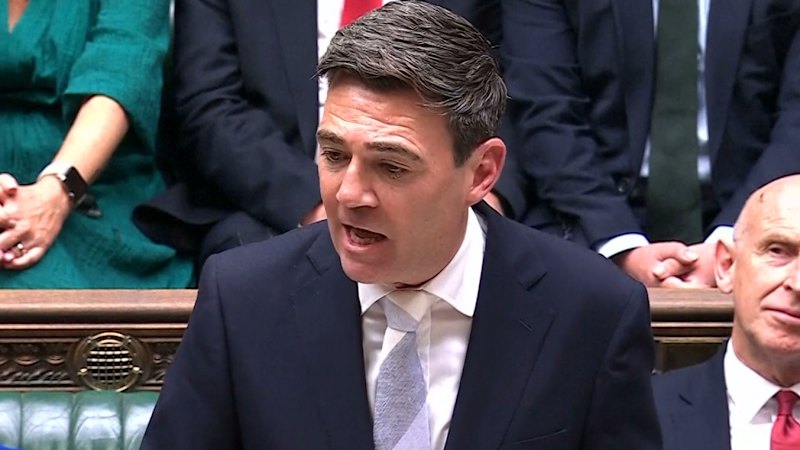
Politics in Westminster usually moves at a snail's pace, defined by polite disagreement and procedural gridlock. When Andy Burnham stepped up to the dispatch box for his first address to MPs since taking over as prime minister, he didn't bother playing by the usual rules. Stepping back into the Commons after sixteen years away is no small feat, but doing it from the frontbench as prime minister changes the entire arithmetic of British governance.
You could feel the shift in the room immediately. Burnham spent his summer recess lining up aggressive policy changes, and he used this address to lay bare a fundamental truth that both major parties spent years avoiding. Privatized public services and decades of stagnant infrastructure have broken the basic economic engine of the country. Instead of offering soft compromises, he doubled down on a core pledge: bringing essential services back into public control.
The Pivot Back to Public Control
For years, the political consensus assumed that private ownership always equaled efficiency. Burnham looked that dogma straight in the eye and dismantled it. He argued convincingly that everyday utility and transport costs are actively bleeding family budgets dry, choking off any real chance at national growth.
This isn't just about rhetoric. The government is actively looking at legislative mechanisms to force struggling utilities like Thames Water through insolvency proceedings and straight back into state oversight. It is a massive gamble. Bond markets are twitchy, and treasury officials are constantly scanning the horizon for anything resembling a fiscal meltdown. Yet, Burnham is betting that voters care far more about reliable water and affordable buses than they do about keeping corporate shareholders happy.
Bus services provide an immediate blueprint for this shift. Regional authorities like the Liverpool City Region and partnerships in the West Midlands are actively wresting control away from private operators. Burnham wants a ten-year rollout of public control across utilities nationwide. Critics call it state overreach. Millions of commuters dealing with canceled trains and soaring bills call it common sense.
Navigating the Trapdoors
Every new prime minister faces immediate traps, and Burnham's ledger is packed. He inherited a sticky economic landscape complicated by soaring global inflation, defense funding gaps left by Keir Starmer's administration, and strict fiscal guardrails that limit tax choices.
The upcoming autumn budget under Chancellor John Healey will test whether these ambitious public pledges can survive contact with reality. Sticking to manifesto promises means avoiding hikes to income tax, national insurance, and VAT, leaving very little room for error. When you promise to fund a national care service while plugging a multi-billion-pound defense hole, something has to give.
Opposition MPs wasted no time during the two-hour grilling, tearing into the logistics of how these programs will be funded. Kemi Badenoch and other critics are already framing the strategy as an expensive throwback to heavy-handed state intervention. But Burnham's counter-argument is straightforward. He blames past political missteps, including Brexit and decades of underinvestment, for locking Britain into low-growth cycles, and he insists that market fundamentalism cannot solve crises of its own making.
Changing the Political Culture
Beyond the economics, the subtext of the address was a direct indictment of political culture itself. Having spent years operating outside the Westminster bubble as Mayor of Greater Manchester, Burnham brings a distinct perspective to the national stage. He told MPs directly that politics needs to be better, pointing out that public cynicism isn't an accident—it is the direct result of a broken system.
This stance is creating friction within his own ranks, too. Nearly a hundred Labour MPs are pushing him to back a commission on electoral reform, arguing that first-past-the-post distorts democracy and keeps citizens alienated. Burnham has supported voting reform in the past, and navigating this internal pressure while maintaining party discipline will require serious political tightrope walking.
The honeymoon phase for any new leader is notoriously brief. By staking his premiership on public ownership and a long-term economic rebuild, Burnham has drawn a hard line in the sand. He wants to prove that government can actually deliver for ordinary people rather than just managing decline. Whether he can turn that optimism into functioning infrastructure before the public loses patience remains the defining question of his tenure.