A child’s stomach is about the size of their fist. It is a small, anatomical fact that becomes haunting when that fist has nothing to hold and the stomach has nothing to process. When hunger moves from a temporary pang to a permanent state of being, it stops being a physical sensation and becomes a thief. It steals the ability to focus, the strength to grow, and eventually, the very spark of a future.
In the glittering corridors of Dubai, where the skyline serves as a physical manifestation of human ambition, it is easy to forget that the most important foundations aren't made of reinforced concrete or tempered glass. They are made of calories and micronutrients.
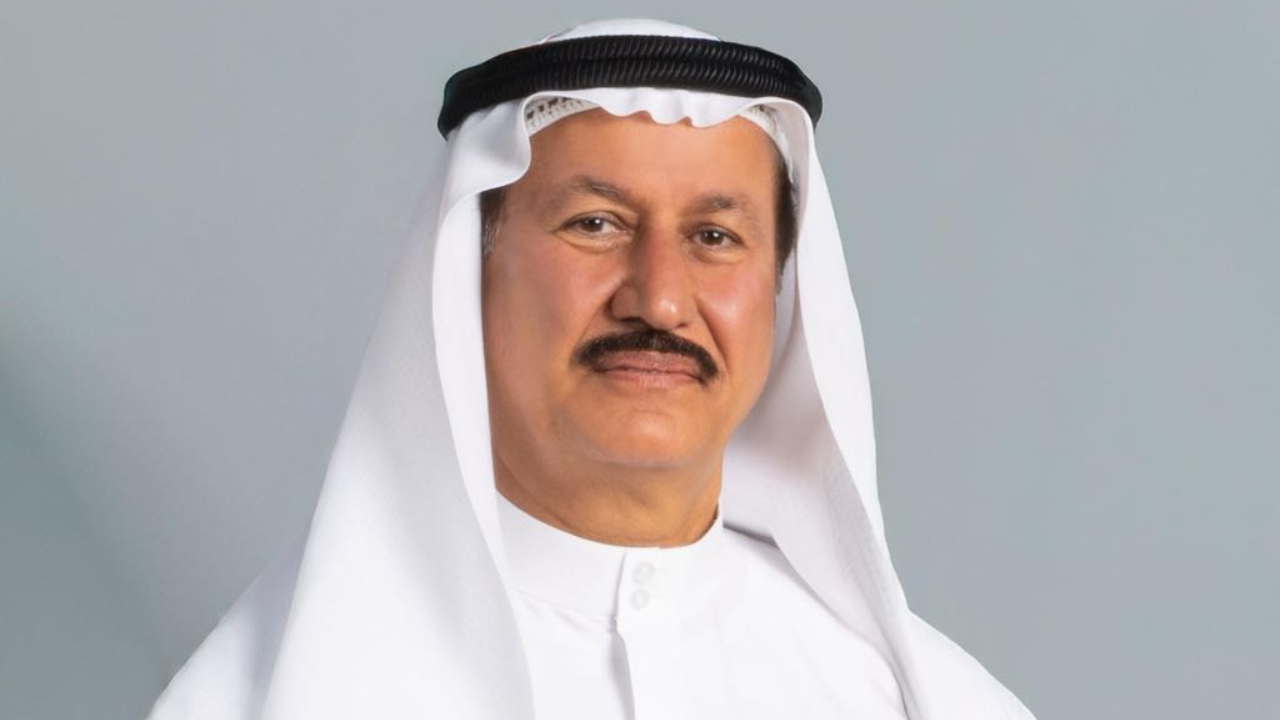
Hussain Sajwani knows a great deal about foundations. As the founder of DAMAC Properties, his career has been defined by the vertical—rising higher, building bigger, defining the aesthetic of a global hub. But recently, the billionaire developer shifted his focus to a different kind of structural integrity. He pledged Dh100 million to the "Edge of Life" campaign, a massive humanitarian push by the UAE to provide food security for the world’s most vulnerable children.
The money is a staggering sum. Yet, to understand the weight of that number, we have to look past the bank transfer and into the reality of what it buys.
The Mathematics of Survival
Consider a hypothetical child named Amina. She doesn't live in a penthouse. She lives in a region where the supply chains have buckled under the weight of conflict or climate shifts. For Amina, the "Edge of Life" isn't a poetic campaign title. It is the literal boundary she walks every day.
When food is scarce, the body begins a brutal process of prioritization. It shuts down non-essential functions to keep the heart beating. Learning to read? Non-essential. Playing with friends? Non-essential. Growing bone density? A luxury the body can no longer afford.
This is the invisible crisis Sajwani is addressing. By injecting Dh100 million into the Mohammed bin Rashid Al Maktoum Global Initiatives (MBRGI), the goal is to intervene before the damage becomes irreversible. This isn't just about a one-time meal. It is about preventing the stunting of an entire generation.
Business leaders often talk about "return on investment." Usually, they mean dividends or market share. But in the context of child hunger, the return is measured in a child’s ability to stay in school. It is measured in the reduction of healthcare costs twenty years down the line. It is measured in the stability of a society that doesn't have to bury its young.
The Responsibility of the Builder
There is a specific kind of pressure that comes with extreme success. Sajwani has spent decades navigating the volatile world of international real estate. He has seen markets rise and crash. He has built some of the most recognizable landmarks in the Middle East. But the legacy of a builder is often trapped in the lifespan of the materials used. Stone erodes. Steel rusts.
Investing in human life is the only way to build something that actually lasts.
The "Edge of Life" campaign is part of a broader UAE philosophy that views humanitarian aid not as an afterthought, but as a core pillar of national identity. It’s a collective effort to address the fact that nearly 800 million people globally go to bed hungry. In a world where we can 3D-print houses and launch private rockets into orbit, the existence of child wasting is a profound systemic failure.
Sajwani’s contribution is a recognition that private wealth cannot exist in a vacuum. A thriving business environment requires a stable world, and a stable world is impossible when parents are forced to watch their children wither.
Beyond the Checkbook
It is easy to be cynical about billionaire philanthropy. We see the headlines and we see the tax write-offs. But let’s look at the mechanics of this specific donation. The MBRGI doesn't just hand out bags of grain. They build sophisticated food systems. They leverage logistics, data, and local partnerships to ensure that aid actually reaches the "last mile"—the most remote, most dangerous, and most neglected areas on the map.
This is where the expertise of a man like Sajwani becomes relevant. He understands logistics. He understands the complexity of moving resources across borders. By backing a campaign that prioritizes efficiency and scale, he is applying a developer’s mindset to a humanitarian catastrophe.
He is essentially saying that the world’s most vulnerable children deserve the same level of professional excellence and structural planning that goes into a luxury skyscraper.
The Ripple in the Water
One man’s Dh100 million doesn't end world hunger. No one is under the illusion that a single check can erase a global plague. But that isn't the point.
The point is the signal it sends.
When a titan of industry puts that much skin in the game, it changes the conversation in the boardroom. It moves philanthropy from the "corporate social responsibility" tab to the "mission critical" tab. It challenges other leaders to look at their own balance sheets and ask what they are doing to shore up the foundations of the human race.
Imagine the shift in a community when the threat of starvation is lifted. Suddenly, parents can think about the future instead of just the next six hours. Teachers see students who can actually hold a pen without their hands shaking. The local economy begins to breathe because its most precious resource—its youth—is no longer being spent just to stay alive.
The Weight of the Moment
We live in an era of unprecedented connectivity and unprecedented disparity. We can see a crisis on our phones in real-time, then scroll past it to look at luxury real estate listings. Sajwani occupies both of those worlds. By bridging them with this donation, he is acknowledging a simple, uncomfortable truth: our fates are linked.
The child at the "edge of life" in a distant refugee camp is connected to the stability of the global markets. Their potential is our potential. Their loss is a hole in the fabric of our collective future.
The Dh100 million isn't just a gift. It is a defense. It is a defense against the apathy that tells us the problem is too big to solve. It is a defense against the idea that a person’s value is determined by the zip code they are born into.
As the sun sets over the Dubai Marina, reflecting off the glass of DAMAC’s various towers, the light looks different when you know what is happening behind the scenes. The man who built those towers is currently trying to build something far more difficult to engineer: hope for a child who has never known a full stomach.
The skyscraper will eventually be replaced by a newer, taller version. The skyline will change. But the life of a child who was saved from the brink of starvation creates a ripple that extends into eternity. That is the only foundation that never cracks.
The fist of a child should hold a pencil, a toy, or a hand. It should never have to stay clenched simply to distract from the ache of emptiness.
Would you like me to analyze how other global real estate moguls are shifting their philanthropic strategies toward sustainable food systems?