National budget allocations in the Philippines function as a dual-track resource distribution system where statutory economic planning collides with localized political patronage. When infrastructure and social welfare funds shift disproportionately toward specific congressional districts during legislative deliberations, the mechanism at work is not merely administrative variance—it is the structural persistence of pork barrel politics under evolving fiscal nomenclature. To understand how project allocations trigger accusations of patronage, analysts must dissect the legislative budget cycle, the constitutional boundaries established by the 2013 Supreme Court ruling against the Priority Development Assistance Fund (PDAF), and the modern insertion mechanisms that recreate discretionary control without violating the letter of judicial prohibitions.
The Structural Anatomy of Philippine Budget Insertions
The Philippine General Appropriations Act (GAA) moves through four distinct phases: preparation by the executive branch via the Department of Budget and Management (DBM), legislation by Congress, execution by implementing agencies, and accountability audited by the Commission on Audit (COA). Accusations of pork barrel politics cluster almost exclusively in the transition between executive preparation and legislative authorization.
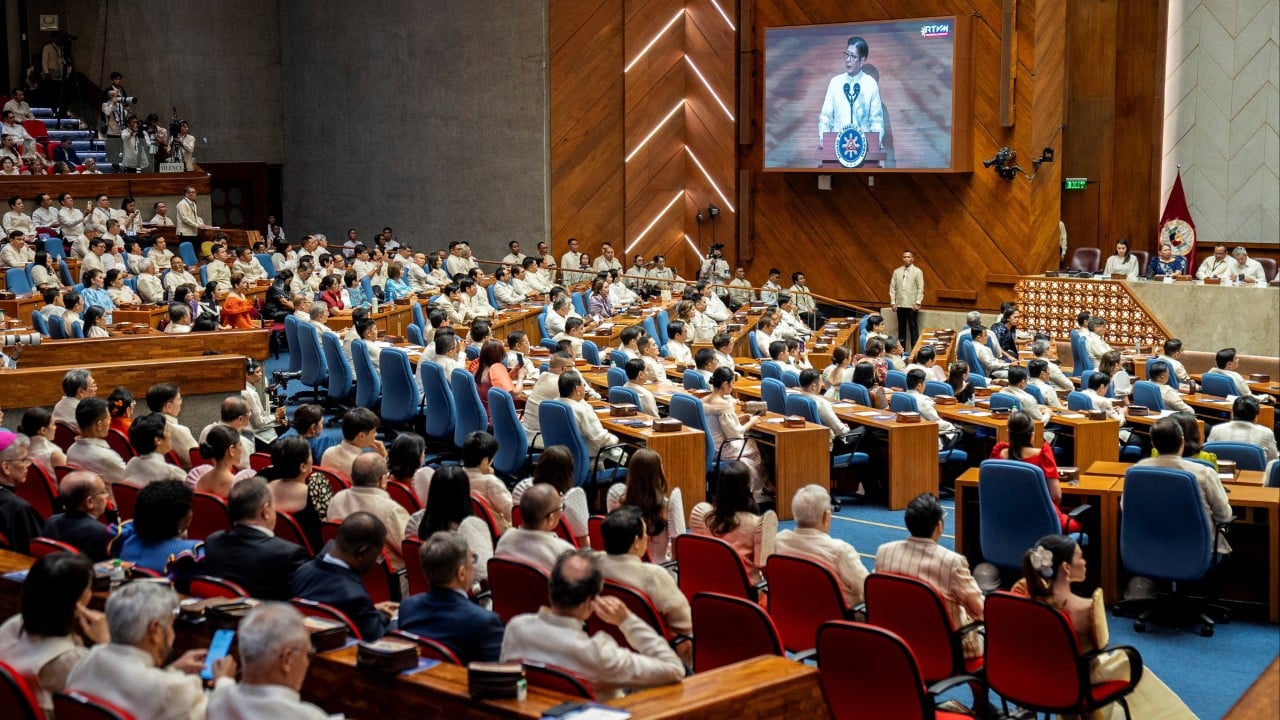
In an idealized public finance model, the National Expenditure Program (NEP) submitted by the President reflects macroeconomic priorities vetted by the National Economic and Development Authority (NEDA) and the Development Budget Coordination Committee (DBCC). Projects included in the NEP theoretically pass feasibility studies, cost-benefit analyses, and regional development council endorsements. However, once the NEP enters the House of Representatives and the Senate, lawmakers exercise their constitutional power of the purse to realign, augment, or insert line items.
This legislative intervention creates three distinct categories of fiscal friction:
- Pre-enactment district identification: Lawmakers submit lists of local projects—often flood control structures, multi-purpose buildings, and farm-to-market roads—prior to the finalization of the NEP or during bicameral conference committee meetings. While the 2013 Supreme Court ruling in Belgica vs. Ochoa outlawed post-enactment intervention by legislators in project identification and fund release, pre-enactment lobbying remains legally permissible.
- Lump-sum obfuscation: Appropriations placed under broad agency banners—most notably the Department of Public Works and Highways (DPWH) and the Department of Social Welfare and Development (DSWD)—frequently contain vague geographic descriptors or unprogrammed appropriations. This opacity shields specific beneficiaries from public scrutiny during initial committee hearings.
- Bicameral conference alterations: The bicameral conference committee reconciles differing versions of the budget bill passed by the House and the Senate. Because these sessions occur behind closed doors without verbatim public transcripts, the bicameral stage serves as the primary vehicle for last-minute insertions that bypass standard committee vetting.
The Economics of Asymmetric Allocation
When critics point to skewed project allocations, they are identifying a breakdown in allocative efficiency. In public economics, optimal capital expenditure targets regions with the highest marginal return on infrastructure investment or the steepest poverty incidence. Patronage-driven budgeting subverts this logic by substituting political utility for economic return.
Consider the mechanics of infrastructure spending within the DPWH budget. A rational allocation model weighs traffic volume, agricultural output, flood risk mitigation, and connectivity gaps. Under a discretionary patronage model, capital divides equally or proportionally based on legislative seniority, committee chairmanships, and coalition loyalty.
This creates two measurable distortions in public spending:
- Fragmentation of capital: Instead of funding high-impact, multi-year regional arterial networks that require sustained capital concentration, budgets fracture into hundreds of small, isolated contracts—such as short stretches of barangay road concreting or standalone waiting sheds. These micro-projects maximize visible political credit for individual representatives while failing to resolve systemic logistical bottlenecks.
- Sub-optimal geographic clustering: Districts represented by key legislative leaders routinely receive capital outlays multiples higher than adjacent districts with identical demographic profiles and superior economic need. Conversely, districts held by opposition lawmakers often experience severe capital starvation, receiving only baseline mandatory maintenance funds.
The cost function of this asymmetry extends beyond wasted capital. It introduces severe execution risk. When local engineering offices are flooded with hundreds of last-minute, unvetted legislative insertions, procurement timelines stall. Bids fail due to flawed technical specifications, right-of-way acquisitions remain unresolved, and absorptive capacity collapses. The result is a high rate of unobligated allotments and uncompleted structures—a direct fiscal drag on gross domestic product growth.
The Evolution of Soft Pork Mechanisms
Following the abolition of the PDAF and the Disbursement Acceleration Program (DAP), overt lump-sum congressional allocations became unconstitutional. In response, the political apparatus adapted by shifting from hard infrastructure pork to soft social assistance programs. This evolution relies on executive agencies acting as distribution conduits for legislator-endorsed beneficiaries.
Programs such as the Assistance to Individuals in Crisis Situations (AICS), Medical Assistance to Indigent Patients (MAIP), and Tulong Panghanapbuhay sa Ating Disadvantaged/Displaced Workers (TUPAD) operate with legitimate social safety net mandates. Yet their operational design makes them highly susceptible to political capture. When budget deliberations inflate these programmatic funds by tens of billions of pesos beyond the executive branch's initial request, the expansion rarely correlates with a sudden macroeconomic shock. Instead, it reflects an informal quota system.
The operational workflow of soft pork follows a predictable sequence:
- Budgetary inflation: Congress increases the allocation for medical, burial, educational, or emergency cash assistance within national agencies during the budget cycle.
- Informal allocation: Agency leadership and legislative liaisons establish unspoken distribution ceilings per congressional district or senatorial office.
- Gatekeeping via referral: Citizens seeking aid are routed through district offices to secure guarantee letters or endorsement slips signed by the politician. While the implementing agency technically disburses the cash or settles the hospital bill, the citizen perceives the politician as the direct benefactor.
This mechanism insulates lawmakers from constitutional challenges. Because the funds remain within the executive branch's line agencies and disbursement occurs post-appropriation through bureaucratic channels, the arrangement technically complies with the Belgica ruling. Politically, however, it achieves the exact outcome of the defunct PDAF: converting public tax revenues into personalized political capital that entrenches incumbents and raises barriers to entry for electoral challengers.
Unprogrammed Appropriations as a Fiscal Release Valve
A critical component of recent budget controversies involves the exponential growth of Unprogrammed Appropriations (UAs). Functionally, UAs are standby authorizations that allow the executive branch to spend beyond the primary programmed budget if excess revenues materialize, if new foreign loans are secured, or if specific fiscal conditions are met.
In prudent fiscal management, UAs act as a contingency buffer for unexpected windfalls or urgent external financing agreements. However, when lawmakers shift billions of pesos from the programmed budget into unprogrammed funds—or drastically expand the ceiling of UAs during bicameral negotiations—the fiscal architecture changes. Moving a major infrastructure project or social program into the unprogrammed tier transforms a guaranteed expenditure into a conditional one.
This shift centralizes leverage within the executive branch, specifically the Office of the President and the DBM. Because the executive decides which unprogrammed items receive funding when excess cash or loan proceeds become available, UAs function as a post-enactment bargaining chip. Lawmakers who secure insertions in the unprogrammed section must maintain strict political alignment with the administration to ensure their projects actually receive a Special Allotment Release Order (SARO) and Notice of Cash Allocation (NCA). Thus, unprogrammed funds bridge the gap between legislative insertion and executive discretion, reinforcing executive dominance over the legislature.
Assessing the Systemic Limitations of Budget Reform
Addressing patronage in budget allocations requires confronting the structural incentives embedded in the Philippine political system. Purely technocratic fixes consistently fail because they treat a political incentive problem as an accounting error.
Transparency initiatives, such as publishing the NEP and GAA online in machine-readable formats, have improved civil society's ability to track macro-level anomalies. Yet transparency alone does not alter legislative behavior when electoral survival depends on delivering localized, tangible goods to constituents. In a weak party system characterized by personality-driven politics and fluid coalition switching, lawmakers face intense pressure from local mayors, barangay captains, and voters to act as direct providers of private and club goods rather than national policymakers.
Similarly, strict judicial prohibitions against post-enactment intervention merely force discretionary spending to migrate upstream into pre-enactment lobbying or sideways into executive-managed social assistance programs. Every regulatory wall erected around one budget line item triggers a capital flight toward less scrutinized accounts, such as confidential and intelligence funds, local government support funds, or disaster risk reduction allocations.
Furthermore, aggressive audit mechanisms by the COA occur retrospectively—often one to two years after funds have been disbursed. While audit observations can flag irregular procurement or ghost projects, they rarely recover misallocated capital or reverse the political dividends already harvested by incumbents during election cycles.
Tactical Blueprint for Structural Budget Integrity
Restoring allocative efficiency and severing the link between public funds and political patronage requires simultaneous structural interventions across the legislative, executive, and civil sectors. Incremental adjustments to reporting rules will not suffice; the architecture of budget authorization must be altered at its points of highest vulnerability.
- Enforce open bicameral proceedings: Legislative rules must be amended to mandate live-streamed bicameral conference committee sessions and require the publication of a detailed comparative matrix showing every item added, deleted, or modified between the Senate version, the House version, and the final enrolled bill at least 72 hours before ratification. Eliminating closed-door insertions removes the primary veil protecting unvetted district allocations.
- Mandate NEDA-DBCC pre-clearance for legislative realignments: Any capital outlay insertion exceeding a strict threshold—such as 50 million pesos—introduced during congressional deliberations must undergo a mandatory 15-day technical viability review by NEDA and the relevant implementing agency. Projects lacking approved feasibility studies, detailed engineering designs, and right-of-way clearances must be automatically disqualified from inclusion in the GAA.
- Digitize social assistance delivery to eliminate political intermediaries: Agencies administering AICS, MAIP, and TUPAD must transition exclusively to direct digital intake portals integrated with the national identification system and standardized means-testing databases. Explicitly prohibiting the acceptance or processing of political guarantee letters and endorsement slips breaks the gatekeeping monopoly held by district offices.
- Cap Unprogrammed Appropriations by statute: Congress must establish a hard statutory ceiling restricting Unprogrammed Appropriations to no more than 5 percent of the total programmed budget, strictly limited to foreign-assisted project counterparts and debt servicing. Removing discretionary local infrastructure and social welfare programs from the unprogrammed tier eliminates the executive branch's ability to use standby authorizations as political leverage.