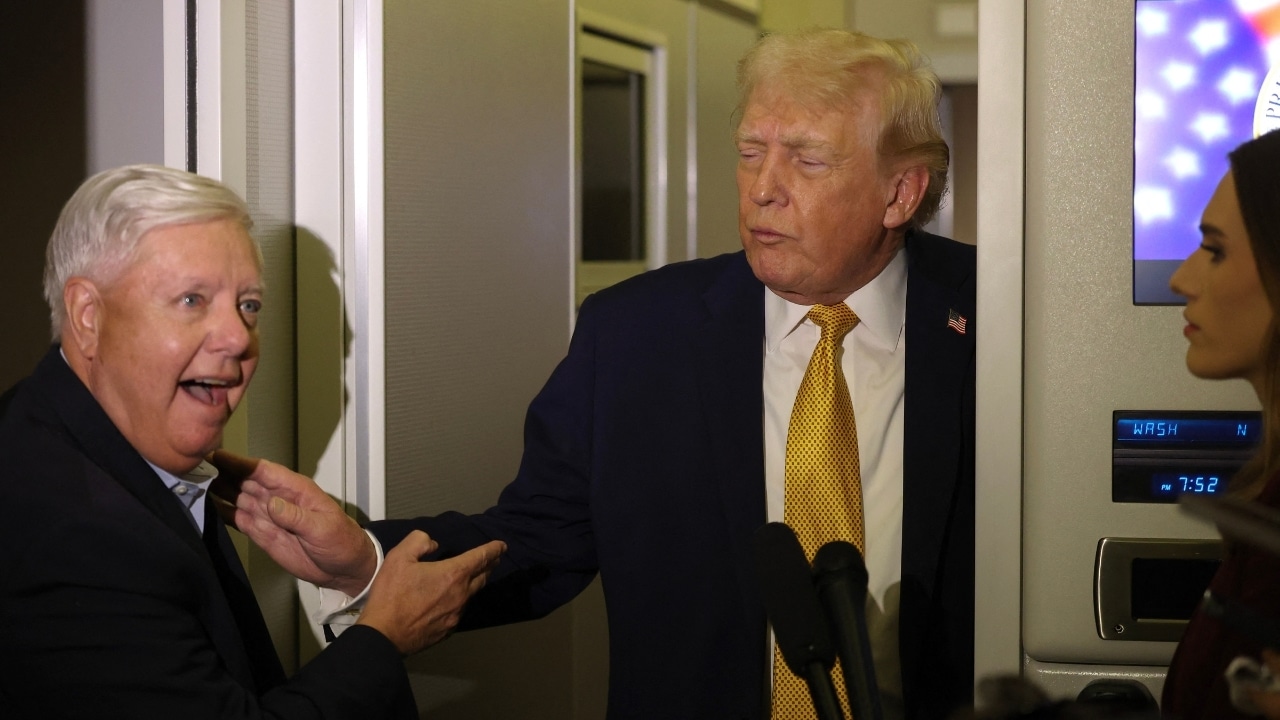
When Israeli Prime Minister Benjamin Netanyahu and Ukrainian President Volodymyr Zelenskyy converge on Washington to pay respects at the funeral of late U.S. Senator Lindsey Graham, the event transcends a simple memorial. It marks a convergence of global statecraft and geopolitical anxiety. Graham, a four-term South Carolina Republican and defense hawk who died suddenly at age 71, spent his final days orchestrating bipartisan momentum for Russian sanctions and locking down defense commitments. His memorial service at the Washington National Cathedral brings together figures who rarely share a room under ordinary circumstances, highlighting the transactional and deeply personal nature of American foreign policy.
To understand why world leaders and domestic political heavyweights are filling the Capitol Rotunda and the National Cathedral, one must examine the specific mechanics of influence Graham mastered. He operated as a bridge between competing political factions.
The Broker of Capitol Hill
For more than three decades, Washington policy was shaped in the smoky backrooms and open hallways where legislative deals were struck. Lindsey Graham occupied the center of that machinery.
He understood how to turn personal charm into institutional power. Long before he became one of Donald Trump's most visible congressional allies, Graham forged ironclad alliances across the aisle. His partnership with the late Senator John McCain and former Senator Joe Lieberman created a formidable bloc on national security.
[Image of US Capitol building in Washington DC]
When the political winds shifted, Graham shifted with them. Critics labeled this behavior opportunistic. Observers who understood the internal physics of the Senate recognized it as survival. He calculated that proximity to power yielded influence over outcomes.
The Foreign Policy Blueprint
Graham's foreign policy worldview was rooted in an old-school interventionist tradition that has largely fallen out of favor with modern populists. He believed American security depended on forward defense and muscular alliances.
- Unwavering Aid: He lobbied fiercely for military assistance to foreign partners facing existential threats.
- Bipartisan Coalitions: He routinely weaponized committee assignments to force votes on sanctions and defense packages.
- Direct Access: He flew directly into conflict zones, meeting foreign heads of state days before his passing to take the pulse of front-line operations.
This relentless advocacy explains the unusual guest list in Washington. Netanyahu and Zelenskyy are not merely attending to mourn a colleague. They are navigating a shifting American political landscape where the rules of engagement are being rewritten daily.
The Shadow of the Successor
As Washington eulogizes a legislative titan, the political machine back home in South Carolina turns immediately to the future. Governor Henry McMaster appointed Graham's sister, Darline Graham, to fill the remainder of his Senate term.
The transition is swift. Politics rarely pauses for grief. Darline Graham has announced her bid to seek a full six-year term, backed by an endorsement from President Trump. The mechanics of dynastic and appointed succession in the American political system ensure that the seat remains a focal point of Republican strategy.
Yet, replicating Graham's specific brand of transactional diplomacy will prove difficult for any successor. He possessed a rare combination of legal training, military background, and cable television ubiquity that allowed him to project influence far beyond his single vote in the upper chamber.
The cathedral will empty. The motorcades will depart. The debates over foreign aid, sanctions, and executive power will resume on the Senate floor without one of their most persistent architects.


