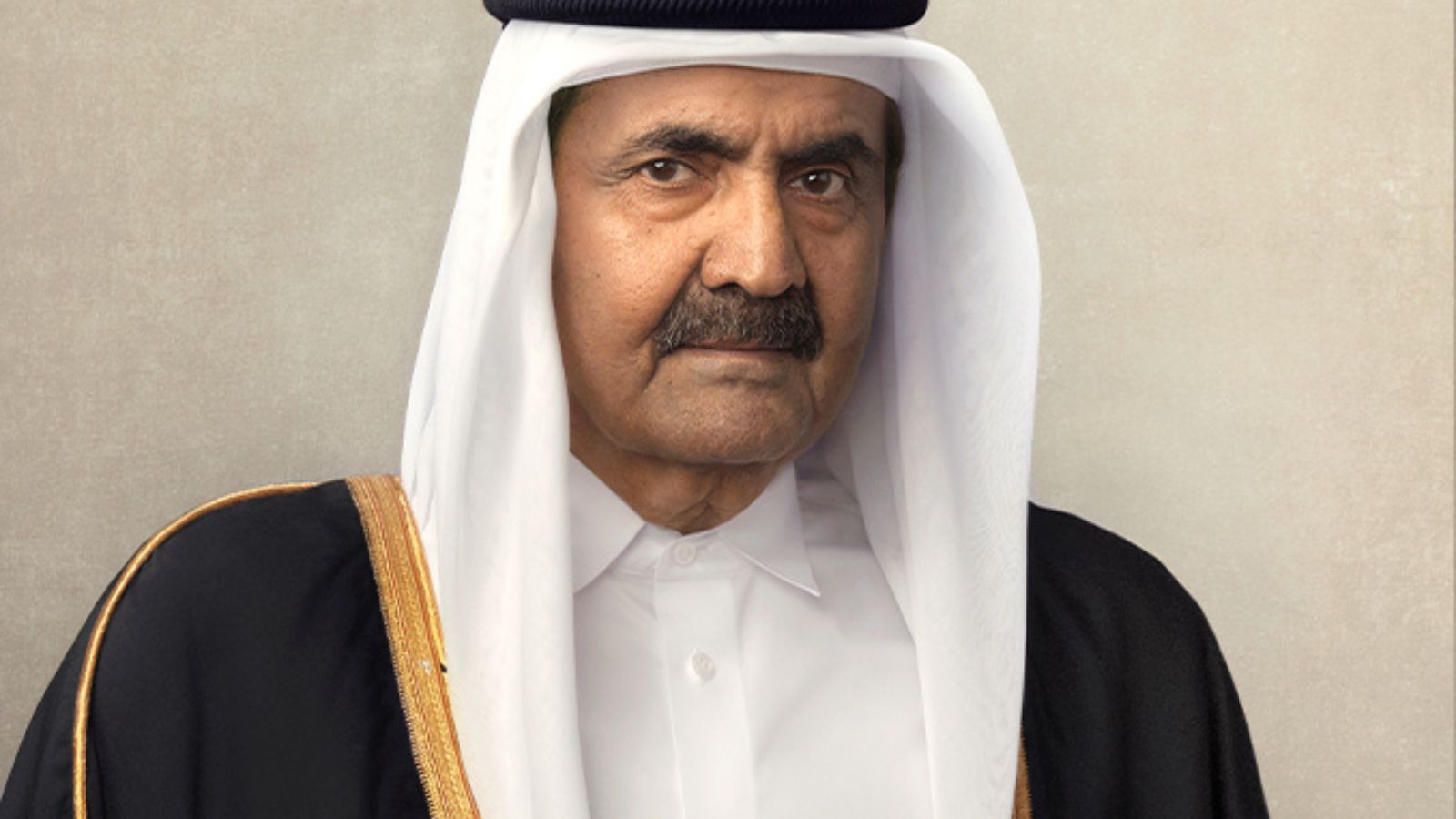
The modern state of Qatar is a product of absolute ambition. When Sheikh Hamad bin Khalifa Al Thani took power in a bloodless coup in 1995, he inherited a quiet, deeply indebted Gulf state overshadowed by its larger neighbors. By the time he abdicated in 2013, he had transformed Doha into a global powerhouse of capital, media, and diplomatic intrigue. The legacy of the "Father Emir," who passed away at the age of 74, is not merely one of domestic governance; it is the blueprint for how a small nation buys, builds, and bullies its way onto the world stage. Understanding his reign is essential to decoding the modern geopolitics of the Middle East.
The Coup That Changed the Gulf
In the summer of 1995, while his father, Sheikh Khalifa bin Hamad Al Thani, was vacationing in Switzerland, Hamad bin Khalifa seized the throne. It was a swift, bloodless execution of political will that stunned the region. The elder Sheikh Khalifa had maintained a conservative, cautious approach to governance and wealth management, keeping Qatar firmly within the orbit of Saudi Arabian foreign policy.
Hamad bin Khalifa saw this caution as a recipe for irrelevance. He believed that for a nation with a tiny native population squeezed between giants like Saudi Arabia and Iran, passivity was a terminal condition. Survival required immense wealth and global visibility.
Upon taking the reins, the new Emir did not just change the leadership; he dismantled the old economic model. He brought in foreign tech, invited Western oil majors, and bet the entire kingdom’s future on a resource his father had largely ignored: liquefied natural gas (LNG).
The Natural Gas Gamble
To appreciate the scale of this transformation, look at the geography. Qatar shares the massive North Dome/South Pars field with Iran. It is the largest non-associated natural gas field in the world. In the mid-1990s, crude oil was still king, and natural gas was widely considered a secondary, difficult-to-transport commodity.
Sheikh Hamad ignored the conventional wisdom. He funded massive infrastructure projects to supercool natural gas into a liquid state, allowing it to be shipped on specialized tankers anywhere on earth.
- The Partnership Model: Qatar opened its doors to ExxonMobil, Total, and Mitsui, offering attractive terms to secure the technical know-how required for large-scale LNG production.
- The Sovereign Wealth Engine: The resulting revenues were funneled directly into the Qatar Investment Authority (QIA), a sovereign wealth fund that began buying up premium assets worldwide—from London’s Harrods and the Shard to significant stakes in Volkswagen and Barclays.
This economic engine turned Qatari citizens into some of the wealthiest individuals per capita on the planet. It also gave Sheikh Hamad the financial shield he needed to pursue an aggressive, often incendiary foreign policy.
Al Jazeera and the Weaponization of Media
In 1996, Sheikh Hamad provided a $137 million loan to launch a pan-Arab satellite news channel. That channel was Al Jazeera. At the time, Arab state television was a tedious procession of government press releases and official ceremonies. Al Jazeera introduced live debates, aggressive reporting, and a platform for political dissidents from across the region.
It was an instant, chaotic success. For the first time, Arab audiences saw their leaders openly criticized on screen.
"Al Jazeera was never a project of pure journalistic altruism. It was a soft-power sledgehammer."
While the network broadcasted hard-hitting coverage of corruption and human rights abuses in Egypt, Saudi Arabia, and Jordan, its cameras rarely turned inward toward Qatar’s own absolute monarchy or its treatment of migrant laborers. Sheikh Hamad realized that control of the regional narrative was worth more than an army. The network infuriated neighboring capitals, leading to repeated diplomatic ruptures, but it established Doha as the undisputed intellectual and media hub of the Arab world.
The Balancing Act Between Washington and Tehran
Sheikh Hamad’s foreign policy defied traditional alignment. He mastered the art of ideological gymnastics, maintaining deep ties with contradictory forces simultaneously.
Under his leadership, Qatar built the Al Udeid Air Base, which eventually became the forward headquarters of the United States Central Command (CENTCOM). By hosting thousands of American troops, Sheikh Hamad secured an implicit security guarantee from Washington against any potential invasion by its neighbors.
Yet, at the very same time, Doha maintained functional diplomatic and economic relations with Iran to ensure the smooth exploitation of their shared gas field. Sheikh Hamad opened offices for the Taliban, financed Hamas in the Gaza Strip, and supported various Islamist factions across North Africa during the Arab Spring.
This was not ideological confusion. It was a deliberate strategy to ensure that every major player in regional conflict had to pass through Doha to negotiate. Qatar made itself the indispensable mediator, a neutral ground where enemies could talk, backed by the implicit protection of American military hardware down the road.
The Costs of Ambition
This aggressive posture came with severe blowbacks. The support for Islamist movements during the 2011 uprisings alienated traditional Gulf allies. Saudi Arabia, the United Arab Emirates, and Bahrain viewed Sheikh Hamad’s policies as a direct threat to their monarchical stability.
The friction generated during his final years on the throne laid the groundwork for the 2017 diplomatic blockade, where neighbors severed ties and closed borders in an attempt to force Qatar to heel. Though his son, Sheikh Tamim, navigated that crisis successfully, the fault lines were drawn during the father’s rule.
Furthermore, the rapid, breathless pace of development required to host mega-events—most notably the 2022 FIFA World Cup, which Sheikh Hamad secured shortly before his abdication—shone a harsh international spotlight on the country’s labor laws. The kafala system, which bound migrant workers to their employers, faced intense global scrutiny and forced reluctant domestic reforms.
The Strategic Abdication
In 2013, Sheikh Hamad did something virtually unprecedented in the modern history of the Gulf: he voluntarily stepped down. At 61, while still in relatively good health, he handed power to his second son, Sheikh Tamim bin Hamad Al Thani.
This was not a retreat into obscurity. It was a calculated transition designed to ensure continuity and protect the family line from the sudden, destabilizing successions that often plague Arab monarchies. As the "Father Emir," Hamad remained a potent force in the background, a senior advisor whose structural blueprint remained untouched.
The transition allowed a younger leader to manage the international fallout of Qatar's hyper-ambitious foreign policy while preserving the core pillars of the state: LNG dominance, sovereign wealth accumulation, and media influence.
Sheikh Hamad bin Khalifa Al Thani built a nation in his own image—wealthy, defiant, and impossible to ignore. He took a vulnerable peninsula and turned it into an unassailable geopolitical reality. The skyscrapers defining the Doha skyline and the pipelines pumping gas across the globe stand as concrete manifestations of a ruler who refused to let his country remain small.