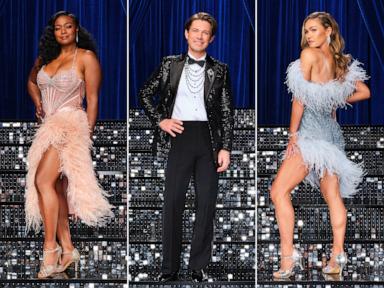
Long-running television formats survive not by reinventing their core mechanic, but by optimizing the input variables of their casting models. When a franchise enters its thirty-fifth iteration, viewer retention depends entirely on how efficiently the producers distribute demographic archetypes, physical capability indexes, and pre-existing fanbases. The official reveal of the upcoming roster provides a clear blueprint of how network strategists balance variance and predictability to maximize audience share across linear television and streaming ecosystems.
The Demographic Distribution Matrix
A successful casting lineup functions as a stratified sample of the broader pop-cultural consumer base. Producers do not select participants at random; they allocate slots across distinct viewership clusters to prevent audience cannibalization.
- The Gen Z and Creator Economy Segment: Represented by digital-first personalities and exhibition athletes, capturing short-attention-span digital native demographics.
- The Nostalgia and Prestige Tier: Anchored by veteran film and television actors, designed to pull linear television loyalists who index higher in median age.
- The Athletic High-Variance Group: Comprising active or recently retired Olympians and high-output physical performers, introducing baseline kinetic competence.
- The Niche Subculture Vector: Cast members sourced from hyper-specific reality television sub-genres or culinary media, converting insular fandoms into live broadcast metrics.
This segmentation creates structural tension. The interaction between a millennial chef accustomed to total kitchen autonomy and a hyper-specialized professional dancer creates immediate friction points that scriptwriters exploit for narrative arcs.
The Pro-Partner Allocation Algorithm
The assignment of professional dance partners is the single most critical variable in determining a contestant's survival probability. This allocation process operates as a resource-matching optimization problem where historical tenure, teaching styles, and fan-voter affinity are mapped against celebrity capability metrics.
When elite athletes enter the ballroom, the matching strategy shifts toward physical synchronization rather than pure personality mitigation. Pairing a Paralympic gold medalist with a veteran choreographer who specializes in athletic adaptation ensures technical rigor without structural safety compromises. Conversely, late-night sidekicks or comedic personalities are matched with high-tempo instructors capable of masking kinetic limitations through heavy spatial misdirection and character-driven performance.
This creates an inherent performance inequality. Certain professional pairings inherit systemic advantages derived from past viewer loyalty to the professional dancer. The distribution of these veteran instructors acts as a thumb on the scale, guiding early-season survival rates independently of raw dance execution scores.
The Kinetic Handicap of Pre-Existing Training
A persistent misconception in dance competition analysis assumes that professional actors or performers with background movement training possess an unmitigated advantage. In practice, formal dance training often introduces a negative learning curve. Dancers grounded in contemporary or commercial styles must unlearn muscle memory ingrained over decades to master the biomechanical specifics of ballroom frames, hip rotations, and foot placement.
Amateurs with zero foundational movement history often display higher systemic adaptability. Because they lack preconceived kinetic habits, they accept technical corrections from their professional partners without internal resistance. The data across multiple seasons demonstrates that raw athletic output combined with low technical baggage frequently outperforms polished performers who struggle to transition from stage choreography to strict ballroom discipline.
Strategic Operational Forecast
The structural success of the upcoming season relies on whether the production team can effectively transition digital native audiences into linear broadcast appointment viewing. The inclusion of multi-platform creators and niche sports figures establishes a wide top-of-funnel reach, but conversion to live voting hinges entirely on the early-week elimination pacing. If high-profile legacy acts are front-loaded against breakout athletic performers, the voting friction will destabilize the retention curve. Producers must engineer early matchups that allow lower-skilled, high-popularity contestants to survive past the initial technical filtering phase, thereby protecting the emotional investment of peripheral fanbases through the midpoint of the broadcast schedule.