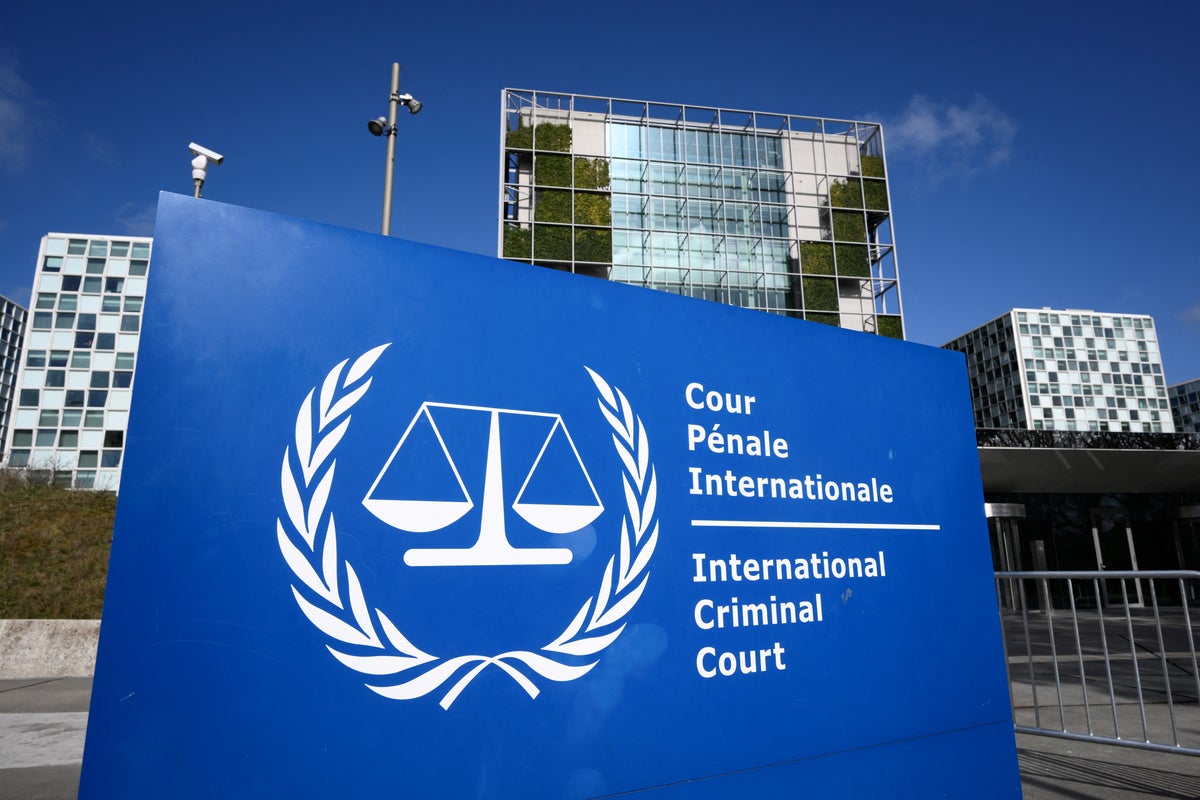
The collision between sovereign power and international jurisprudence has entered a severe administrative phase. Four major non-governmental organizations—the American Friends Service Committee, the Center for Constitutional Rights, Human Rights Watch, and the Open Society Institute—filed a federal lawsuit in the Southern District of New York targeting the executive branch’s financial and legal restrictions directed at the International Criminal Court. This litigation exposes a fundamental tension: the weaponization of domestic economic instruments to neutralize external legal bodies that lack direct enforcement mechanisms.
The Regulatory Mechanics of the Executive Order
At the center of the dispute is an executive order authorizing asset freezes, entry bans, and secondary sanctions against officials, judges, prosecutors, and allied organizations supporting the Hague-based tribunal. Rather than operating through traditional diplomatic channels, this strategy applies the machinery of the International Emergency Economic Powers Act and related statutes to transnational judicial operations.
The economic architecture of these sanctions relies on strict liability standards for financial institutions. Banks clearing transactions globally face catastrophic exposure if they process funds linked to designated entities or individuals. Consequently, the policy achieves its operational goals not through physical coercion, but by inducing commercial self-censorship. Financial intermediaries preemptively sever ties with targeted human rights defenders, legal counsel, and administrative staff to eliminate compliance risk.
The Three Operational Pillars of State Opposition
The United States government operates outside the Rome Statute framework, maintaining that the tribunal possesses no legitimate jurisdiction over nationals of non-member states. This opposition manifests across three distinct strategic pillars designed to insulate allied states and domestic personnel from external prosecution:
- Financial Interdiction: Utilizing the global dominance of the US dollar to cut off liquidity, banking access, and digital infrastructure for court officers and cooperating civil society groups.
- Legal Deterrence: Imposing severe civil and criminal penalties on domestic advocacy organizations that provide material support, documentation, or legal testimony to the tribunal.
- Diplomatic Coercion: Exerting bilateral pressure on third-party states to encourage withdrawals from the Rome Statute or non-cooperation with arrest warrants.
This trifecta creates a chilling effect that extends far beyond the immediate targets. Legal scholars note that the scope of the administrative penalties forces domestic human rights defenders to suspend essential fact-finding missions, witness protection programs, and collaborative filings to avoid prosecution under US counter-terrorism and sanctions regulations.
Constitutional and Statutory Vulnerabilities
The plaintiffs' legal strategy centers on violations of foundational domestic statutes rather than international treaties alone. By penalizing communication, association, and the exchange of information with an international court, the executive order collides directly with established domestic jurisprudence.
The core arguments rest on two constitutional anchors:
- First Amendment Infringement: The restriction of speech, advocacy, and collaborative legal analysis regarding foreign policy and war crimes investigations constitutes an impermissible burden on protected expression. Historical precedent from analogous challenges indicates that executive penalties targeting ideological alignment or professional association face a heavy constitutional burden.
- Fifth Amendment Due Process: Vaguely defined secondary sanctions categories create ambiguity regarding what constitutes "material support" for the court, leaving organizations vulnerable to arbitrary enforcement without adequate notice.
Complementing these claims, the lawsuit invokes the Religious Freedom Restoration Act, reflecting the diverse ideological and faith-based foundations of the participating humanitarian networks.
The Macroeconomic and Jurisdictional Fallout
The systemic implications of this legal battle redefine how powerful states interact with international institutions. When a state utilizes secondary sanctions against judicial officers, it establishes a functional precedent: multilateral legal accountability can be intercepted by unilateral financial dominance.
For the tribunal in The Hague, the pressure compromises investigative capacity across active dockets spanning multiple continents. While the immediate political catalyst involved investigations in the Middle East, the enforcement mechanism applies uniformly to all nineteen preliminary examinations and active situations managed by the court. Investigators face asset freezes that disrupt field operations, witness relocations, and secure communications infrastructure.
The litigation in New York federal court forces a direct judicial review of executive authority over foreign affairs when those powers intersect with domestic civil liberties. If the federal bench finds that the sanctions exceed statutory authority or violate constitutional protections, it will carve out a definitive boundary limiting how far an administration can go to protect allied states from international scrutiny.
Strategic Outlook
The resolution of this dispute will determine the viability of civil society participation in international tribunals. Human rights organizations must transition from direct operational collaboration with the court to decentralized, proxy-based legal structures that isolate domestic entities from direct liability. Compliance departments within international NGOs must model worst-case asset freeze scenarios, diversifying financial conduits away from dollar-denominated clearing houses to insulate baseline administrative functions from ongoing executive actions.