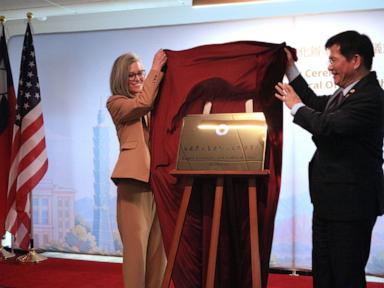
The headlines cheered it as a diplomatic triumph. When Arizona threw open the doors for a new Taiwan representative office, pundits across the media landscape—pardon the prohibited vocabulary, let us stick to the real world—hailed it as a heroic defiance of Beijing. They painted a picture of a desert state standing tall against superpower intimidation, proving that local grit can outmanoeuvre authoritarian threats.
It makes for great political theater. It also displays a catastrophic misunderstanding of how global supply chains actually operate.
I have watched state-level politicians play high-stakes foreign policy poker while completely ignoring the underlying cost of their chips. When you peel back the rhetoric, this diplomatic ribbon-cutting is not a bold stand for freedom. It is a calculated distraction masking a fragile industrial vulnerability. Arizona is not punching above its weight; it is walking deeper into a strategic trap where local politicians get the press clippings while taxpayers foot the bill for systemic risk.
Let us dismantle the lazy consensus.
The Myth of Municipal Diplomacy
The standard narrative assumes that establishing trade and cultural outposts at the state level builds an independent armor against foreign coercion. The argument goes that by creating direct ties with Taipei, Arizona creates a decentralized network of alliances that insulates its booming tech sector from federal dithering or foreign pressure.
This logic collapses upon contact with physical reality.
Arizona is home to TSMC’s multi-billion-dollar semiconductor fabrication plants. That is not a casual economic footprint; it is the beating heart of advanced computing in the Western Hemisphere. Every major American defense contractor, smartphone manufacturer, and artificial intelligence firm depends on the silicon currently being baked in the Phoenix desert.
When Beijing issues warnings against these sub-national diplomatic maneuvers, the standard media reaction is to wave them away as empty bluster. That is dangerously naive. China does not need to invade Arizona to retaliate. It controls precursor chemical supplies, rare earth refining bottlenecks, and logistics chokepoints that can starve a fabrication plant of essential inputs within weeks.
Local officials treating international diplomacy like a municipal zoning dispute do not understand the scale of the machinery they are hitching their wagons to. You cannot run a sovereign-level deterrence strategy out of a county commissioner's office.
Supply Chains Are Not Local Real Estate
The core fallacy of the Arizona-Taiwan partnership narrative is the belief that proximity equals security. Politicians love pointing to physical factories on American soil as proof of reshoring success. They talk about American independence, domestic jobs, and secure borders.
The truth is far messier. Modern semiconductor manufacturing is the most hyper-specialized, globally integrated enterprise in human history. A chip does not care about state lines or flag-waving speeches. It cares about ultra-pure neon sourced from Eastern Europe, specialized lithography machines built in the Netherlands, chemicals refined in East Asia, and engineering talent drawn from a truly global talent pool.
When Arizona opens a representative office under the banner of defying foreign pressure, it treats a complex, brittle web of global interdependency like a local chamber of commerce mixer.
Imagine a scenario where trade tensions escalate past the point of rhetoric, and shipping lanes through the Taiwan Strait face severe disruption. Does a plaque on a wall in Phoenix keep the wafers moving? Does a state-level trade representative negotiate maritime security patrols? Of course not. In an actual crisis, state-level diplomacy vanishes, leaving local economies exposed while federal authorities scramble to manage the fallout.
We are watching politicians monetize a geopolitical flashpoint for domestic political points. Governors and mayors love the optics of standing up to foreign adversaries because voters reward the theatre. But theatre does not fabricate semiconductors. Theatre does not secure supply chains.
The Unspoken Cost of Performative Defiance
Every hour spent negotiating symbolic diplomatic outposts is an hour not spent solving the actual engineering and workforce bottlenecks plaguing domestic manufacturing.
I have spoken with engineers and operations managers on the ground in Arizona who quietly roll their eyes at the political pageantry. They do not need another delegation of politicians cutting ribbons. They need reliable infrastructure, streamlined permitting for industrial water usage, and thousands of skilled technicians who actually know how to run a cleanroom.
By framing the issue entirely through the lens of geopolitical defiance, leadership shifts the focus away from their own operational failures. If a fab faces massive construction delays, cost overruns, or cultural friction between management styles, politicians can simply point to the foreign adversary across the Pacific and blame external intimidation. It is a convenient shield for domestic incompetence.
Let us be brutally honest about the downsides of this approach. When sub-national governments engage in rogue foreign policy, they complicate federal diplomatic efforts. Foreign policy requires a single, coherent voice. When individual states start running independent foreign relations strategies to score points in local election cycles, it creates strategic incoherence. Adversaries exploit that confusion, and allies lose confidence in American predictability.
What Real Industrial Resilience Looks Realized
If we actually want to secure our technological future, we need to stop treating trade policy like an action movie.
Real resilience is boring. It looks like boring investments in domestic vocational training pipelines. It looks like grueling, unglamorous work securing raw material stockpiles. It looks like building redundant supply chains across multiple friendly nations rather than putting all our hopes into a single desert manufacturing cluster backed by performative photo ops.
Arizona’s new representative office changes nothing about the fundamental vulnerability of the global tech stack. It is a loud, expensive band-aid on a structural fracture.
Stop celebrating the symbolism of defiance when the substance of security is still missing. The next time a politician cuts a ribbon to prove how tough they are against a superpower, check to see if they have actually solved the local talent shortage or secured the chemical supply lines. Spoiler alert: they haven't. They just want your vote before the reality sets in.