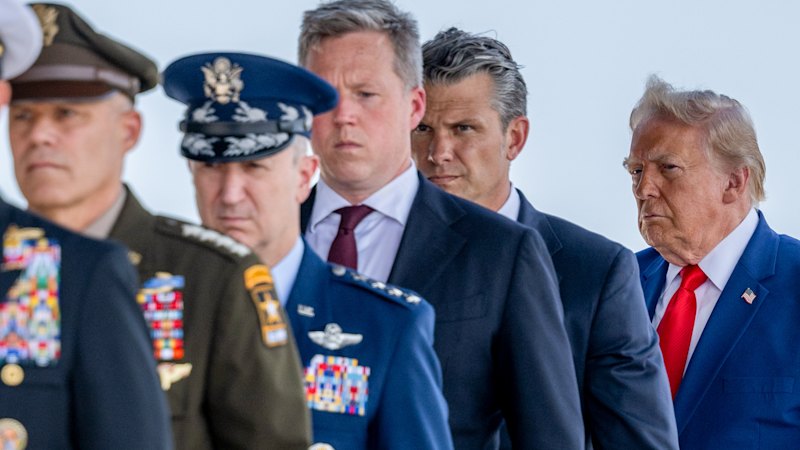
The Pentagon is bleeding top-tier leadership while active global conflicts strain military resources to their absolute limits. Army Secretary Dan Driscoll just handed his resignation to the White House after months of mounting friction with Defense Secretary Pete Hegseth. If you think this is just standard Washington bureaucracy at play, you're missing the bigger picture.
The core of the fallout comes down to a fundamental disagreement over military modernization, personnel purges, and how the US Army should adapt to modern warfare. Driscoll, an Iraq war veteran and tech venture investor, spent his brief tenure pushing hard for cheap drones, counter-drone systems, and private capital integration. He wanted a leaner, tech-forward force. Hegseth, meanwhile, has been aggressively reshaping the upper echelons of the military, cutting general officer ranks, and blocking promotions.
When Hegseth pushed out Army Chief of Staff General Randy George—whom Driscoll openly championed—the writing was on the wall. Driscoll's departure leaves the largest branch of the US armed forces completely vacant of its top two Senate-confirmed leaders, both civilian and military. That is a staggering vulnerability.
This leadership vacuum arrives at the worst possible moment. The United States is actively managing two major foreign conflicts, including an ongoing war with Iran that recently passed the six-month mark alongside enduring commitments tied to European security and Ukraine peace negotiations. When the civilian secretary and the chief of staff are both gone, institutional memory vanishes overnight. Procurement programs stall. Long-term strategy turns into short-term guesswork.
Critics of the current defense leadership argue that wholesale purges of high-ranking generals destroy the precise institutional expertise needed during wartime. Supporters of the administration counter that aggressive top-down reform is the only way to break through bureaucratic stagnation and modernize a force stuck in twentieth-century habits. Both arguments hold weight, but the immediate reality is chaotic.
The military industrial base cannot afford prolonged leadership paralysis. Contractors need clear signals on drone acquisition, software integration, and supply chain priorities. Without a confirmed Army Secretary to sign off on massive transformation initiatives, innovation cycles slow down.
Watch how the White House fills these vacancies over the coming weeks. The next nominee will signal whether the Pentagon doubles down on scorched-earth personnel changes or pivots back to stabilizing institutional leadership while two wars burn overseas.
Trump's Army Secretary Quits Amid Hegseth Feud
This video provides a detailed breakdown of Army Secretary Dan Driscoll's resignation and the ongoing leadership shake-up at the Pentagon under Defense Secretary Pete Hegseth.
http://googleusercontent.com/youtube_content/1