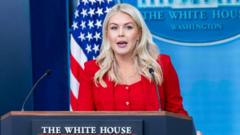
The heavy oak doors of the West Wing briefing room swallow sound. Inside, the air always smells faintly of dry paper, floor wax, and the distinct, rising static of anticipation. Microphones stand like rows of silver reeds. Cameras hum in the dark of the riser. For the person behind the podium, this room is either a temple of control or a gallows.
Karoline Leavitt knew the acoustics of that room better than most. If you liked this piece, you should check out: this related article.
She stood there, day after day, absorbing the concentrated friction of modern American politics. Reporters fired questions like buckshot. Interruptions overlapped. Accusations flew disguised as syntax. Yet, her composure rarely cracked. It was a performance born of sharp preparation and an unyielding defense of her principal. Now, the news has broken that her tenure in that specific, blistering spotlight is coming to an end.
Transitions in high office are rarely quiet. They arrive with a flurry of memos, whispered leaks, and television pundits dissecting every micro-expression. But behind the cable news chyrons lies a much quieter, more human reality. Jobs at the apex of power extract a brutal toll. They consume weekends, family dinners, and peace of mind. To step away from the White House press secretary role is to step out from beneath a relentless magnifying glass. For another perspective on this story, check out the latest coverage from NPR.
Consider the rhythm of a day in that position. It begins before dawn with intelligence briefings and policy memos. It peaks under the blinding hot lights of the midday camera broadcast. It bleeds late into the evening with strategic reviews. Sleep becomes an intermittent luxury. The brain stays wired to a frequency of perpetual defense. When someone leaves that post, the silence that follows must feel deafening.
History shows us that the podium changes whoever stands behind it. Press secretaries are the lightning rods of the executive branch. They take the direct hit so the president does not have to. They absorb the public's frustrations with inflation, foreign wars, judicial battles, and cultural fractures. In return, they receive intense loyalty from their allies and fierce animosity from their critics. There is no middle ground. There is only the daily battle for the narrative.
Leavitt stepped into this arena with a youthful tenacity that caught the establishment off guard. She understood the modern media ecosystem. Traditional gatekeepers no longer command the absolute monopoly on truth they once did. Podcasts, independent journalists, and fragmented social platforms have shattered the old rules of engagement. Navigating that chaotic landscape requires a distinct kind of stamina. You cannot simply read talking points from a binder. You have to wrestle live crocodiles on television while millions watch.
Why do they leave?
The answer is rarely a single headline. It is the accumulation of fatigue. It is the realization that life is happening outside the perimeter fence of 1600 Pennsylvania Avenue. Birthdays missed. Anniversaries celebrated via phone calls from a secure holding room. The constant hum of hostility takes a quiet inventory of the soul. At some point, the internal cost outweighs the external honor.
When the announcement drops, the media reacts with mechanical predictability. Analysts measure winners and losers. They speculate on who will take the empty chair next. They pore over past transcripts for hidden signs of internal friction. But this external theater misses the quiet human drama of departure.
Imagine walking out of the West Wing for the final time. The security pass is surrendered. The badge is deactivated. The persistent ping of urgent group chats finally falls silent. The heavy door closes behind you, and for the first time in years, the afternoon air belongs to no one else.
The public rarely appreciates the sheer velocity of political burnout. We treat public servants like permanent fixtures, as if they were carved from the marble of the buildings they inhabit. We forget they bleed, tire, and yearn for ordinary quiet. We demand relentless perfection while offering zero grace.
As the page turns on this chapter, the speculation will inevitably shift toward the future. Politics is a revolving door. Few people truly leave its orbit for long. The gravitational pull of power is too strong, the addiction to high-stakes conflict too potent. Yet, for right now, there is a pause.
The microphones in the briefing room are empty. The lights are dimmed. Another voice will soon step up to the podium to face the storm. But the footprint left behind by those who stood there before remains etched into the marble, a testament to the heavy price paid by anyone brave or foolish enough to speak for the leader of the free world.


