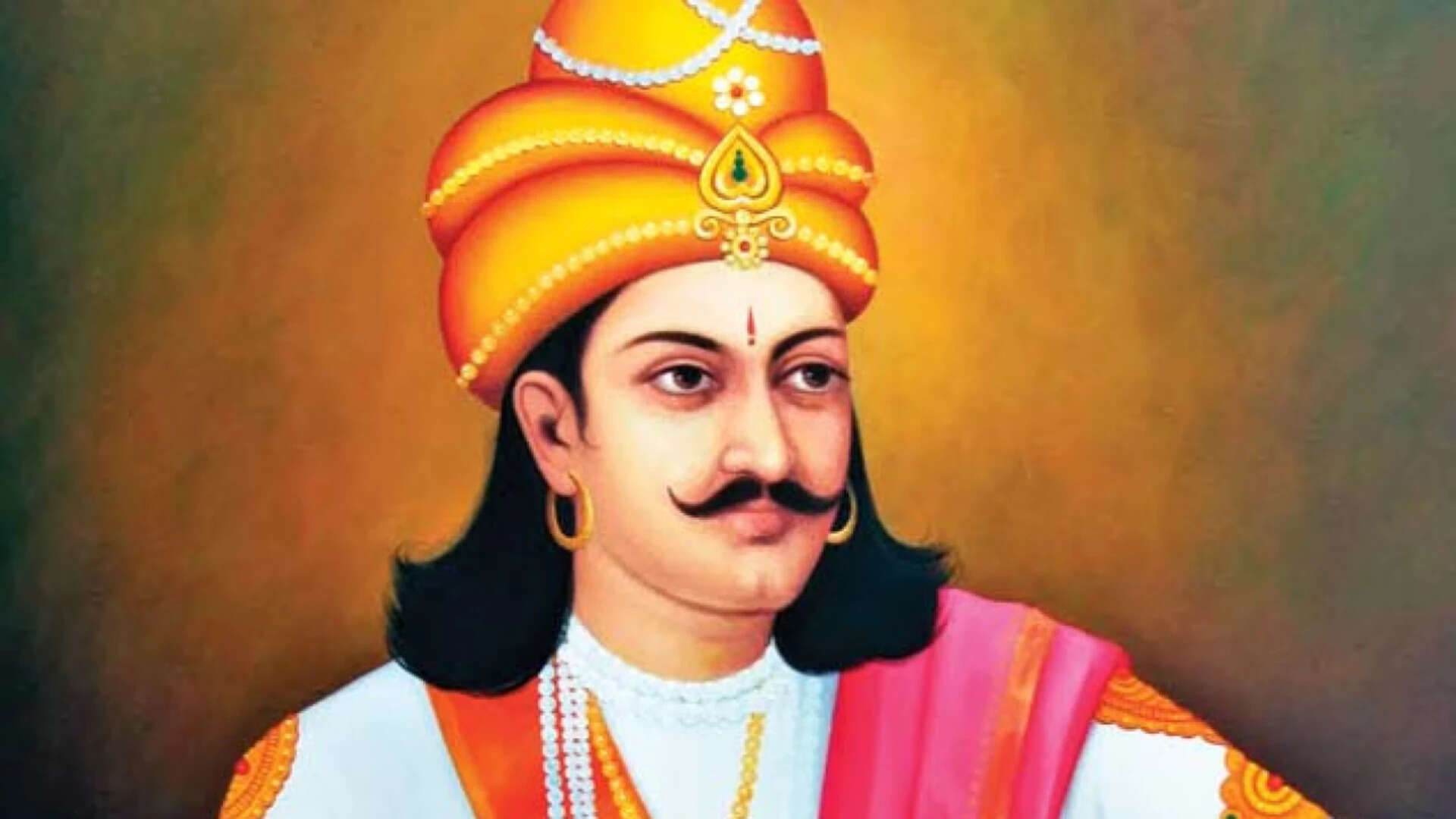
We live in an era where everyone wants to win the argument. Social media feeds are battlegrounds of identity, belief, and politics. We shout louder to prove we are right, convinced that our perspective is the only one that holds water. But over two thousand years ago, an emperor who ruled almost the entire Indian subcontinent figured out a better way.
His name was Ashoka the Great. After conquering Kalinga in a bloody war that left over a hundred thousand dead, he looked at the carnage and broke. He didn't just regret his actions. He completely changed how he ruled.
Instead of forcing his subjects into a single mold, Ashoka carved messages of tolerance into giant rocks and stone pillars. One recurring theme in his philosophy centers on how humans relate to the divine and to each other. When we look at his ideas about those who approach the gods, we find a blueprint for peace that we desperately need right now.
The Truth Behind Ashoka's Words on the Divine
Most people think ancient rulers used religion to control their subjects. Many did. They claimed divine right to demand absolute obedience. Ashoka took a radically different path. He didn't demand that everyone worship his way.
Instead, he observed that as long as there are people who approach the gods, they will do so through different doors. He understood that human beings have an innate desire to connect with something larger than themselves. Some find it in rituals. Others find it in silent meditation. Some see it in the laws of nature.
Ashoka's genius lay in recognizing that the specific door you walk through matters much less than how you treat your fellow travelers.
His edicts, scattered across modern-day India, Pakistan, Nepal, and Afghanistan, emphasize "Dhamma" or righteous living. To Ashoka, Dhamma wasn't a specific religion. It was a code of conduct. It was about kindness, charity, truthfulness, and gentle behavior. He argued that if you claim to love God but treat your neighbor like garbage, your religion is hollow.
He didn't want to eliminate differences. He wanted to make those differences harmless.
The Radical Act of Tolerating Other Beliefs
Let's look at his famous Rock Edict XII. It is a masterpiece of political and spiritual philosophy. In it, Ashoka states that one should not honor only one's own sect and condemn the sects of others.
Think about that for a second. This was written in the third century BCE.
He wrote that by honoring the beliefs of others, you actually strengthen your own faith while doing a service to theirs. Conversely, if you praise your own religion simply out of devotion and bash others to make your own look better, you end up severely damaging your own belief system.
It is a profound psychological insight. When you attack someone else's deeply held convictions, you don't convince them. You just make them defensive. You build walls. Ashoka saw this cycle of religious and cultural bickering and decided to break it by royal decree.
He believed that real spiritual growth happens through dialogue. He encouraged people to listen to the doctrines of other faiths. He wanted his citizens to be well-versed in different perspectives. Imagine a world where we actually try to understand the beliefs we disagree with instead of just looking for talking points to destroy them. That is the world Ashoka tried to build.
How the Mauryan Empire Solved the Culture War
The Mauryan Empire was massive and incredibly diverse. It held millions of people from different ethnic groups, languages, and spiritual traditions. There were Vedic Hindus, Buddhists, Jains, Ajivikas, and Greek-speaking communities in the northwest.
Ashoka knew he couldn't hold this sprawling empire together by force alone. Bloodshed had built the empire, but it couldn't sustain it.
So, he created a new government position. He called them the Dhamma Mahamatras. These were essentially officers of righteousness and public welfare. Their job wasn't to police what people believed. Their job was to ensure that people of all sects were treated fairly, that the elderly were cared for, and that prisoners were treated humanely.
They were the ultimate community builders.
They traveled the empire, resolving disputes between different religious groups. If a Buddhist group and a Hindu group were clashing over resources or influence, these officers stepped in to mediate. They worked to prevent the kind of sectarian violence that has plagued humanity for millennia.
This wasn't just soft, feel-good poetry. It was a hard-nosed, practical governance strategy. Peace at home meant stability. Stability meant prosperity. Ashoka proved that tolerance isn't a sign of weakness. It is the ultimate display of strength.
Applying Ancient Tolerance to Modern Echo Chambers
We don't have emperors anymore, but we do have digital fiefdoms. Our modern echo chambers function a lot like the sectarian factions of ancient India. We surround ourselves with people who think exactly like we do, and we demonize anyone who dares to disagree.
We approach our personal "gods"—whether they are political ideologies, scientific dogmas, or lifestyle philosophies—with a fierce, exclusionary zeal.
If Ashoka were alive today, he would probably tell us to put down our phones and look at the human being across from us. He would point out that our obsession with being right is actually making us miserable.
True tolerance doesn't mean you have to give up what you believe. It doesn't mean you have to agree with everyone. It simply means acknowledging that other people have the right to their own search for truth. It means accepting that you don't hold a monopoly on wisdom.
When we approach the big questions of life with a bit of humility, everything changes. We stop seeing disagreement as a personal attack. We start seeing it as an opportunity to learn.
Practical Steps to Build Bridges Instead of Walls
You don't need a massive empire to put Ashoka's philosophy into practice. You can start in your own life, today, using a few simple shifts in how you interact with others.
- Listen to understand, not to refute. The next time someone voices an opinion that makes your blood boil, pause. Don't immediately craft your counterargument. Ask them why they think that way. Try to see the path that led them to that conclusion.
- Stop criticizing other groups to boost your own. Whether it's your political party, your diet plan, your religion, or your favorite tech brand, resist the urge to trash the alternative. Let your values stand on their own merit.
- Seek out different viewpoints actively. Read a book by an author you disagree with. Listen to a podcast from a different perspective. Don't do it to find flaws; do it to understand their worldview.
- Focus on shared human values. Strip away the labels, the rituals, and the jargon. Most people want the same basic things: safety, happiness, purpose, and connection. Focus on those commonalities rather than the minor details that divide us.
Ashoka's message was simple yet incredibly difficult to execute. He challenged us to rise above our tribal instincts. He showed us that greatness isn't measured by the enemies we conquer, but by the differences we reconcile.
Start practicing this radical tolerance in your daily life. Stop trying to win every argument and start trying to understand the person on the other side of it. You might find that the world becomes a much less hostile place.